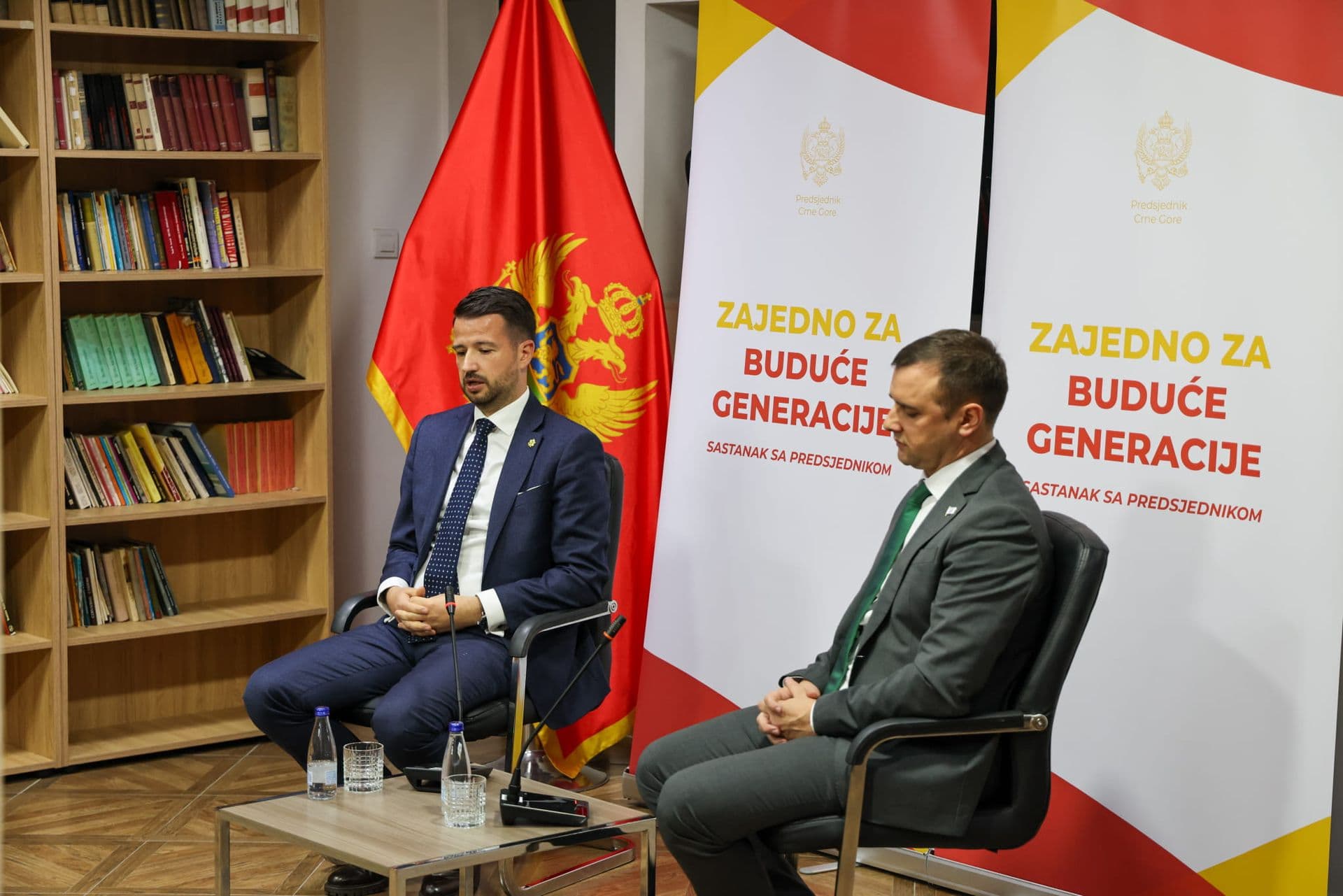
UPDATE: In a significant move for democratic engagement, Montenegro’s President Jakov Milatović held an urgent meeting with citizens in Danilovgrad this evening, emphasizing the need for direct communication over traditional political rhetoric. Joined by Mayor Aleksandar Grgurović, Milatović stated, “Montenegro needs politicians who engage with citizens, not those confined to offices.”
During this pivotal gathering, Milatović sought to address pressing issues faced by locals, urging the public to voice their concerns on justice, governance, and community needs. He stressed the importance of listening to the citizens’ struggles to shape effective solutions for both Danilovgrad and the broader nation of Montenegro.
The President highlighted the necessity of reforming Montenegro’s political system, asserting that the current model fails to meet public expectations. “Today, citizens lack full freedom of choice. We don’t directly elect mayors, and closed party lists alienate politicians from the people,” he remarked. Milatović proposed introducing open lists in elections, allowing citizens to vote for individuals rather than just parties, a move he believes would enhance accountability among politicians.
Milatović announced that citizens will have the opportunity to express their views on this reform through a future referendum. “This is a critical step towards revitalizing our democracy,” he stated.
Shifting focus to economic concerns, the President acknowledged the alarming state of Montenegro’s economy, citing low growth rates and high inflation. “We must realign state policies with economic priorities. Recent trends indicate a combination of sluggish growth and soaring prices, which is unacceptable,” he explained.
Milatović called for an open discussion on developing a sustainable economic growth model. “Currently, we have one of the lowest competitiveness rates in the region. For every €100 we import, we only export around €12. Our tourism sector is declining, and investments are falling short,” he said, pushing for a shift towards an economy based on labor, knowledge, production, and exports.
He emphasized the critical need to increase the agricultural budget, declaring, “To keep people in rural areas, we must boost funding and subsidies for agriculture. This money must reach those who work and create value, rather than supporting partisan employment in government.” Milatović also stressed the importance of reforming state enterprise management, insisting that these entities should drive economic development rather than serve political interests.
Regarding Montenegro’s aspirations for European Union membership, Milatović urged the acceleration of necessary reforms to reap economic benefits. He highlighted the potential for job creation, investment opportunities, and enhanced institutional stability through EU integration.
Milatović expressed his vision for Danilovgrad to serve as a model of economic reform, agricultural support, and strategic use of state and EU funds to improve citizens’ daily lives. “These dialogues are essential to define our priorities and restore political accountability to where it belongs—with the citizens and their real problems,” he concluded.
This meeting marks a crucial step in fostering a transparent and responsive government in Montenegro, as citizens eagerly await the President’s proposed reforms.