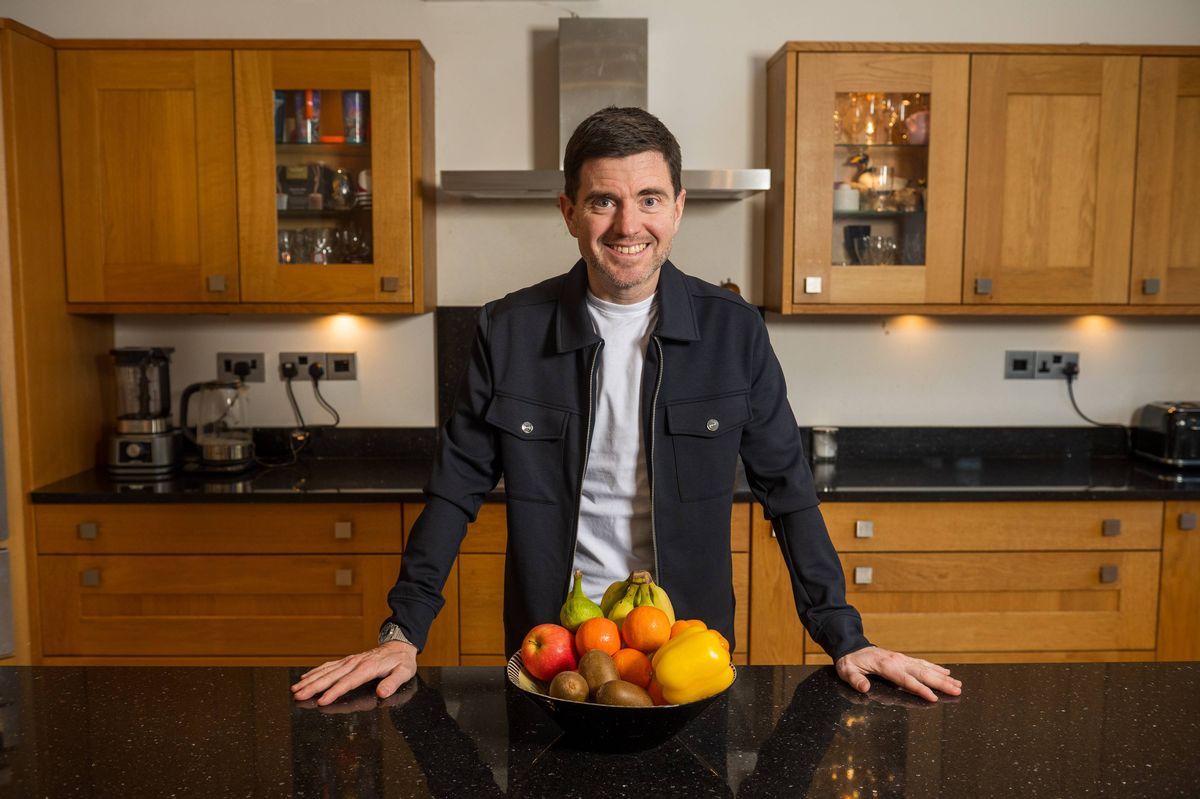
URGENT UPDATE: A woman’s decision to quit ultra-processed foods two years ago has transformed her life in significant ways, emphasizing the urgent need for dietary awareness. In January 2024, driven by feelings of sluggishness and bloating after the holiday season, she took a bold step to reclaim her health.
This personal journey comes amid growing concerns over the prevalence of ultra-processed foods (UPF) in modern diets. These are items laden with artificial ingredients, often disguised as convenient options. She found herself feeling less tired, losing weight, and even improving her exercise performance after cutting UPFs from her diet.
The woman’s weight dropped from 11.5 stone to 10 stone, marking a loss of one-and-a-half stone. She now reports feeling more comfortable in her own skin, as well as experiencing significant boosts to her energy levels. “I can handle exercise more comfortably now,” she stated, reflecting on improved performance in running events, including breaking her personal records in half marathons and 10Ks.
The changes she made are sustainable and enjoyable, allowing her to eat satisfying meals without counting calories. She advocates for anyone seeking a healthier lifestyle to be mindful of food labels and ingredients. “If it’s wrapped in plastic and contains ingredients you wouldn’t typically find in a domestic kitchen, it’s likely ultra-processed,” she advised, echoing sentiments from health experts like Dr. Chris Van Tulleken, a prominent infectious diseases doctor and BBC science presenter.
The woman highlighted shocking examples of commonly consumed foods, including granola and flavored yogurt, which she previously believed to be healthy. “These items are often packed with added sugars and processed ingredients,” she noted.
Experts warn that ultra-processed foods are engineered to be hyper-palatable, making them nearly impossible to resist. Professor Tim Spector, an epidemiologist and co-founder of Zoe, emphasizes that while some processed foods are acceptable, UPFs push the boundaries of health. “The problem arises when foods are altered with additives and unhealthy fats,” he explained.
She now consumes a diverse range of whole foods, including chickpeas, kale, and nuts, and has learned to appreciate new flavors. “I’ve discovered so many new combinations and can’t imagine reverting to my old shopping list,” she stated. Her typical meals include Greek yogurt with nuts and fruits for breakfast, lentils with vegetables for lunch, and fish with butter beans for dinner.
Despite her dietary restrictions, she stresses that occasional indulgences are acceptable. “I don’t stress about every meal. It’s overall progress that counts,” she added, advocating for a balanced approach to eating.
The woman’s story resonates with a broader trend as data reveals that those consuming high amounts of UPFs tend to gain weight and face health risks. A recent clinical trial reported participants on ultra-processed diets consumed an average of 500 more calories daily, leading to weight gain of about two pounds within two weeks.
Dr. Van Tulleken’s own experiment on a diet comprised of 80% ultra-processed foods resulted in significant weight gain, illustrating the risks associated with such diets. “If I continued for a year, I would have doubled my body weight,” he warned.
The urgency of this dietary shift is underscored by alarming statistics linking UPFs to obesity, heart disease, and other health crises. Professor Carlos Monteiro of the University of Sao Paulo has labeled UPFs as the primary cause of obesity, stating they foster environments conducive to inflammatory diseases.
As the conversation around ultra-processed foods intensifies, this woman’s journey serves as both a warning and an inspiration. She encourages others to explore healthier alternatives and to be critical of food marketing tactics that exploit consumer habits. “We need to be mindful about what we eat,” she concluded, advocating for education and awareness.
For more insights, readers can explore Dr. Van Tulleken’s book Ultra-Processed People and his upcoming BBC documentary “Irresistible.” This movement towards healthier eating is not just a personal quest; it’s a societal necessity.