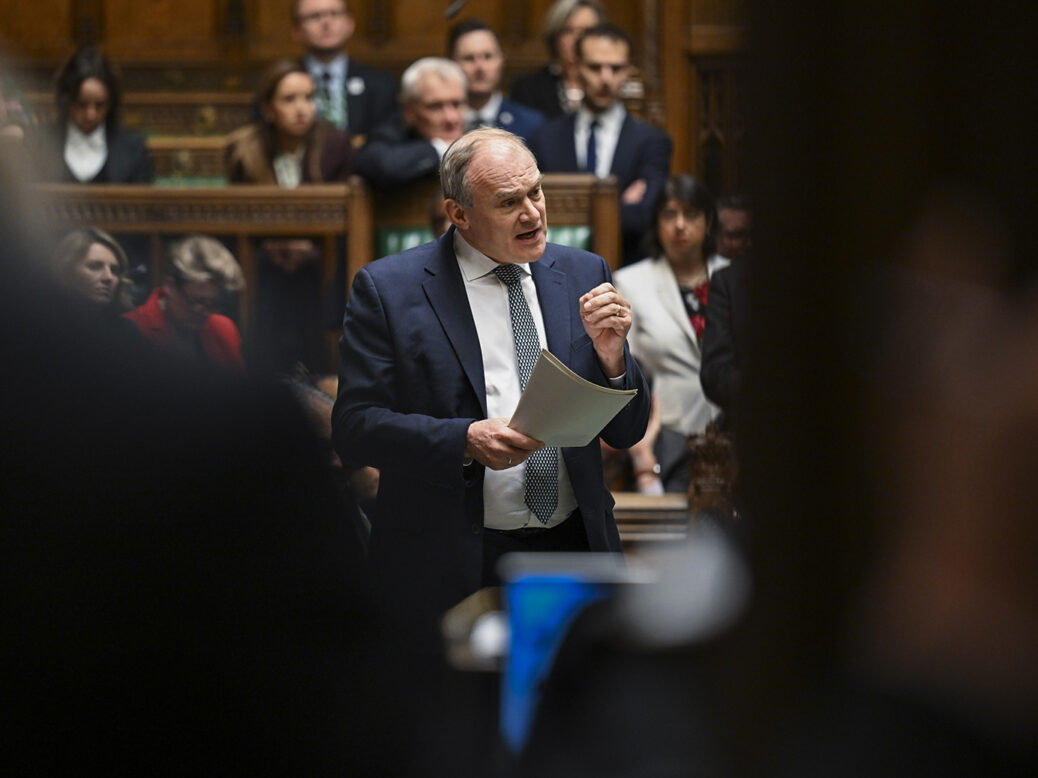
UPDATE: The Liberal Democrats have just achieved a significant breakthrough with a Ten Minute Rule bill passing in a tie-break vote, marking a pivotal moment in the party’s strategy as they gear up for the 2026 local elections. The bill, which calls for negotiations to join a bespoke customs union with the EU, was championed by Lib Dem spokesperson for Brexit and celebrated by leader Ed Davey as a “historic victory.”
This development comes as the Lib Dems strive to redefine their role in an increasingly fragmented political landscape, where they face stiff competition from Reform UK and the Greens. With 72 MPs in parliament, the party is attempting to capitalize on growing public dissatisfaction with the traditional political dichotomy, while presenting itself as a credible alternative to both Reform and Labour.
The mood among Lib Dems is notably optimistic despite the media’s limited coverage of their successes. Davey has been vocal in addressing the party’s challenges, particularly the rising prominence of Nigel Farage and his Reform party, which many now view as the de facto opposition. At the party’s conference in September, Davey directly linked his message to the threat posed by Reform, mentioning Farage 30 times in a bid to reclaim the narrative.
As they prepare for the upcoming elections, the Lib Dems are focusing on local issues to build broader support. Recent successes in local elections, including wins in Preston and Surrey, showcase their strategy of addressing community concerns, which they believe resonates with voters tired of the dominant two-party system.
Local triumphs underscore their potential to leverage public sentiment around pressing issues like the cost of living and the fallout from Brexit. The House of Commons Library estimates that leaving the EU is costing the Treasury £90 billion annually in lost tax revenue, a narrative the Lib Dems are keen to highlight. Recent polling indicates that support for Brexit is dwindling, with only 29% of Brits backing it as of August, and a majority now favoring closer ties with the EU.
Insiders assert that this new focus, particularly on economic impacts, could draw support from hesitant voters and even some Labour MPs, as evidenced by 13 Labour members who sided with the Lib Dems during the customs union vote. The party’s approach aims to position them as not just a local powerhouse but also a national contender with a clear message on economic recovery.
Local MP Mike Martin has emerged as a social media sensation, effectively communicating updates to constituents during the recent South-East Water outages, further showcasing the party’s hands-on approach. Davey’s visit to an illegal rubbish site in Kidlington reflects the party’s commitment to addressing local issues directly, contrasting sharply with the perceived inaction of their competitors.
As the political landscape shifts, the Lib Dems are determined to carve out a distinct identity. Party insiders are confident they can emerge as a formidable force against both the Conservatives and Reform, stating, “It’s between us and Reform.”
With the local elections on the horizon, the stakes are high. The Lib Dems are not just fighting for seats; they are battling for the soul of British politics amid rising populism and discontent with the establishment. As the party rallies behind its new message, the real question looms: Can they transform local victories into a national resurgence?
Stay tuned for further developments as the Liberal Democrats prepare to take on the challenges ahead, aiming to redefine their future in a complex political environment.