UPDATE: The Labour Party is facing a critical moment as new analyses reveal a resurgence of interest in the post-war era of Britain. This shift comes amid ongoing challenges such as a brutal housing crisis, stagnant growth, and rising social tensions.
Recent discussions in Westminster highlight a significant change in perspective among younger political figures. They are increasingly drawn to the achievements of the 1950s to 1970s, which are now seen as a golden age of social conservatism and community strength. With the UK grappling with 15 years of slow economic progress, the question arises: can Labour harness this nostalgia to revitalize its agenda?
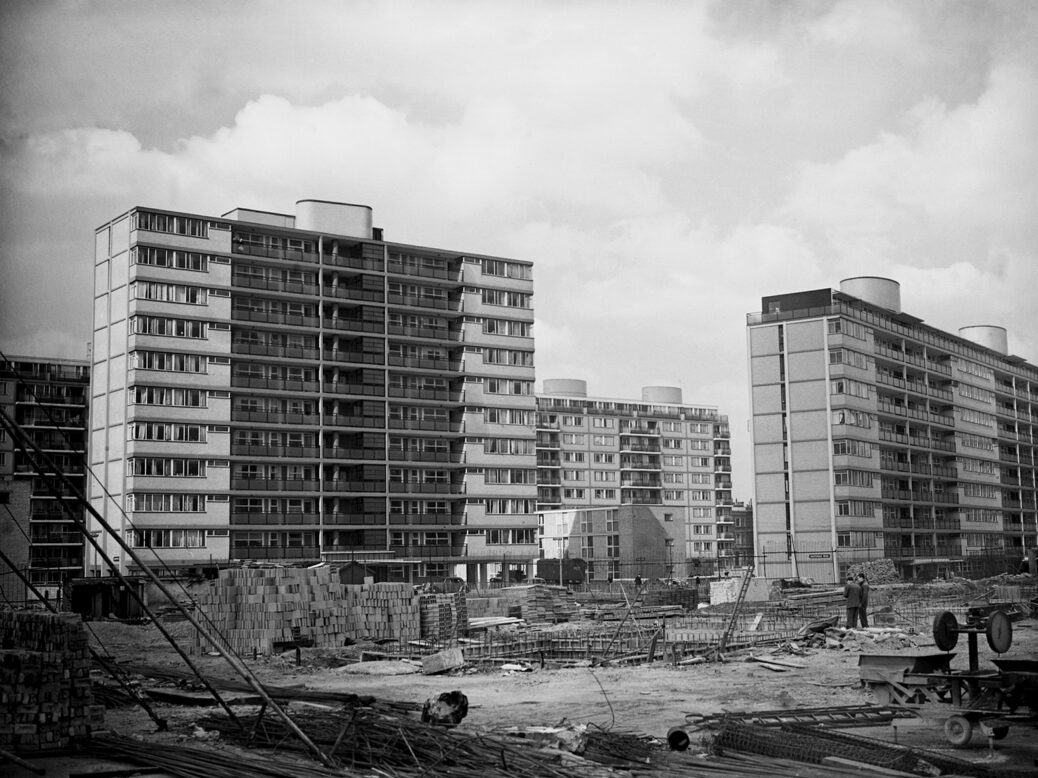
Central to this debate is the concept of YIMBYism (Yes In My Back Yard), which advocates for increased housing development. Many younger politicians are calling for a return to the extensive building projects that characterized the post-war era, including the establishment of the UK’s first civil nuclear program and a vast network of motorways and housing. This renewed focus contrasts sharply with the current stagnation in construction, exacerbated by decades of privatization and deregulation.
As political factions within the Conservative Party pivot towards cultural conservatism, Labour is urged to reconsider its strategies. Keir Starmer is already channeling elements of post-war recovery, referencing the need for a “Buy British” policy echoing sentiments from the Attlee government. However, critics point out that Labour’s attempts to embrace this narrative have been slow and inconsistent.
The Future of the Left project, led by Jonathan Rutherford, offers a potential pathway forward. It combines social conservatism with a renewed focus on national economic strategies, advocating for a political economy that prioritizes domestic production. This approach stands in stark contrast to the neoliberal policies that have characterized recent decades.
As the UK finds itself outside the European Union, parallels are drawn to the post-war landscape where self-sufficiency became paramount. With rising energy costs and empty shelves, the need for an effective industrial strategy is more pressing than ever. The era of globalization appears to be waning, shifting the focus back to national interests.
The Labour Party must recognize that the political and economic landscape has dramatically shifted. The challenges they face today resemble those of the immediate post-war period, and there is an urgent need for a revival of the principles that once defined their party.
In this critical moment, the Labour Party has the opportunity to reclaim its legacy and forge a new path that resonates with today’s realities. The party’s ability to adapt to this evolving narrative will determine its relevance in the upcoming political landscape. As discussions continue, observers will closely watch how Labour responds to these urgent calls for change.