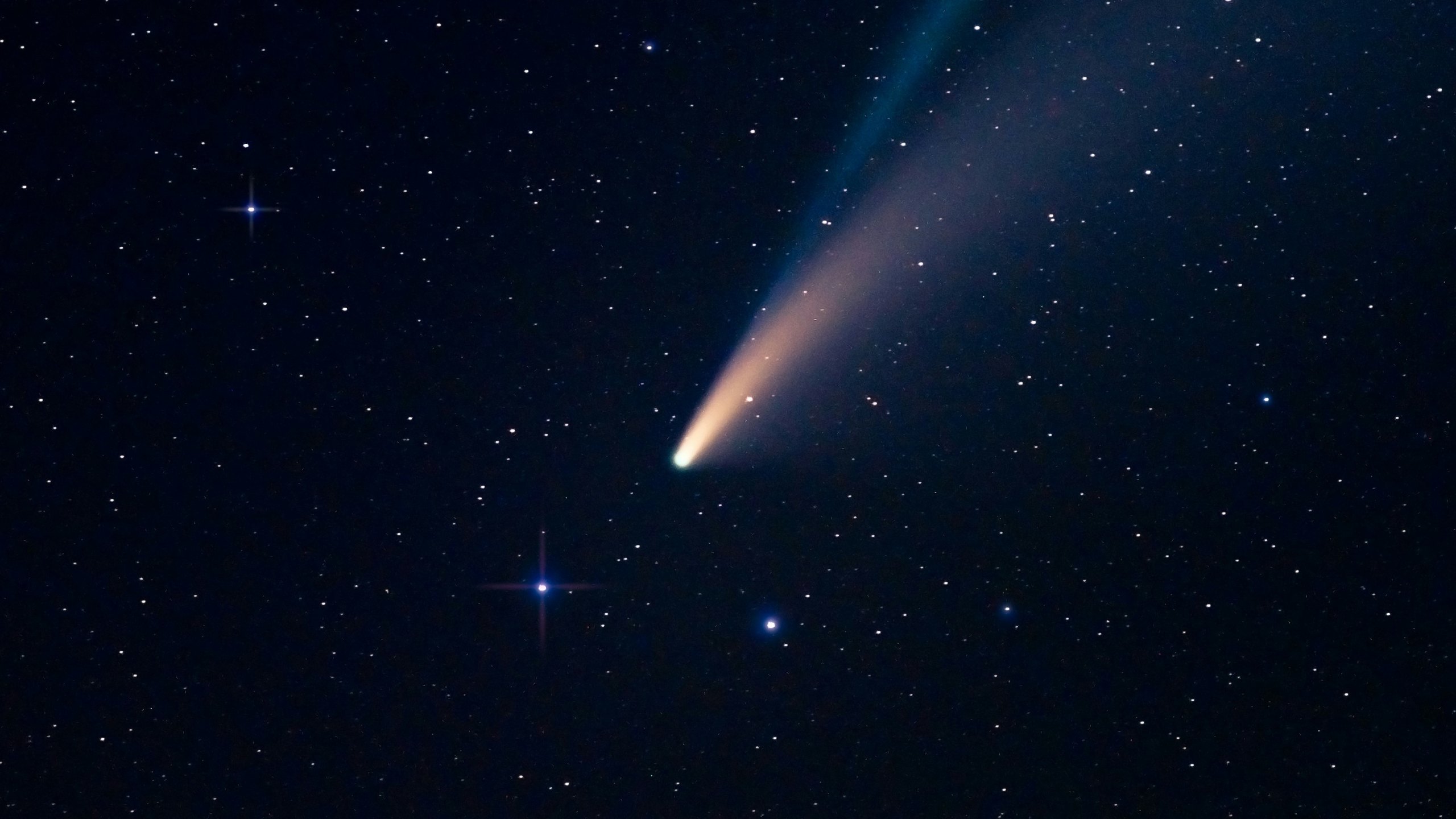
A newly discovered interstellar object, known as 3I/ATLAS, has sparked a mix of scientific intrigue and public apprehension due to conflicting reports regarding its trajectory. Confirmed by international astronomical data, 3I/ATLAS is the third interstellar body documented passing through our solar system, following ‘Oumuamua and 2I/Borisov. Its hyperbolic path indicates it originated from outside the solar system and is set to depart, with no likelihood of returning.
The object was first detected on July 1, 2025, and its trajectory has been thoroughly examined by multiple space agencies and observatories, including NASA and the Asteroid Terrestrial-impact Last Alert System (ATLAS). The scientific consensus is clear: 3I/ATLAS poses no threat to Earth. The closest approach occurred on December 19, 2025, at a distance of approximately 1.8 astronomical units, or around 170 million miles (about 270 million kilometres) away, safely outside the orbit of our planet.
Scientific Observations Confirm Comet-Like Features
High-resolution imaging from the James Webb Space Telescope and other instruments has revealed that 3I/ATLAS possesses a comet-like coma and tail, primarily composed of gas and dust, typical of icy bodies heated by solar radiation. The chemical composition shows dominance of carbon dioxide (CO2), along with traces of water and carbon monoxide, aligning with characteristics expected from a primitive comet.
Polarimetric studies conducted with large ground-based telescopes indicate unique surface textures, as evidenced by negative polarization features not typically observed in most solar system comets. These findings suggest a complex surface but do not imply any artificial origin or technology. Furthermore, orbital measurements indicate that any non-gravitational acceleration, which can occur due to gas emissions, is minimal and consistent with typical cometary activity.
Despite the solid scientific foundation, speculation surrounding 3I/ATLAS has gained traction online. Claims that the object could be alien technology or a hidden threat have circulated, fueled by discussions from Harvard astrophysicist Avi Loeb. Loeb has raised questions regarding anomalies in the object’s behavior, suggesting that NASA has withheld certain images from public release. One such instance involves an image captured by the Mars Reconnaissance Orbiter that Loeb claims was not made available despite requests.
Debunking Speculation and Misinformation
These assertions remain speculative and lack support from primary scientific sources. Independent experts in planetary science, along with NASA’s own findings, assert that 3I/ATLAS’s trajectory and physical properties conform to natural comet behavior, even if they exhibit some unusual characteristics. Other theories circulating in public forums, including claims of pulsing signals or controlled maneuvers, are unsupported by any verifiable measurements or peer-reviewed research.
The rarity of objects like 3I/ATLAS only heightens the fascination surrounding them. As the complexity of their observation invites curiosity, the rapid spread of anecdotal claims on social media can lead to misunderstandings. Astronomers emphasize that brightness variations reported by users online can stem from normal rotational and viewing geometry effects, and no observational data indicate that 3I/ATLAS is changing course toward Earth.
3I/ATLAS offers a unique opportunity for scientists to study pristine materials from a distant stellar nursery. The data collected will enhance our understanding of planetary system evolution beyond our own. As it continues its trajectory, 3I/ATLAS will exit the solar system, never to return.
In conclusion, while speculation continues to swirl in various circles, the scientific community remains focused on the evidence. The prevailing view is that 3I/ATLAS is a fascinating natural phenomenon, providing valuable insights into the origins of celestial bodies rather than posing a danger to our planet.