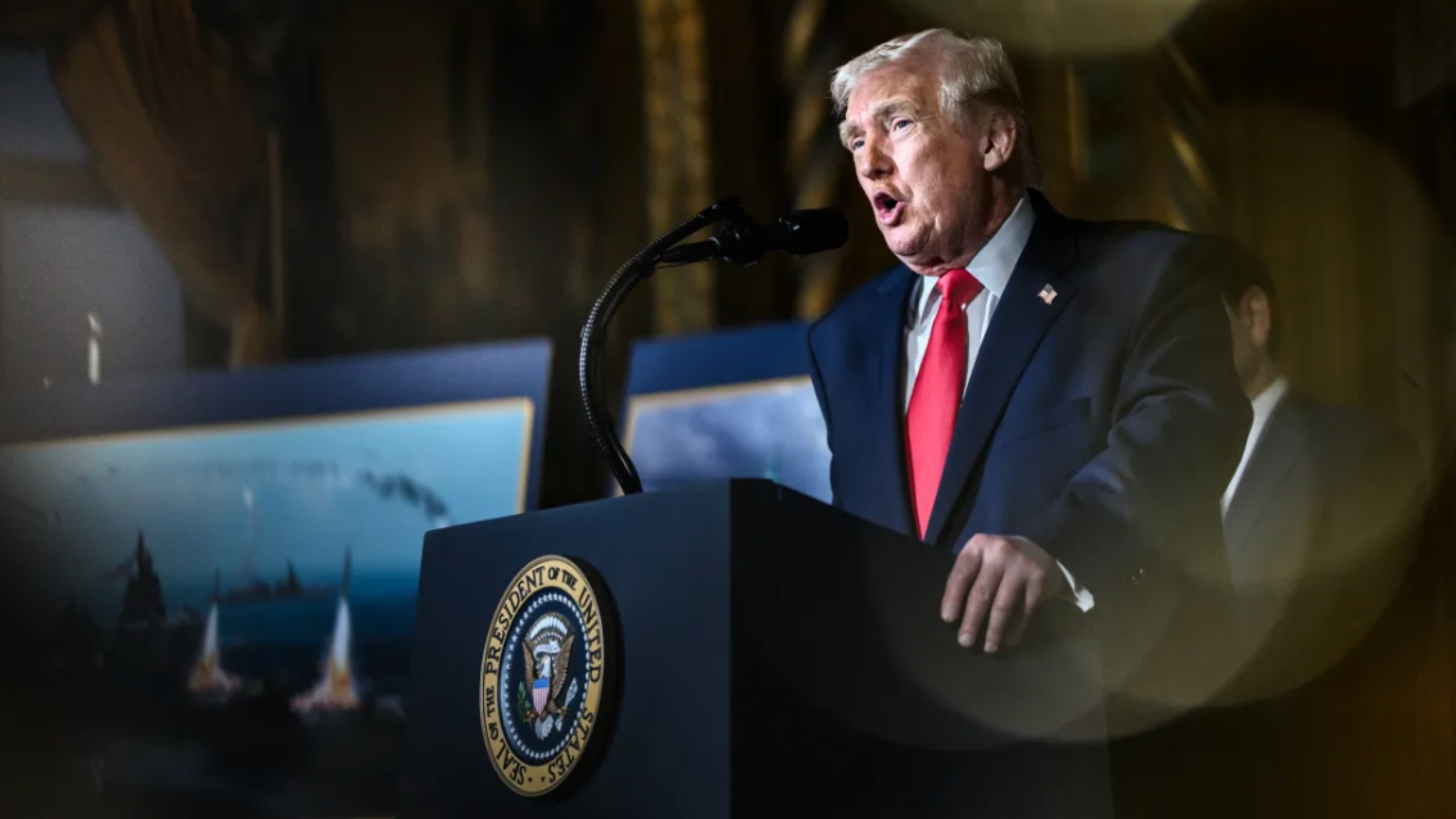
URGENT UPDATE: A startling claim has emerged regarding former President Donald Trump, as health expert Adam James asserts that Trump may have just four months to live. This assertion comes during a discussion with political commentator David Pakman, igniting widespread concern and speculation about Trump’s health.
James, a licensed physical therapist, argues that Trump’s recent public appearances—marked by meandering speeches and apparent confusion—point to significant cognitive decline. He posits that these symptoms are indicative of frontotemporal dementia, suggesting that Trump has displayed signs of this condition since before his presidency began in 2016. The implications of this diagnosis are profound, as James indicates that the life expectancy following such a diagnosis is typically between seven to twelve years.
The conversation has gained traction in the wake of Trump’s recent address at the World Economic Forum in January 2023, where he reportedly confused Greenland with Iceland. This slip has been interpreted by some as evidence of cognitive issues, leading to heightened scrutiny of Trump’s health status. James claims, “His frontal lobe is shrinking inside his skull, and the MRIs will show this,” suggesting a deliberate effort by Trump’s administration to conceal this information by favoring CT scans over MRIs.
The discussion around Trump’s health has taken on an almost thriller-like quality, with every mark and bruise on his hands dissected for insights into his condition. James dismisses common explanations for these marks as mere handshaking, proposing instead that they are indicative of IV diuretic medication being administered to relieve fluid retention.
While the public’s curiosity regarding a president’s health is understandable, the manner in which James presents his theories raises significant ethical questions. The lack of clinical evidence and the speculative nature of his claims contribute to a climate where political commentary often masquerades as medical diagnosis.
James’s statements have sparked intense debate, with critics accusing him of sensationalism, while supporters may view his remarks as a long-overdue acknowledgment of concerns surrounding Trump’s health. The situation underscores a troubling trend in contemporary politics—where speculative health diagnoses of leaders have become a form of entertainment, overshadowing critical discussions about leadership and reality.
As this situation develops, it remains crucial for the public to seek verified information from credible medical sources rather than relying solely on provocative claims from commentators. The focus should be on transparency and accurate reporting, as the nation grapples with the implications of leadership health in a politically charged environment.
The unfolding narrative around Trump’s health raises urgent questions about transparency and accountability in leadership. As citizens respond to these claims, the need for clear, factual communication becomes increasingly vital. What will transpire next in this evolving story is yet to be seen, but the implications for American politics are significant and far-reaching.