UPDATE: Gaza fisherman Ismail Farhat was released on December 16 after enduring 70 days of detention and torture by Israeli forces. His harrowing experience sheds light on the dire state of Gaza’s fishing community amid ongoing conflict, which has claimed the lives of at least 230 fishermen since October 7, 2023.
On the morning of October 8, Farhat set out from the coast of Deir al-Balah in central Gaza with a makeshift boat he built himself. Shortly after launching, he was intercepted by an Israeli naval vessel and ordered to “surrender.” Farhat recounted the terrifying incident: “They ordered us to strip, jump into the sea, and swim towards their vessel.”
Once detained, Farhat faced brutal interrogation, during which Israeli soldiers accused him of being affiliated with Hamas. “I was treated as a criminal,” he stated. The Israeli military has been accused of killing fishermen, destroying boats, and implementing a total naval blockade, leading to a catastrophic decline in Gaza’s fishing sector.
Over the past two months, Farhat’s conditions were brutal. He was held in Sde Teiman, a notorious detention facility, where he endured constant handcuffing and was denied basic human rights. “I slept on an iron mesh and was forbidden from speaking,” Farhat shared. “We were treated like animals.”
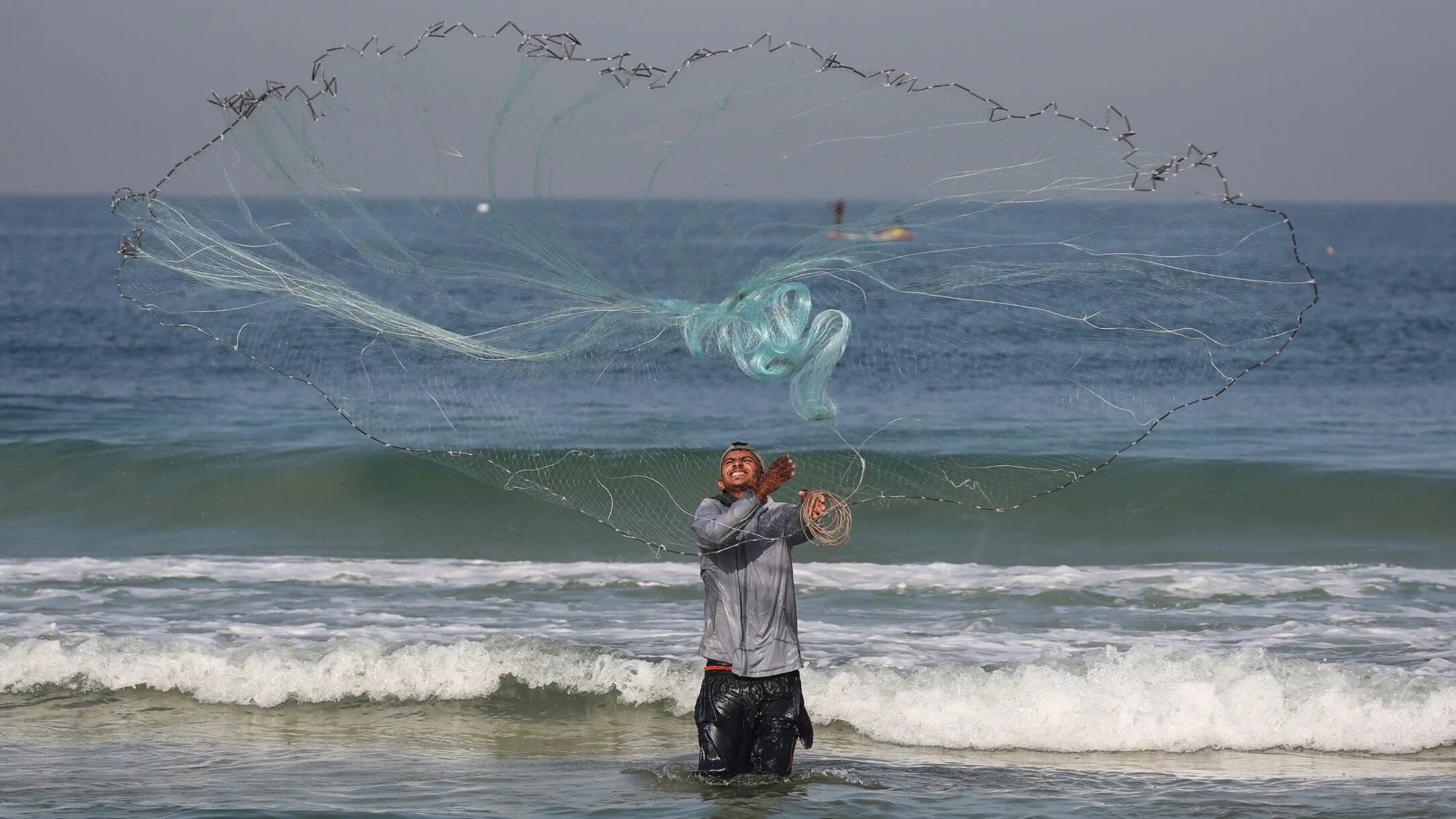
The toll on Gaza’s fishing community is staggering. Zakaria Bakr, head of the Fishermen Union Committees in Gaza, reported that the fishing area has been reduced to zero, with the Israeli military systematically destroying over 95 percent of the fishing infrastructure. “Today, fishermen are forced to work using makeshift platforms and nets retrieved from the rubble,” Bakr explained.
The humanitarian crisis deepens as the fishing yield plummets. Current fishing production has fallen to just two percent of pre-war levels, with fishermen collectively catching a mere 16 kilograms of fish per day—compared to 15 tonnes before the conflict erupted.
Under the Oslo Accords, Palestinian fishermen should have access to 20 nautical miles off Gaza’s coast, but this has never been realized. The harsh reality is that the ongoing blockade and violence compel fishermen like Farhat to risk their lives for survival. “Fishing is not a choice; it’s our only way to feed our families,” he lamented.
As the situation continues to deteriorate, the international community is urged to recognize the plight of Gaza’s fishermen. “We risk our lives to provide food for our families, knowing that this profession leads to detention, injury, or death,” Farhat concluded.
The urgent need for humanitarian assistance and international intervention has never been more critical. As Gaza’s fishermen face unprecedented challenges, the world watches closely. What happens next remains to be seen, but the resilience of individuals like Ismail Farhat highlights the human cost of this ongoing crisis.