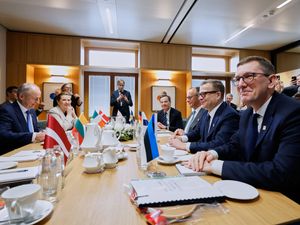
UPDATE: Belgium’s leaders have issued an urgent demand for **ironclad guarantees** of protection against Russian retaliation before supporting a **massive loan** for Ukraine. As the **EU summit** unfolds in **Brussels**, the 27-nation bloc is set to deliberate on using **tens of billions of euros** in frozen Russian assets to finance Ukraine’s military and financial needs over the next two years.
During this critical summit, held on **October 15, 2023**, Belgium’s Prime Minister **Bart De Wever** stated, “Give me a parachute and we’ll all jump together,” emphasizing the need for solid assurances from EU partners. The stakes are high, as **193 billion euros** in frozen assets, currently held in the **Euroclear** financial clearinghouse, could play a pivotal role in this funding strategy.
Belgium fears potential Russian retaliation and prefers that the EU borrows funds from international markets instead of relying solely on frozen assets. De Wever is pushing for inclusion of other frozen assets across Europe and guarantees that Euroclear will have adequate funds to withstand any legal challenges from Russia, which recently escalated tensions by suing Euroclear.
“I have not yet seen a text that could satisfactorily address Belgium’s concerns,” De Wever told parliament just before the summit.
European officials warn that Russia is actively conducting a **campaign of sabotage** across the continent. The **Central Bank lawsuit** adds pressure on Belgium and the EU, complicating their financial support strategy for Ukraine.
The proposed “**reparations loan**” plan aims to provide **90 billion euros** to Ukraine, with nations like the **UK**, **Canada**, and **Norway** expected to fill any funding gaps. While Russia’s claim to these assets remains, they would be locked away until the Kremlin ends its invasion and compensates for the extensive damage caused over the last four years.
European Commission President **Ursula von der Leyen** stressed the urgency of the situation: “We will not leave the European Council without a solution for the funding of Ukraine for the next two years.” She indicated that Ukraine requires **137 billion euros** to avoid bankruptcy by spring.
EU Council President **Antonio Costa** has committed to keeping negotiations ongoing, stating he will ensure leaders reach an agreement, even if it takes days. Polish Prime Minister **Donald Tusk** warned, “Now we have a simple choice. Either money today or blood tomorrow,” urging all European leaders to step up to the challenge.
Negotiations have been intense, with EU envoys working tirelessly to bridge differences among member states. However, the risk of blocking the loan plan remains if enough countries oppose it. Some leaders, including **German Chancellor Friedrich Merz**, expressed hope that Belgium’s concerns could be resolved, advocating for the use of frozen Russian assets rather than incurring new European debt.
Conversely, Hungary’s Prime Minister **Viktor Orban** remains skeptical, labeling the loan plan as “a dead end” and aligning himself with a more peace-oriented stance. Orban cautioned that providing financial assistance could escalate tensions, stating, “To give money means war.”
As the summit progresses, the pressure mounts for a resolution that can adequately support Ukraine while addressing Belgium’s security concerns. The world is watching closely, as the decisions made in Brussels could have far-reaching implications for the ongoing conflict and the stability of Europe.
The time for action is NOW, and EU leaders must find common ground to ensure Ukraine receives the necessary support while protecting the interests of all member states.