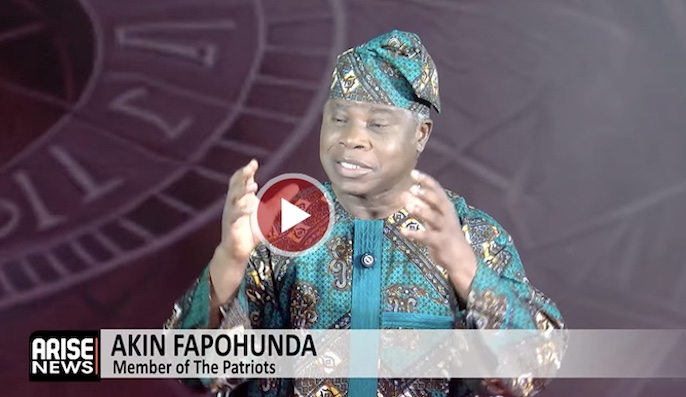
UPDATE: Akin Fapohunda, a key member of the Eminent Elders Forum, has launched a bold call for the decentralization of Nigeria, asserting that the country cannot operate as a unified nation-state. This urgent appeal was made during an interview with ARISE NEWS on Wednesday, following a formal letter addressed to President Bola Ahmed Tinubu and other top officials, including Chief Justice Kudirat Kekere-Ekun.
Fapohunda’s letter, sent by a coalition of prominent leaders, advocates for significant structural reforms to shift governance from the federal level to regional authorities. His message is clear: “We are not a nation. A nation must be bound by culture and language. We don’t have one language; we don’t have one culture,” he stated emphatically.
This call comes as Nigeria grapples with ongoing governance challenges, with Fapohunda arguing that the centralized system is ineffective. He noted, “There is universal consensus across all regions that managing everything unitarily from Abuja is not ideal. Mr. President is trying, but one man cannot oversee 50 ministries.”
Fapohunda outlined a gradual approach to decentralization, emphasizing that it is a process rather than a quick fix. “Restructuring is not a switch you put on the wall. If the idea is kick-started now—like we have the state police being discussed—credit to the President. You kickstart it,” he said.
The urgency of this appeal is underscored by the group’s expectation for a response within 45 days. Fapohunda insists that the current governance structure under the 1999 Constitution is no longer viable for Nigeria’s diverse populace. He stated, “We cannot continue being managed this way. The real import is that we don’t want to be managed under the 1999 constitution the way it is anymore.”
Fapohunda’s proposal has been formally communicated to all three branches of the Nigerian government—the executive, legislature, and judiciary—reflecting a concerted effort for consensus on this critical issue. “We want the three of them to act in concert. So that there is a consensus that we want to do this,” he added.
As Nigeria faces increasing pressure for governance reform, Fapohunda’s call for decentralization could mark a pivotal moment in the nation’s political landscape. This development is set to resonate across the country, as citizens await the government’s response to the urgent need for structural change.
Stay tuned for updates on this developing story as the situation unfolds.