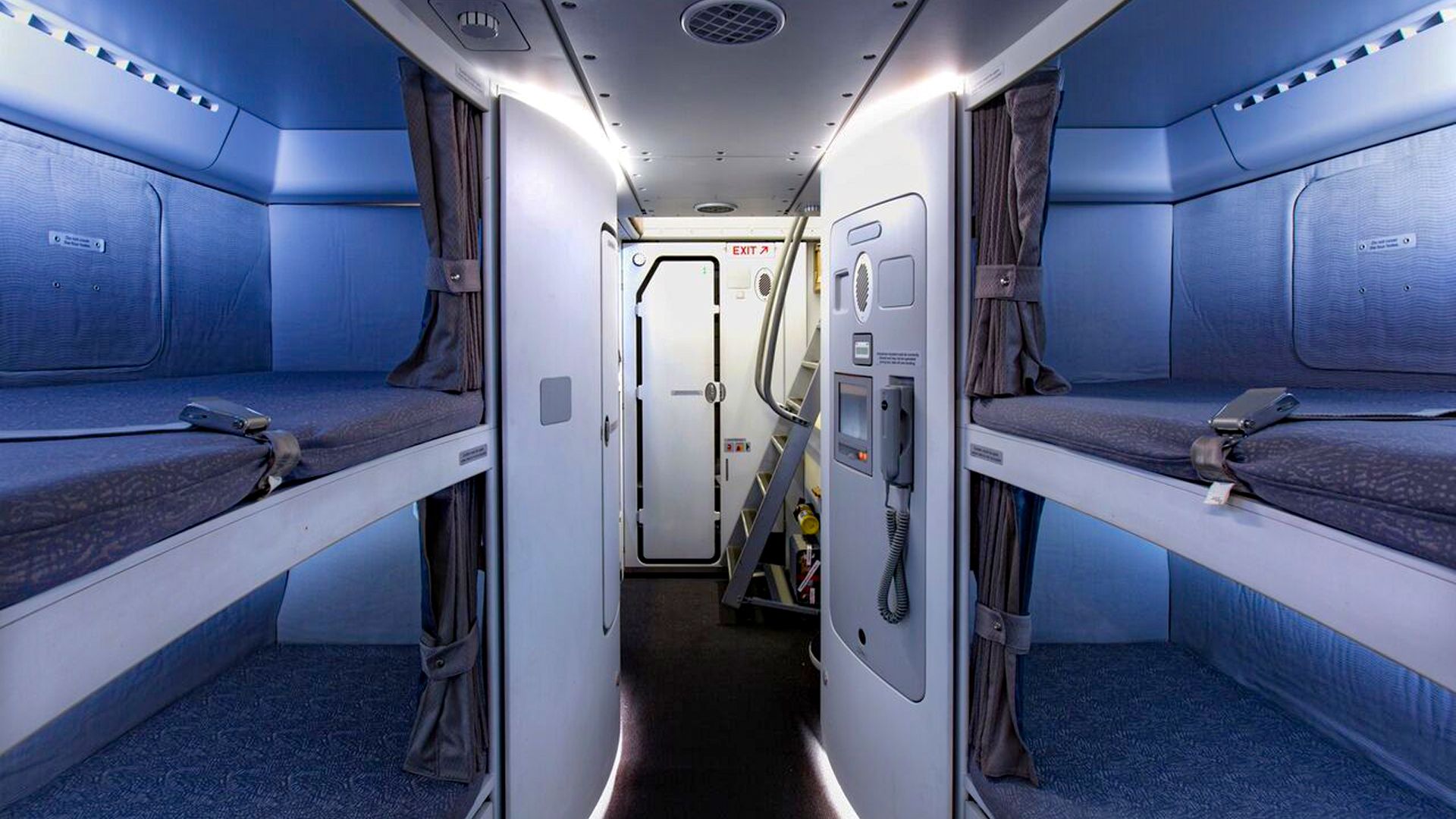
UPDATE: The Airbus A380 features innovative crew rest areas that are crucial for long-haul flights, ensuring cabin personnel remain alert and ready for emergencies. This dedicated space allows crew members to recharge effectively during flights that can last up to 17 hours, according to new insights from Executive Traveller.
The design of the A380 facilitates an efficient rotation of cabin crew, enabling them to provide continuous service while addressing safety concerns. Airlines utilize these spaces to ensure that crew members are not on their feet for the entire flight, which can involve serving more than 400 passengers on ultra-long-haul routes with a team of up to 21 cabin crew and three pilots.
Located on the lowest deck of the aircraft, the crew rest area is often fitted with bunk beds and even private restrooms, providing a sanctuary away from passenger noise and galley traffic. This thoughtful design preserves valuable passenger cabin space while enhancing crew comfort. The compartments are equipped with controlled lighting, ventilation, and charging points, all essential features that promote quick recovery during breaks.
Accessing these crew rest areas is discreet; a simple service door often goes unnoticed by passengers. This intentional camouflage ensures smooth traffic flow while maintaining the privacy and security of the sleeping space. The A380 typically features a 12-berth module that takes up cargo space but is essential for crew welfare.
The crew rest facility is not just a luxury—it’s a necessary component of the aircraft’s safety framework. As such, airlines treat these sleeping quarters as critical compartments, ensuring that the crew on duty is well-rested and ready to respond to any situation that may arise during the flight.
Inside the bunk room, cabin crew members find padded mattresses in individual compartments separated by sound-dampening curtains. Each sleep space is equipped with reading lights, power outlets, and an intercom system, providing a safe and functional environment for rest. Though some may find the space compact and windowless, these areas are essential for ensuring that crew members can recharge and deliver the best service possible.
Pilots have separate rest facilities designed to support deep sleep, typically located at the front of the aircraft. This distinction recognizes the different needs of cabin crew and pilots and is vital for maintaining overall flight safety.
Airlines are now adapting their fleet configurations. British Airways, for example, is implementing upgrades to its A380 fleet that could enhance the crew experience even further. Meanwhile, Emirates has reconfigured pilot rest areas to optimize passenger accommodations while maintaining crew welfare.
As ultra-long-haul flights continue to grow in popularity, the role of these rest areas becomes increasingly vital. With flights lasting several hours, controlled crew rotations ensure that service remains uninterrupted and that the well-being of crew members is prioritized.
The Airbus A380 remains a favorite among both crew and passengers, not just for its size and capacity but also for its thoughtful design that supports efficient operation and crew comfort. As airlines continue to innovate, these crew rest areas will play a key role in enhancing the flying experience for everyone on board.
Stay tuned for more updates on how the aviation industry is evolving to meet the demands of long-haul travel and ensure the comfort and safety of all passengers and crew.