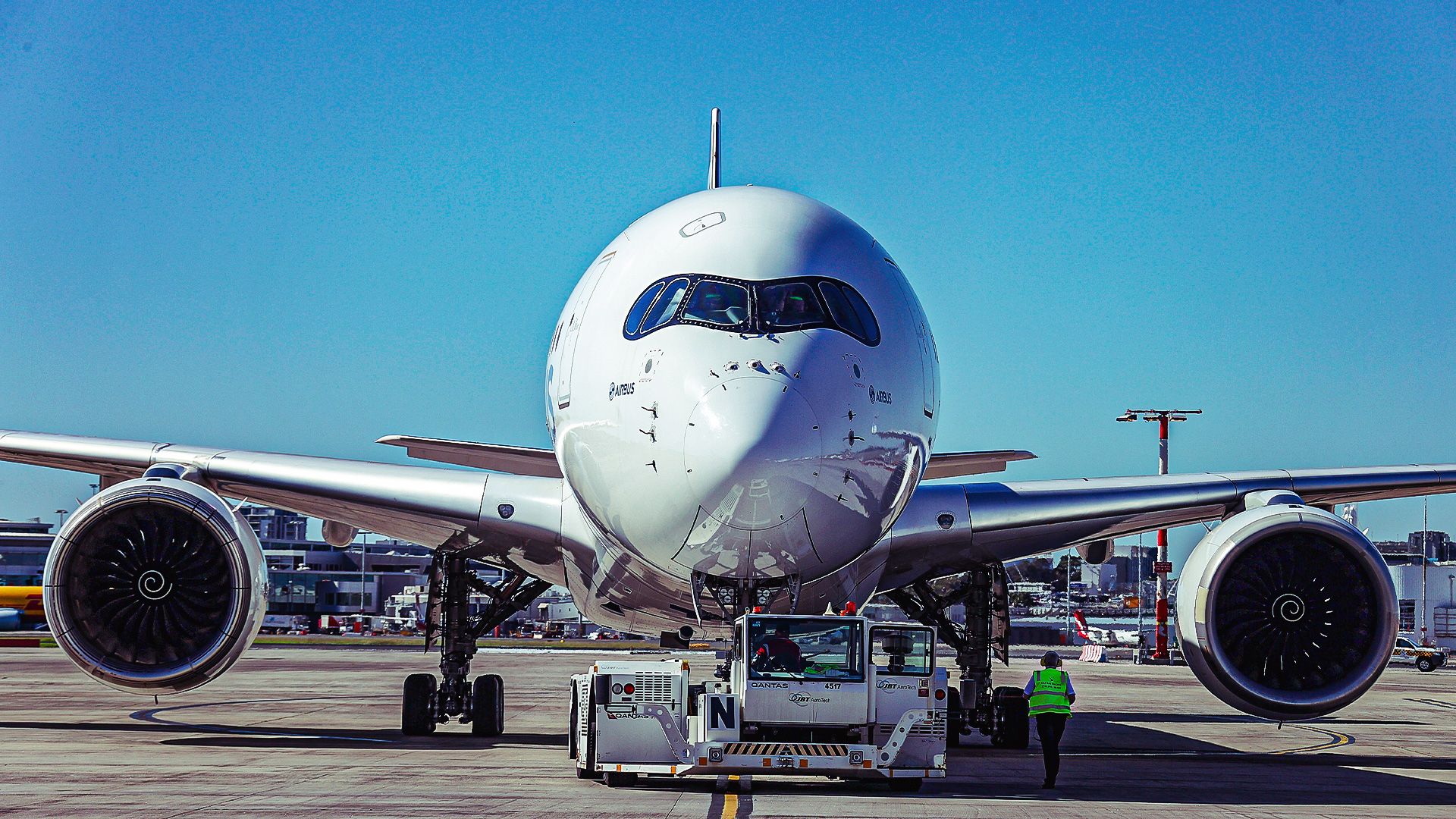
UPDATE: New reports reveal significant differences between the Airbus A350-1000 and its sibling, the A350-900, highlighting the A350-1000’s growing prominence in modern aviation. As airlines worldwide increasingly seek efficiency, the A350-1000 is poised to reshape long-haul travel, boasting enhanced capacity and performance.
The Airbus A350, known for its advanced composite materials and next-generation engines, has been a game-changer since its debut in commercial service. With over 700 A350s delivered and more than 2 million flights completed, it is celebrated for its fuel efficiency and passenger comfort. The A350-1000, introduced in 2018, features a stretched fuselage that allows for an impressive capacity of up to 480 passengers in a one-class configuration, compared to the A350-900’s maximum of 440.
This change is critical for airlines looking to maximize capacity without compromising comfort. The A350-1000 measures approximately 242 feet (73.78 meters) long, compared to the A350-900’s 219 feet (66.8 meters), resulting in a notable increase in usable cabin space. The additional length translates to more seating rows, enhancing airline profitability on long-haul routes.
In terms of power, the A350-1000 is equipped with Rolls-Royce Trent XWB-97 engines, delivering a thrust of 97,000 pounds, surpassing the A350-900’s engines, which provide 87,000 pounds. This increased thrust supports the A350-1000’s maximum takeoff weight of 679,000 lbs (308,000 kgs), ensuring superior performance on extended routes.
Both variants maintain a wingspan of 212 feet 5 inches (64.75 meters) and a height of 56 feet (17.08 meters), allowing them to operate from the same airports and use identical gate infrastructure—an essential factor for airlines managing mixed fleets.
From a passenger perspective, both aircraft feature a similar cabin experience, with modern amenities and high ceilings. However, airlines like French Bee push the A350-1000 to its limits, accommodating up to 480 travelers, while Singapore Airlines opts for a more premium configuration, with just 161 seats across business and premium economy classes.
The A350-1000’s range is another critical point of distinction, with a maximum capability of 9,000 nautical miles (16,670 km), enabling it to connect major cities like New York and Auckland nonstop. In contrast, the A350-900 has a range of 8,500 nautical miles (15,740 km), making both aircraft leaders in the long-haul segment.
Despite the A350-1000’s advancements, the A350-900 remains more popular among airlines, with over 1,081 orders compared to the A350-1000’s 367. Singapore Airlines leads the fleet with 65 A350-900s, while Turkish Airlines is projected to become the largest A350 operator with an order of 82 additional aircraft.
Looking ahead, discussions about a potential A350-2000 variant have emerged. Emirates President Tim Clark expressed interest in a larger model, potentially increasing capacity by 40 to 50 passengers. Should Airbus proceed, the A350-2000 could intensify competition with Boeing’s upcoming 777X.
The developments regarding the A350 family reflect a dynamic shift in the aviation industry, where efficiency and capacity are paramount. As airlines adapt to an evolving landscape, the Airbus A350-1000 is set to play a crucial role in shaping the future of long-haul travel.
Stay tuned for more updates on the evolving landscape of aviation as Airbus continues to innovate and expand its fleet capabilities. Share this article to keep others informed about the latest in air travel technology!