A new rhythm game titled Unbeatable is set to hit the market on December 9, 2025, developed by D-Cell Games and published by Playstack. Available on Windows via Steam for $28, the game combines engaging gameplay with a compelling narrative about rebellion against an oppressive regime that has outlawed music.
At its core, Unbeatable tells the story of a group of young adults, including a twelve-year-old girl named Quaver, who form a band in defiance of an organization known as H.A.R.M. (Harmonics and Resonance Management). The game features two primary modes: a narrative-driven story mode and an Arcade mode focused on skill development through a variety of original songs.
Gameplay Mechanics and Modes
The gameplay mechanics are straightforward, allowing players to stand between two tracks while notes flow in from above and below. Players must hit or dodge these notes in time with the music, with various actions such as holding notes or executing quick button presses adding to the challenge. The game provides customization options for button configurations, accommodating both controller and keyboard users.
In story mode, players embody Beat, a slacker who awakens in a field and is drawn into Quaver’s quest to uncover the fate of her musician mother. This leads them to confront the anti-music enforcers of H.A.R.M. The narrative unfolds through a series of engaging episodes, blending visual novel elements with rhythm gameplay, occasionally shifting into fight sequences where timing is key.
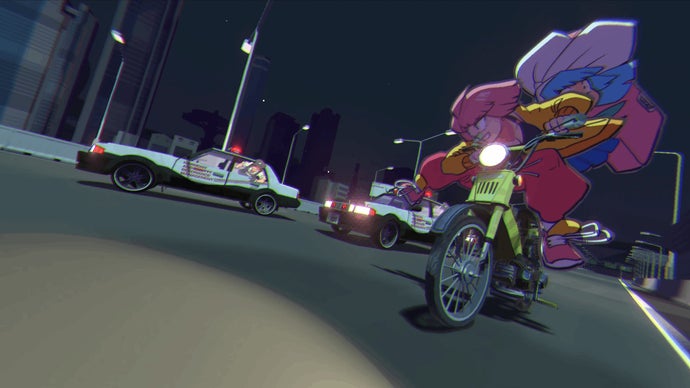
Players will find a mix of pacing throughout the game. After an introductory episode that involves some monotonous tasks, the story picks up with a dramatic prison break. The vibrant art style draws inspiration from anime and zine culture, contributing to a unique aesthetic that enhances the overall experience.
Story Depth and Character Dynamics
While the game excels in its punk-infused storytelling, it occasionally stumbles in narrative cohesion. The mysterious background of H.A.R.M. and Beat remains somewhat ambiguous, leaving players wanting more context. Despite these narrative gaps, the game’s emotional core thrives in its exploration of relationships and self-discovery.
The character dynamics shine through the interactions among the band members. Each character, from the sarcastic Beat to the loudmouthed Clef and awkward Treble, brings a distinct personality to the group. The humor and camaraderie among the characters create engaging moments that resonate with players.
The final chapter culminates in a powerful song that encapsulates the themes of the game, emphasizing the importance of creativity and human connection. This emotional climax is a highlight, providing a satisfying closure to Beat’s journey.
Arcade mode serves as the game’s competitive heart, offering a diverse selection of songs that players can tackle for high scores. The inclusion of a Challenge Board keeps players engaged, presenting cryptic achievements that unlock additional characters and music. The wide variety of genres, from grungy garage rock to ambient electronica, ensures a rich auditory experience.
Despite its shortcomings, Unbeatable captures the essence of youthful rebellion and creativity. The game’s heart and enthusiasm shine through its imperfections, making it a compelling addition to the rhythm game genre. As the release date approaches, anticipation builds for what promises to be a unique musical journey.