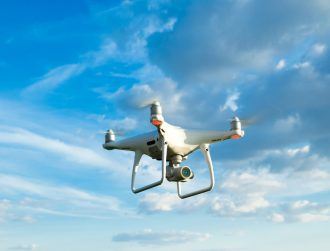
On December 1, 2023, a series of drones approached the flight path of Ukrainian President Volodymyr Zelensky as he traveled over the Irish Sea towards Dublin. While Zelensky and his wife landed safely, the incident highlights the urgent need for effective measures to detect and mitigate coordinated drone threats. This situation raises significant questions regarding both operational protocols and the technological capabilities of Ireland’s defence systems.
An Taoiseach Micheál Martin has dismissed any Russian claims of innocence regarding the incident, underscoring the diplomatic complexities associated with such scenarios. With discussions primarily centered on responsibility, it is critical to examine the technical aspects of drone detection and defence strategies to prevent future threats.
Challenges in Drone Detection
The first major challenge lies in effectively identifying drone presence. Current methods, including radar, radio-frequency scanning, GPS-spoofing, and optical imaging, each have inherent limitations. Often, by the time a drone is detected, it may be too late to respond effectively to an imminent threat. In the case of the December 1 incident, had the drones intended to harm Zelensky’s aircraft, they could have succeeded.
Once a drone is detected, the next challenge involves accurately assessing the threat level it poses. Reports following the incident varied regarding the number and type of drones involved, complicating the determination of which might have been dangerous. If dozens of drones are present, identifying the specific ones that pose a threat becomes paramount.
Understanding the nature of the threat is also crucial. Questions arise regarding whether the drones operated in a coordinated manner, if they were armed, and which targets they might be interested in. Perhaps the most pressing issue is time; security officials must react promptly to potential threats. The effectiveness of the response hinges on how quickly they recognize a danger and assess its severity.
A Multi-Tiered Defence System
The proposed solution for enhancing drone defence capabilities is a hybrid system that integrates human judgement with artificial intelligence (AI). This approach aims to leverage AI’s speed while utilizing human expertise to minimize errors. Traditional detection methods can feed data into machine learning models, enhancing the accuracy of drone location predictions.
In the December 1 incident, reports indicated that the drones violated a no-fly zone and approached a high-value asset, which should have triggered immediate alerts. Implementing a robust early warning system could facilitate the automatic execution of proportional responses, such as jamming communications between the drones and their handlers or deploying drone swarms from nearby naval vessels to intercept suspicious drones.
These drone swarms could use advanced machine learning algorithms to track and redirect threatening drones away from aircraft like Zelensky’s. Should initial measures fail, security personnel equipped with online dashboards can quickly reassess the threat level based on real-time data and expertise. Trained officials could authorize interceptor drones to engage, ensuring actions do not endanger other entities in the vicinity.
While the specifics of the Irish military’s capabilities during the incident remain unclear, it is evident that hybrid systems combining human oversight and AI assistance can lead to prompt and responsible decision-making. Such incidents not only test a nation’s response mechanisms but may also serve as provocations designed to elicit reactions that could escalate tensions politically and diplomatically.
What remains crucial is understanding the timing involved in decision-making processes during incidents like the one on December 1. Collaborative efforts between AI technology and security personnel have the potential to create a more effective defence system against drone threats, ensuring that nations can respond to dangers swiftly and accurately.
Professors Barry O’Sullivan and V S Subrahmanian emphasize the importance of developing these systems to safeguard airspace and protect individuals from potential threats posed by drones. As the landscape of aerial security evolves, integrating human and AI capabilities will be essential for ensuring safety in the skies.