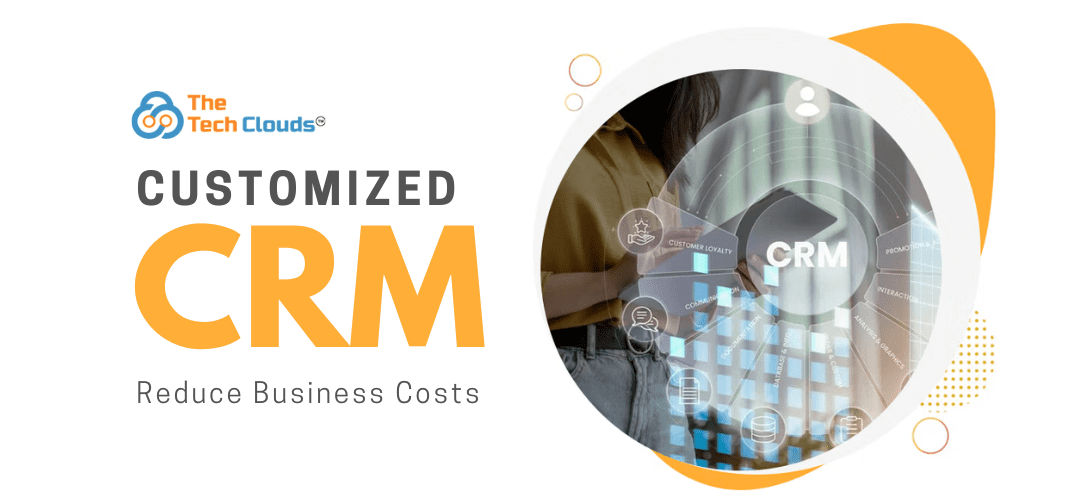
Businesses continuously seek innovative solutions to reduce operational costs while enhancing customer experiences and increasing efficiency. Customized Customer Relationship Management (CRM) software emerges as a powerful tool that not only diminishes functional costs but also drives growth. This advanced technology minimizes paperwork associated with customer details and employee wages, allowing businesses to focus on strategic initiatives.
Unlike off-the-shelf CRM solutions, which offer broad functionality, custom CRM development tailors systems to meet specific organizational needs. These personalized systems optimize sales processes and boost customer engagement. Reports indicate that businesses experience an average return on investment (ROI) of 8.71 for every dollar spent on customized CRM solutions.
Understanding Customized CRM Software
Custom CRM software like Bigin, is designed exclusively for a specific business, reflecting its unique requirements, goals, and industry standards. This bespoke approach contrasts with generic CRM systems that come with fixed features. Customized solutions often include personalized dashboards, automated reports, and seamless integration with existing tools, such as Enterprise Resource Planning (ERP) and accounting software. Companies increasingly choose customized solutions to enhance user adoption and efficiency without incurring costs for unnecessary features.
Cost Savings from Custom CRM Solutions
Custom CRM solutions significantly reduce costs by aligning technology with real business processes. Here are key ways these platforms help control expenses and maximize ROI:
One major advantage is the elimination of licensing costs. Off-the-shelf CRM systems typically operate on a subscription basis, charging per user or feature. Custom CRM systems allow businesses to pay only for what they truly use, resulting in lower long-term software expenses and sustained financial benefits.
Additionally, seamless system integration is crucial. Many off-the-shelf CRMs struggle to integrate with existing software, leading to operational inefficiencies and data silos. Customized CRMs, however, integrate smoothly with current tools, minimizing manual synchronization and preventing costly fixes.
Automated performance reporting further enhances efficiency. Project managers often spend hours compiling performance metrics in spreadsheets. Custom CRM solutions generate real-time, automated reports aligned with business objectives. This not only saves time but also reduces errors, facilitating quicker strategic decisions.
Furthermore, reliance on external vendors decreases with custom CRM systems. Businesses using generic solutions often depend on third-party vendors for customization and support, driving up costs. Custom CRMs empower organizations to manage their systems independently, reducing support costs and mitigating risks associated with vendor lock-in.
Scalability is another significant benefit. Custom CRM solutions adapt as businesses grow, allowing companies to add users, features, or workflows without incurring proportional costs. This flexibility eliminates the need for expensive platform migrations during expansion phases.
The ROI from custom CRM platforms is noteworthy. These systems streamline workflows without unnecessary features, ensuring that tools support efficient task execution. A study revealed a 50% increase in sales and a 28% rise in closed deals, with an impressive 45% ROI compared to generic systems.
Moreover, advanced data security features are essential. Custom CRMs implement role-based access, encryption, and compliance safeguards, protecting sensitive customer and business information. This reduces the risk of data breaches and potential legal penalties, safeguarding brand reputation.
Investing in custom CRM development offers businesses strategic advantages, enabling personalized customer interactions through accurate insights. Customers benefit from improved responsiveness and targeted communication, leading to higher satisfaction and retention rates. An enhanced customer experience directly contributes to revenue growth and lowers acquisition costs.
Customization also provides a competitive edge. A reputable custom CRM development company will ensure that the system reflects unique operational strategies and supports differentiated workflows. This agility enables businesses to respond swiftly to market changes, helping them outperform competitors.
Furthermore, a custom CRM serves as a unified source of truth for customer data. Centralized records enhance accessibility, accuracy, and collaboration across teams, saving time and improving overall efficiency.
Finally, AI-driven forecasting within custom CRM systems analyzes historical data and business processes for accurate predictions. This technology aids in better business planning and helps avoid overstaffing, ultimately driving long-term savings.
In conclusion, a custom CRM solution represents a strategic investment for businesses looking to cut costs while enhancing operational efficiency. Unlike rigid prebuilt systems, customized solutions are designed to integrate seamlessly with existing workflows, scale with growth, and improve overall effectiveness. By embracing tailored CRM systems, organizations can support smarter operations and achieve sustained success.