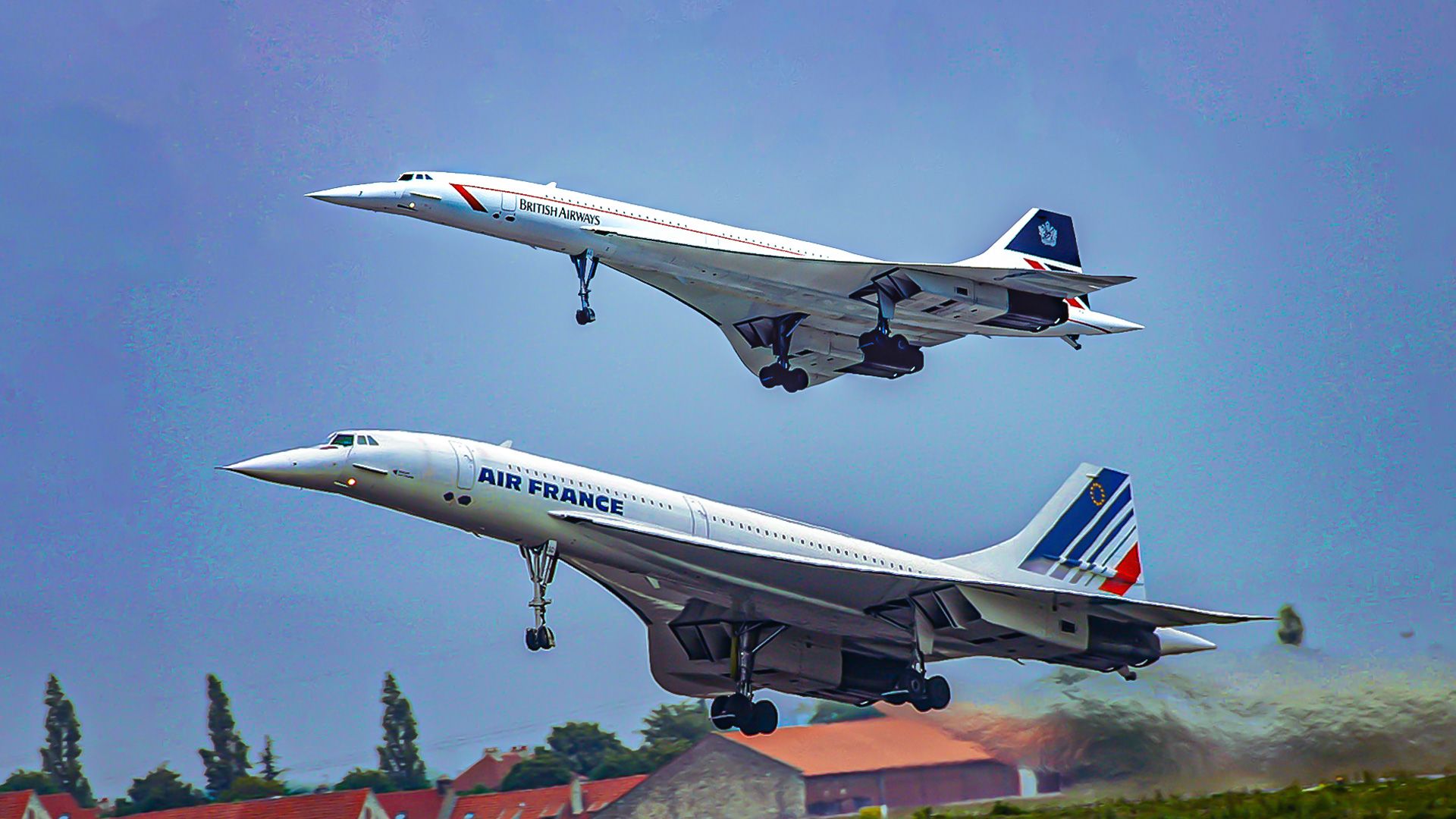
As the world reflects on the legacy of the Concorde, it is notable that both British Airways and Air France operated seven Concordes each, one more than originally ordered. This milestone marks 50 years since the aircraft entered service, which was not without its complexities. While the primary routes for Concorde were from London and Paris to New York, its inaugural revenue-generating flights took different paths, with British Airways flying to Bahrain and Air France to Rio de Janeiro via Senegal.
The Origins of Concorde’s Fleet Size
The Concorde project was a prestigious national initiative, a collaboration between the United Kingdom and France that began in the early 1960s. In 1963, the UK’s national carrier, BOAC, ordered six Concordes, later confirming a total of five in 1972. Concurrently, Air France placed a similar order, which was confirmed for four aircraft in the same year. Although other international orders were canceled, production continued, resulting in a total of 20 aircraft, including prototypes and pre-production models.
Ultimately, only 12 Concordes were contracted for by British Airways and Air France, with four additional aircraft produced as “white tails” due to canceled orders. These extra planes were distributed between the two airlines, bringing their total to seven each. The remaining two Concordes were not utilized in commercial service but were repurposed for spare parts and development.
Despite the impressive engineering of Concorde, the economics of operating the aircraft were challenging. The capital expenses associated with its development and maintenance meant that neither airline could justify operating eight aircraft. Instead, British Airways and Air France maintained an operational fleet of five, allowing for one or two aircraft to be in maintenance at any given time.
Operational Challenges and Global Interest
Economic viability was a significant concern throughout the Concorde’s service life. Even with government support, the high operational costs made profitability elusive. The aircraft was famously sold to British Airways for £1 each in 1984, while Air France acquired its planes for a mere Franc. This financial arrangement underscores the necessity of national subsidies for the operation of Concorde.
Interest in Concorde extended beyond the UK and France, with several airlines placing nonbinding orders. These included major carriers such as Pan Am, American Airlines, and Japan Airlines. However, factors such as the crash of the Soviet Tu-144, environmental regulations, and increasing costs led many to cancel their commitments. Ultimately, US-based airlines had options for 38 Concordes, but none proceeded with acquisition.
Interestingly, Iran Air came close to finalizing an order for the supersonic aircraft. The Shah of Iran viewed Concorde as a symbol of national modernization and intended to use it for routes between Tehran and major cities like London and New York. However, following the Iranian Revolution in 1979, the orders were canceled in 1980, marking a significant missed opportunity for the program.
The Concorde represents a unique chapter in aviation history, characterized not only by its technical achievements but also by its geopolitical significance. The 1962 Anglo-French Concorde Treaty symbolized a united European effort to maintain competitiveness in aerospace, amidst fears of being overshadowed by American advancements.
While the Concorde may not have succeeded as a conventional commercial project, its legacy lies in its role as a collaborative endeavor that demonstrated the potential for European states to overcome historical rivalries. The engineering marvel paved the way for future cooperation in the aerospace sector, ultimately leading to the formation of Airbus and setting the stage for multinational projects in Europe.
In evaluating the Concorde’s impact, it is essential to consider it through a broader lens. The aircraft not only served as a testament to advanced engineering but also as a symbol of national pride and international collaboration. Its legacy continues to influence the aviation industry today, as countries work together on ambitious projects that transcend borders.