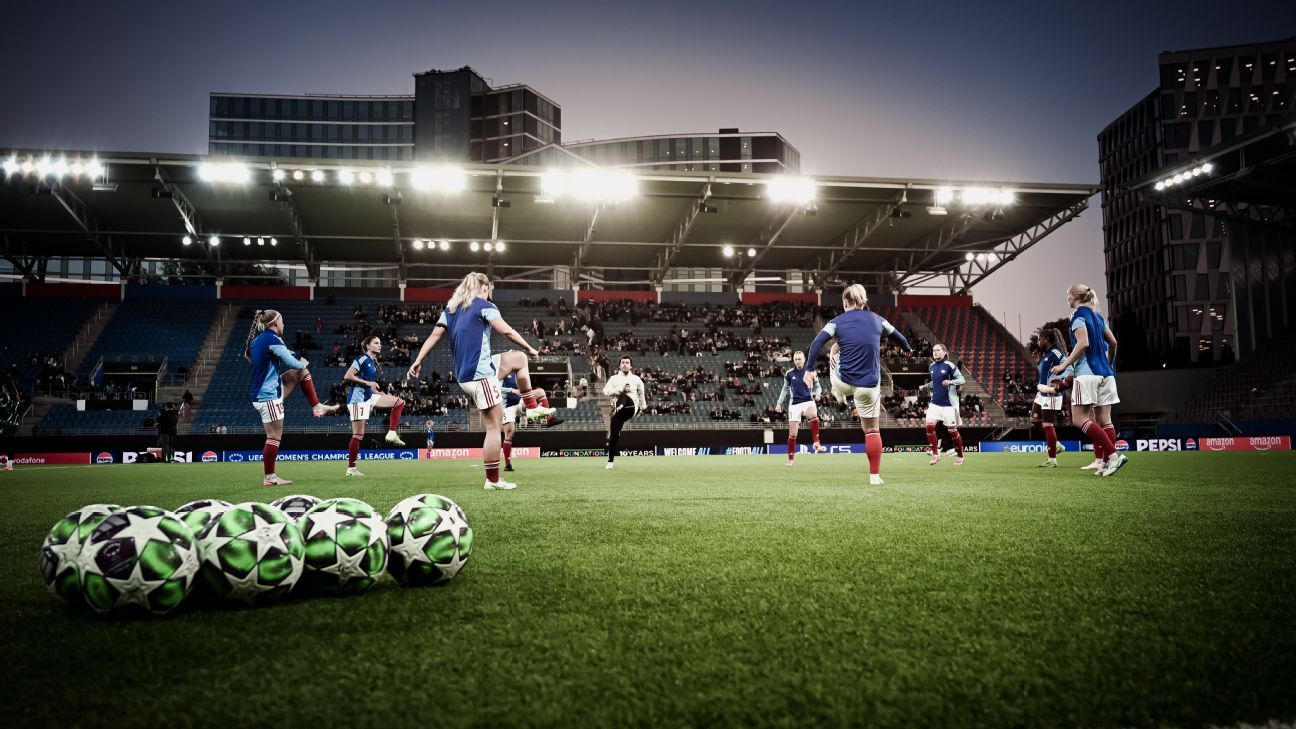
In a remarkable display of growth, Vålerenga secured a draw against Switzerland’s St. Pölten in the UEFA Women’s Champions League on March 13, 2024. The match, which ended in a 2-2 tie at the Intility Arena in Oslo, showcased not only the team’s competitive spirit but also the evolving landscape of women’s football in Norway.
Community Support and Team Development
A standout moment came from Agnes Viljugrein, who scored the opening goal while simultaneously leading the dedicated fan section known as “Østblokka.” By day, Viljugrein serves as a member of the Norwegian parliament, but on game days, she passionately directs cheers and songs from the stands, turning her back to the pitch to cultivate an engaging atmosphere.
“Until a few years ago, we didn’t even need somebody to do that job. There wasn’t even a point because there was barely anyone watching the games,” Viljugrein told ESPN. “Now, we’re growing and building a community that really follows the women’s team.”
This growth is mirrored in the team’s performance, as Vålerenga has now qualified for the UWCL’s group stage for two consecutive seasons. Under the leadership of CEO Harriet Rudd, the club has strategically aimed for this milestone since 2021.
“It’s a milestone for us, and financially it’s also very important,” Rudd stated. “Of course, the financial gain isn’t that large, but strategically and for the future development of the club, it’s super important.”
Strategic Recruitment and Competition
Sporting director Steinar Pedersen, who joined Vålerenga in 2022, has emphasized the importance of competing at a high level. He noted that as the women’s game becomes more competitive, with four players transferred for fees exceeding $1 million in 2025 alone, the club must adapt its recruitment strategy.
“European competition is really important. The level the Norwegian league has reached traditionally has been alright, but we still have a lot to do,” Pedersen remarked. “We know players are coming to Norway to use Vålerenga as a stepping stone into bigger leagues, and we have to use that, combined with producing young talent that’s already in the country.”
This year marks a significant change in the UWCL, expanding the number of teams in the league phase from 16 to 18. From 2025 to 2027, participating clubs will share €18.2 million in prize money, which will increase to €24.1 million from 2027 to 2030. Such funds could significantly impact the future of clubs like Vålerenga.
Pedersen is keen on collaborating with larger European clubs to optimize resource use. “We have met with those big clubs to discuss how to prepare players for higher-level football,” he said. “Of course, every young player dreams of playing for big clubs, but it takes a lot of hard work to get there.”
Midfielder Anna Tvedten, who joined Vålerenga from Avaldsnes in 2021, highlighted the club’s ambition to compete on European soil. She scored from distance to put Vålerenga ahead before the draw against St. Pölten. “We’ve shown we can win games at that level and that we are continuing to develop,” Tvedten explained.
Achievements and Future Aspirations
Under the guidance of manager Nils Lexerød, Vålerenga has clinched two Norwegian Toppserien titles in the past three seasons, alongside winning the Norwegian Women’s Cup in 2024. Notably, they achieved their first-ever Champions League away victory with a 1-0 win over Italian giants AS Roma earlier this month.
“There’s always a chance of producing these kinds of results when facing opponents that are bigger than you,” Pedersen noted. “For us, it is about getting a lot of good quality and results out of smaller budgets.”
While Vålerenga faces competition from clubs with established global fanbases, the unwavering support from the Østblokka sets them apart. “When I started to become a football fan, I realized going to a match was like coming home,” Viljugrein reflected. “The community just felt right for me.”
As the women’s game rapidly evolves, concerns about maintaining competitive parity exist. Viljugrein expressed apprehension about whether Norwegian clubs can keep pace with the increasing financial power in football. Yet, she remains optimistic about the potential for growth and recognition of the women’s team.
“It would be amazing to qualify for the Champions League quarterfinals, but I don’t dare to dream about it yet,” she admitted. “I hope that, if it really happens, we can show everybody what a big support culture of a women’s team actually can be.”
The upcoming UWCL final, set to be held in Oslo at Ullevaal Stadion in May 2025, represents a significant opportunity for Vålerenga. While the path to that stage remains challenging, the club’s recent achievements signal a bright future for women’s football in Norway.