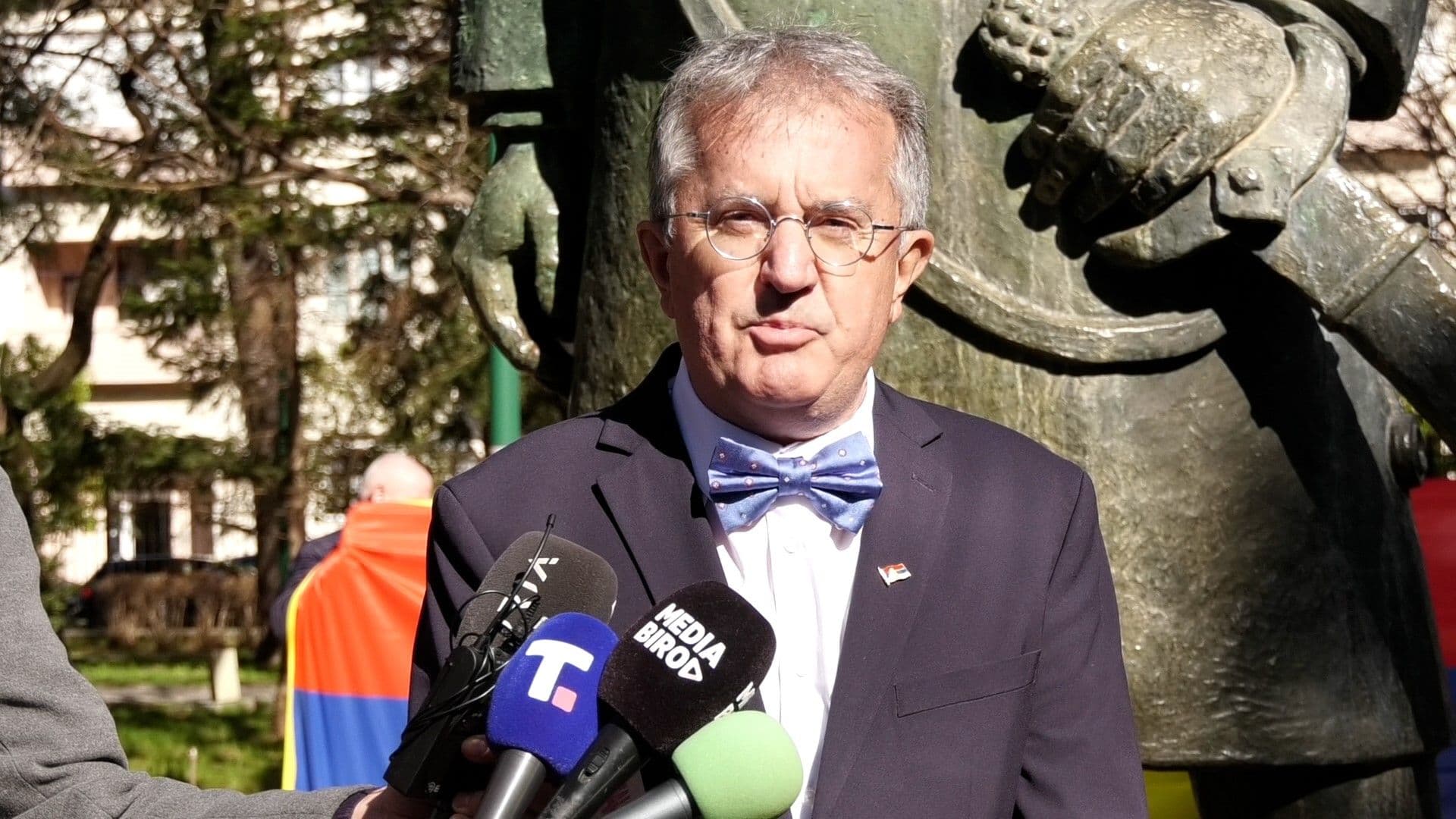
Political tensions escalated between Serbia and Montenegro following remarks by Serbian President Aleksandar Vucic regarding the European Union (EU) membership of Western Balkan countries. Vucic’s comments, made in anticipation of meetings with top EU officials in Brussels, have drawn sharp criticism and concern from Montenegrin leaders.
In a statement reflecting a strong regional ambition, Vucic proposed that all nations in the Western Balkans should join the EU simultaneously. He described this approach as vital for both the future of the region and the broader European community. “If someone is left out, what will you do with those countries? This is not just about the future of the region, but about the future of Europe,” Vucic stated, emphasizing the importance of collective accession.
Milojko Spajic, the Montenegrin Prime Minister and head of the ruling Europe Now Movement, responded quickly to Vucic’s assertion. He agreed that EU membership should be the ultimate goal for the Western Balkans but insisted that Montenegro plans to await its turn in the EU by 2028. Spajic urged Vucic to expedite the integration process for other regional candidates.
Vucic reaffirmed his proposal during discussions with Ursula von der Leyen, President of the European Commission, and Antonio Costa, President of the European Council. He expressed confusion about Spajic’s urgency in responding to his proposal, suggesting that it lacked malicious intent. He remarked, “I would like to have heard Spajic’s reaction on many more important issues,” referring to broader concerns affecting citizens in Montenegro.
As Vucic continued to advocate for regional unity in EU accession, he criticized what he perceived as Croatia’s antagonistic stance towards Serbia. He asserted that Croatia operates behind closed doors to undermine Serbia’s interests, stating, “I will not flatter them; I refuse to be humiliated in Podgorica.”
The political landscape further intensified as reactions poured in from various Montenegrin political figures. Miodrag Laković, a member of Spajic’s Europe Now Movement, stated that Serbia would have to engage with Montenegro as an EU member in due course. In contrast, Ivan Vujovic, leader of the Social Democratic Party, accused Vucic of masking his true intentions regarding Montenegro’s EU aspirations, labelling his proposal as a desperate attempt to delay Montenegro’s accession.
Davor Đenero, a Croatian analyst, expressed disbelief at Vucic’s comments, recalling that Serbia had previously sought to delay Croatia’s EU accession. He emphasized that while Croatia has been an EU member for over a decade, Serbia has only made limited progress in its negotiations.
The current political climate in Montenegro poses significant challenges, particularly with upcoming parliamentary elections that could lead to a shift in administration. Analysts warn that a new government may not support the EU membership process, potentially jeopardizing Montenegro’s progress.
A cohesive and pro-European coalition is deemed essential for Montenegro to navigate these challenges successfully. Đenero cautioned that reliance on existing political structures dominated by those loyal to the “Serbian world” could hinder Montenegro’s EU ambitions.
In light of these developments, the path to EU accession remains fraught with complexities. The actions of both Vucic and Spajic will heavily influence the political future of the region and its relationship with the European Union. As the dialogue continues, stakeholders must remain vigilant in addressing the underlying tensions that threaten to derail progress towards integration.