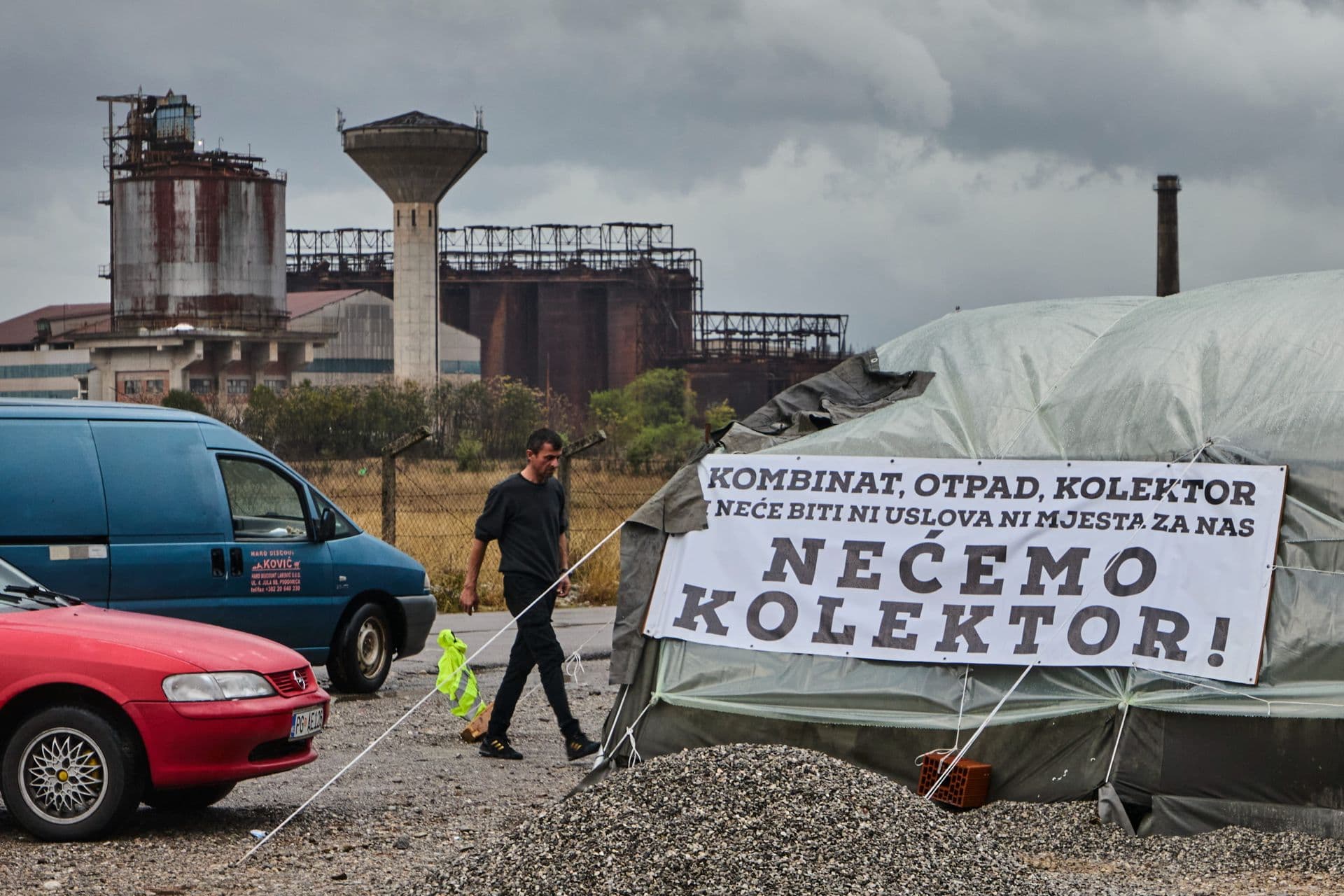
Residents in the Montenegrin village of Botun are protesting against the proposed construction of a wastewater treatment plant, a project that has drawn significant public attention and could impact local governance and European Union funding. The plant is intended to address serious environmental concerns in the capital city, Podgorica, which has been grappling with an outdated wastewater system for years.
The issue has escalated into a potential political crisis, with protests taking place for nearly a month. Local citizens argue that the new collector system would pose serious health risks and harm the environment. In response, the Zeta municipality has scheduled a referendum for December 14, 2023, to gauge local support for the project.
Jagoš Bećirović, a protest leader, stated, “We will determine our next steps after the citizens of Zeta express their views on whether they support the collector at this location.” Approximately 12,747 residents are eligible to vote in this non-binding referendum, which does not carry legal weight for Podgorica’s administration.
The government of Montenegro has made assurances to local residents. During a meeting with Prime Minister Milojko Spajić and Podgorica’s Mayor Saša Mujović, residents received guarantees regarding environmental safeguards. Mujović expressed confidence in the project, stating, “I genuinely wish for reason to prevail, as I consider the government’s offer to be exceptionally fair.” He emphasized that the facility would not be a pollutant and that public health would not be jeopardized.
The proposed plant in Botun represents the largest environmental project supported by the European Union in Montenegro, with nearly €33 million allocated in non-repayable funds for the new sewage system and collector. This funding covers over 40 percent of the total investment, complemented by a loan from Germany’s KfW Development Bank.
Montenegro has committed to the EU to establish a total of 29 wastewater treatment plants by 2035, ensuring that 95 percent of its population is connected to a sewage system. The existing facility in Podgorica was constructed in 1978 and was designed to serve only 55,000 residents. However, according to the 2023 census, the city now has nearly 180,000 residents, making the urgent need for updated infrastructure evident.
Political tensions have intensified as leaders from the ruling Democratic People’s Party express their opposition to the construction. Milan Knežević, the party leader, has threatened to withdraw from local government if construction begins. He stated that his party would leave the Government of Montenegro if law enforcement uses force against protesters. The opposition parties, including the SNP and local officials from the Democratic Montenegro and New Serbian Democracy, have also voiced their disapproval of the plant’s construction in Botun.
The situation has led to speculation that the protests may be a façade, with political leaders potentially using the concerns of a few hundred residents who have lived in an area contaminated by red sludge for decades. They fear that the new collector could exacerbate their health issues, while politicians may be leveraging the situation for their own agendas.
As the December referendum approaches, the outcome could significantly influence both local governance and the future of environmental projects in Montenegro. Failure to commence construction by the end of the year could result in a financial loss of around €100 million for Podgorica, jeopardizing the city’s ability to meet EU environmental standards and potentially delaying further negotiations with the European Union. The coming weeks will be crucial in determining the fate of this contentious project and the broader implications for Montenegrin environmental policy.