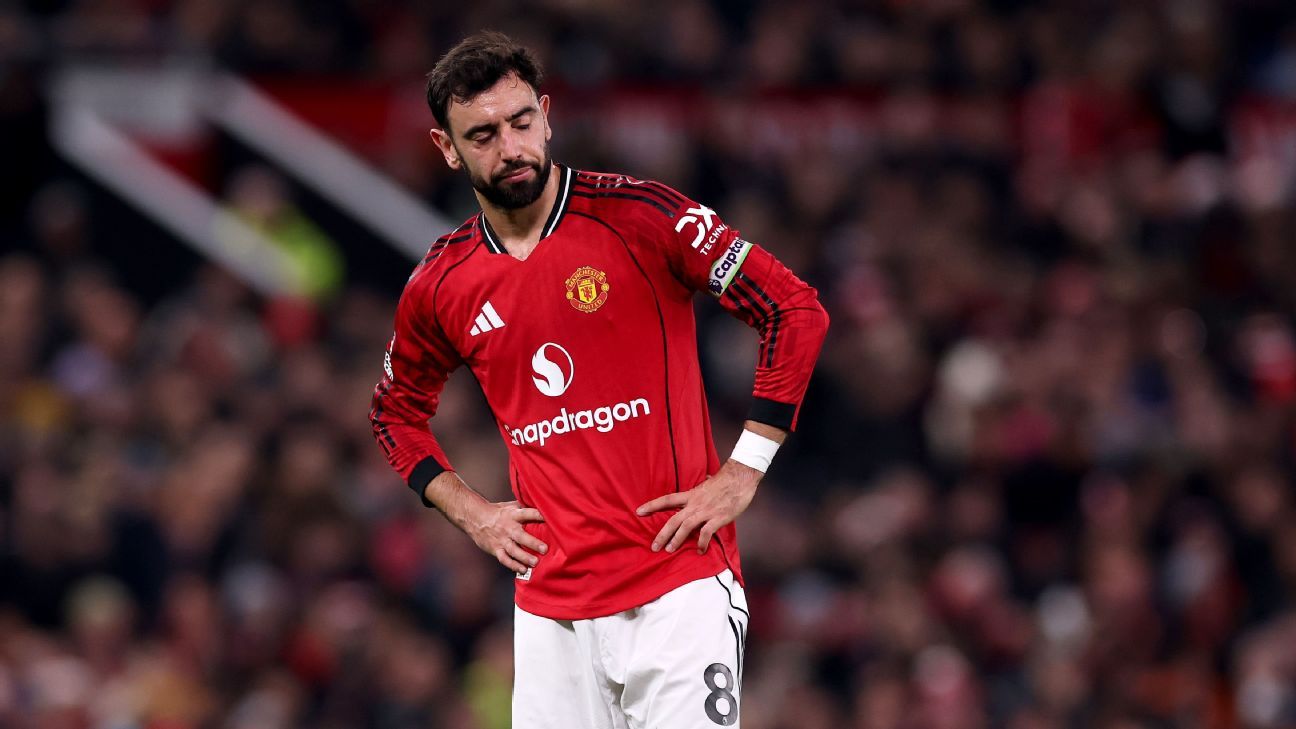
Bruno Fernandes, the captain of Manchester United, recently expressed his disappointment regarding the club’s willingness to consider a transfer deal with Al Hilal. In an interview with Canal 11, the media channel owned by the Portuguese Football Federation, Fernandes revealed his belief that the club’s readiness to offload him reflected a misunderstanding of his contributions.
At the end of the previous season, United faced significant challenges, finishing 15th in the Premier League and missing out on European competition. Reports indicated that Al Hilal was prepared to offer a transfer fee of approximately £100 million, along with lucrative wages nearing £750,000 per week for the Portuguese midfielder. The decision to remain was ultimately left to Fernandes, as the club navigated its financial constraints.
While it remains uncertain whether United would have benefitted from selling Fernandes, his comments suggest a disconnect from the broader realities of team dynamics. The captain stated, “From the club I felt it was, ‘If you go, it’s not so bad for us.’ It hurts me a bit. More than hurting me, it makes me sad.” Fernandes perceives the club’s willingness to listen to offers as a rejection of his significance to the team’s history and performance.
Despite his frustrations, Fernandes, who has been a pivotal figure for United since joining from Sporting Lisbon in January 2020, has continued to deliver impressive performances. His recent spectacular free-kick goal in a 4-4 draw against Bournemouth highlighted his ongoing impact. Yet, he may need to consider that clubs often thrive after parting ways with star players.
Historically, Manchester United has seen the departure of notable figures such as David Beckham, Ruud van Nistelrooy, and Eric Cantona, who left the club only to be succeeded by players who contributed to subsequent successes in the Premier League and Champions League. Fernandes has scored 103 goals and provided 93 assists across 307 appearances, but his exit could have opened opportunities for new talent and financial flexibility.
With the potential £100 million transfer fee, United could have pursued midfield reinforcements that the team desperately needs. The likes of Brighton’s Moisés Caicedo or Southampton’s Romeo Lavia could have strengthened the squad and allowed Fernandes to occupy a more suitable role, rather than being utilized as a deep-lying midfielder.
Manchester United’s decision-makers, including CEO Omar Berrada and director of football Jason Wilcox, might have taken a more decisive approach by accepting Al Hilal’s offer. Liverpool faced a similar choice when accepting a £146 million bid for Philippe Coutinho, which allowed them to reinvest in players like Sadio Mané and Virgil van Dijk, ultimately leading to significant triumphs under manager Jürgen Klopp.
Fernandes’ choice to remain at Old Trafford may be appreciated by many fans, but it also prevents the club from exploring the potential benefits of a significant reinvestment. As he continues to be a central figure, he might reflect on the broader implications of his situation. The club’s willingness to explore transfer options was likely a strategic move aimed at long-term stability and success, a perspective that Fernandes seems to overlook.
In the coming months, Manchester United will need to address their midfield challenges and consider how to best utilize their resources moving forward. Whether Fernandes remains a crucial part of that equation or not, the landscape of football continues to evolve, and clubs must adapt to thrive.