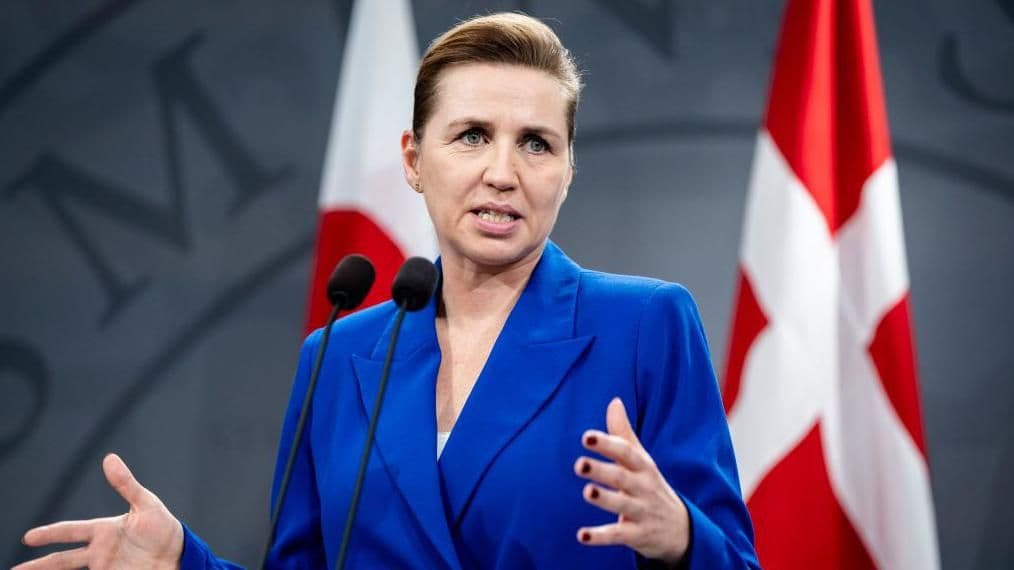
Danish Prime Minister Mete Frederiksen has issued a stark warning regarding the future of NATO, stating that if U.S. President Donald Trump were to invade Greenland, it would signify the end of the alliance. This statement follows Trump’s recent escalations regarding the autonomous Danish territory in the Arctic, which he has previously expressed interest in acquiring. Frederiksen emphasized the seriousness of Trump’s remarks during an interview with Danish television station TV2.
In her comments, Frederiksen noted, “If the United States decides to militarily attack another NATO member, then everything ends, including NATO, and therefore the security established since the end of World War II.” This declaration underscores the potential ramifications of any military action against a member state of the alliance, highlighting the fragile nature of international agreements in times of geopolitical tension.
On March 15, 2024, the U.S. Congress discussed ways to limit Trump’s military authority amid growing concerns about his approach to international relations. The Prime Minister of Greenland responded to Trump’s claims by asserting that there are “no more fantasies about annexation.” This reflects a growing discontent with Trump’s rhetoric surrounding Greenland, which, despite its self-governing status, remains part of Denmark and thus under the NATO umbrella.
The situation escalated as Trump reiterated his interest in acquiring the mineral-rich island, describing it as a “strategic necessity.” He has not ruled out the use of force or economic pressure to achieve this goal. “We will deal with Greenland in about two months, but let’s talk about it in 20 days,” Trump stated, leaving many to wonder what actions might follow.
This alarming rhetoric has sparked fear across Europe about the possibility of Washington attempting to annex Greenland. Following recent military actions in Venezuela, including the detention of President Nicolás Maduro, many governments are expressing their concerns about the respect for international law and the territorial integrity of states.
Such developments pose significant questions about the future of NATO and the global balance of power. As tensions rise, leaders from various nations are calling for a reaffirmation of international norms to ensure peace and stability. The potential for conflict over Greenland not only threatens diplomatic relations but also raises the stakes for global security in an increasingly unpredictable geopolitical landscape.
Frederiksen’s strong stance is a clear signal of Denmark’s commitment to maintaining its sovereignty while navigating the complex dynamics of international relations under the Trump administration. The world now watches closely as the situation continues to unfold, urging all parties to prioritize dialogue and diplomacy over military confrontation.