
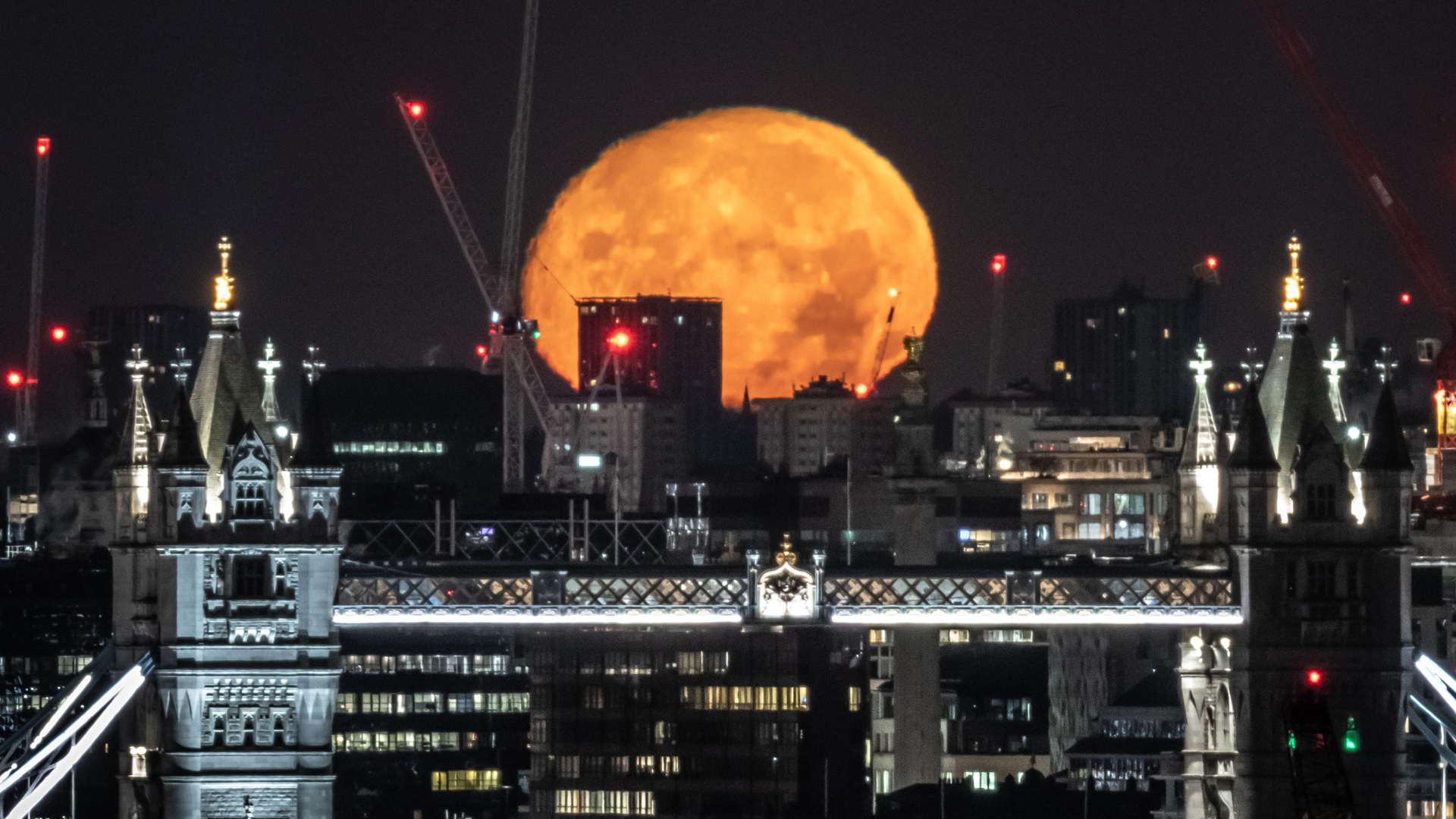
A stunning astronomical event is set to take place tonight as the first supermoon of 2026 brightens the night sky. This full moon, which is often referred to as a supermoon, appears larger and brighter than usual due to its proximity to Earth. Enthusiasts and casual observers alike are encouraged to take advantage of this opportunity for stargazing.
Understanding the Supermoon Phenomenon
A supermoon occurs when the full moon coincides with its closest approach to Earth, known as lunar perigee. The Royal Greenwich Observatory explains that the Moon’s orbit is not a perfect circle, causing varying distances between the Earth and the Moon. When the Moon is at its nearest point, it can appear up to 14% larger and 30% brighter than when it is at its furthest, or apogee.
This year, three supermoons are scheduled to occur: on January 3, 2026, November 24, 2026, and December 24, 2026. The December supermoon is anticipated to be particularly impressive, as the Moon will be approximately 221,000 miles from Earth—significantly closer than its average distance of 238,000 miles.
The Wolf Moon and Other Lunar Names
Tonight’s supermoon is also known as the Wolf Moon, a name popularized by The Old Farmer’s Almanac. This moniker is associated with the time of year when wolves were commonly heard howling in hunger during the long winter nights. Each month has its own traditional name for the full moon, reflecting various seasonal changes. Other names for the moons in 2026 include the Snow Moon in February, the Pink Moon in April, and the Cold Moon in December.
Tips for Viewing and Photographing the Supermoon
To make the most of tonight’s lunar spectacle, observers can follow several practical tips. First, ensure a clear view of the sky by checking local weather forecasts for cloud cover. Areas with minimal light pollution, such as countryside locations or elevated hills, will provide the best viewing conditions.
For those looking to capture stunning photographs of the supermoon, utilizing a tripod for your camera or smartphone can significantly enhance image clarity. Small movements can lead to blurred images, particularly when zooming in on the Moon. Many smartphones, especially iPhones, offer a “night mode” that activates when the device is steady for longer exposure times.
Additionally, experiencing the moonrise just after sunset or the moonset just before sunrise can create an optical illusion that makes the Moon appear larger relative to the landscape. The Royal Greenwich Observatory notes that this effect is due to our brain misperceiving the dome of the sky, thereby projecting objects near the horizon as larger than they actually are.
As excitement builds for this celestial event, observers are reminded to dress warmly, as winter temperatures can be quite chilly during nighttime outings. With the right preparation, tonight’s supermoon is sure to be a memorable highlight for stargazers around the world.


