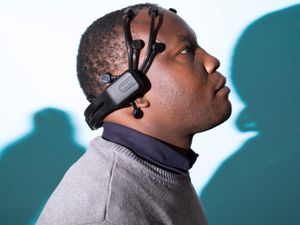
A groundbreaking AI-powered headset designed to predict epileptic seizures has been developed by researchers at Glasgow Caledonian University in Scotland. This innovative wearable device can provide warnings up to several minutes before a seizure occurs, offering vital time for users and their families to take precautions. Currently, no such device exists, making this development a potential game-changer in the management of epilepsy.
The headset works by analyzing brainwaves and heart functions to detect patterns that indicate an impending seizure. This advanced technology aims to empower individuals living with epilepsy, allowing them to avoid secondary injuries that can result from seizures. With hundreds of thousands of people in the UK alone affected by epilepsy, along with millions worldwide, the impact of this device could be substantial.
Professor Hadi Larijani, who leads the research team, expressed optimism about the headset’s potential. “Providing even a few minutes’ warning could be life-changing,” he stated. “Our goal is to empower patients and families with time to act to stay safe and live more independently.” The team envisions a discreet, wireless design that resembles a cap, differentiating it from existing tools.
Innovative Technology Behind the Headset
The researchers utilized extensive data to train the AI system, drawing from thousands of hours of electroencephalography (EEG) and electrocardiography (ECG) recordings. A custom-made “phantom head” was also employed to simulate real user conditions, enabling the AI to learn to identify the subtle electrical and physiological signals that precede a seizure.
Remarkably, the AI boasts an accuracy of up to 95% in predicting seizures. It can even display its confidence levels regarding the likelihood of an upcoming event. Professor Larijani emphasized the importance of this feature, stating, “For families affected by epilepsy, even a brief warning means they can prevent injuries and reduce fear. That is the true measure of success for us.”
As the team continues to refine the design, they aim to create a model suitable for children. Their initial prototypes have relied on third-party hardware, but future plans include developing proprietary models to enhance functionality and user experience.
Future Prospects and Regulatory Challenges
While the research team has made significant strides, bringing this innovative headset to market will require navigating stringent regulatory processes. Professor Larijani noted, “The most regulated things are medical devices. It takes time to get through the hurdles.” Initial feasibility testing on both software and hardware aspects has been completed, and the team is now focusing on preparing a more commercially viable product.
Support for this ambitious project has been bolstered by recent funding from UK Research and Innovation through its £9 million Proof of Concept programme. This financial backing will be crucial as the team looks to accelerate the development and eventual accreditation process for medical devices.
The potential availability of this AI-powered headset could dramatically alter the landscape of epilepsy management, providing a beacon of hope for those affected by this condition. The Glasgow Caledonian University team remains dedicated to their mission of improving the quality of life for individuals with epilepsy, and their ongoing work holds promise for a safer, more independent future.