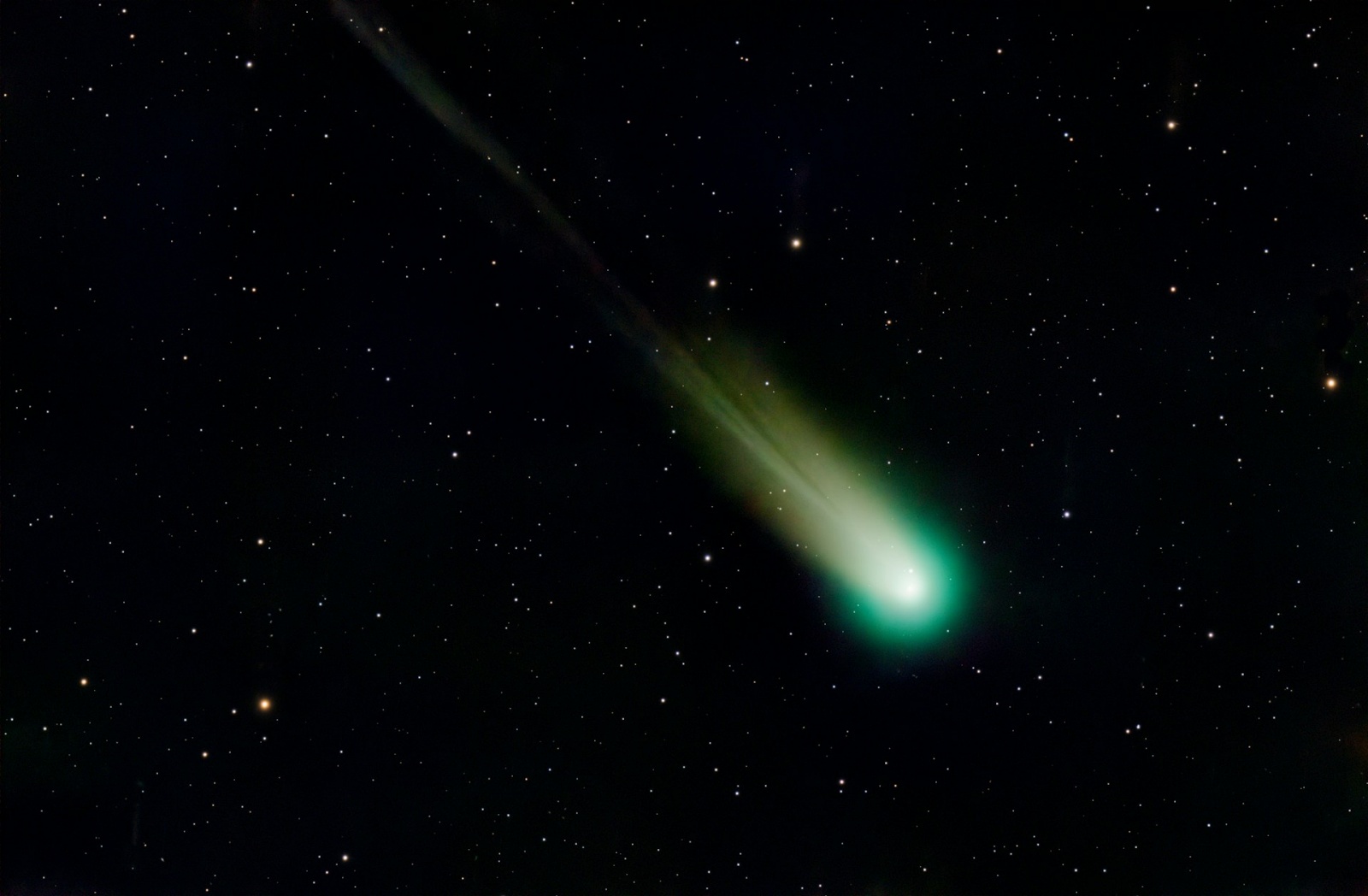
A team of astrophysicists is grappling with the enigmatic behavior of 3I/ATLAS, an interstellar comet that challenges existing theories of cometary physics. This unusual object, only the third confirmed visitor from outside our solar system, has been observed displaying a sunward-facing plume, complicating our understanding of how such bodies should behave as they approach the sun. The observations, captured by the Hubble Space Telescope and various ground-based facilities, have ignited a split in the scientific community, with some researchers even suggesting the possibility of extraterrestrial technology at play.
Researchers first noticed the peculiar structure, termed an anti-tail, in July 2025. Typically, a comet’s tail forms as solar radiation pressure pushes particles away from the sun. An anti-tail, which may appear due to perspective, is generally less defined. However, the anti-tail observed around 3I/ATLAS has been described as too strong and structured to be merely an optical illusion. Avi Loeb from Harvard University has taken a keen interest in these observations, noting the elongated nature of the sunward glow, with an aspect ratio of approximately 10:1, indicating a highly directed jet structure rather than a diffuse cloud.
The scientific community has proposed various natural explanations for the observed phenomena. While some theorize that unusually large dust particles, about 100 micrometres in radius, might be responsible, others suggest that ice fragments could be a factor. In this scenario, the ice sublimates too quickly to form a traditional tail, leading to a unique observation. Further complicating matters, researchers have suggested that the anti-tail may consist of a swarm of non-volatile objects rather than a single plume.
Recent data has only added to the intrigue. The outflow velocity of gas jets from a typical comet is usually a few hundred metres per second. In contrast, to produce the expansive plume observed from 3I/ATLAS, exhaust speeds would need to reach several kilometres per second. This observation suggests an energetic process beyond natural outgassing.
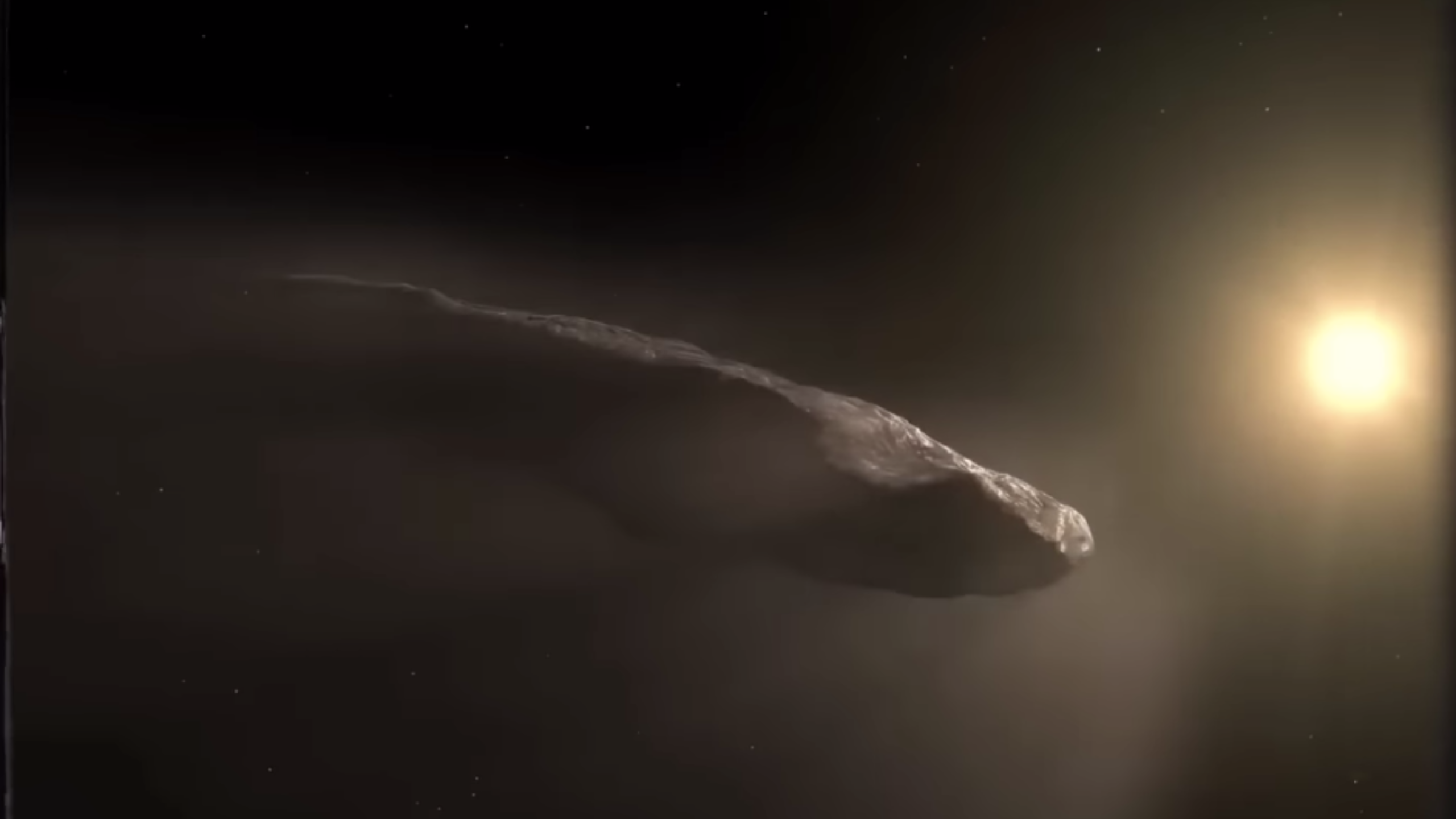
After passing its closest approach to the sun, known as perihelion, 3I/ATLAS displayed remarkable integrity, a trait that typically indicates significant evaporation in comets. Despite experiencing non-gravitational acceleration, which usually leads to fragmentation, the object has remained intact. Estimates place its diameter at around 46 kilometres, giving it a mass approximately one million times greater than that of the first interstellar visitor, 1I/’Oumuamua.
Astrophysicists have calculated that 3I/ATLAS has lost approximately two million tons of material between July and October 2025. If this mass loss were due to sublimation, the required absorbing area would need to be unrealistically large, at least 1,600 square kilometres. Such figures raise questions about the nature of the comet’s composition and behavior.
The chemical makeup of 3I/ATLAS adds another layer to the mystery. Observations have revealed that the gas plume is predominantly composed of carbon dioxide, accounting for 87% by mass, with only about 4% water. This is unusual, as most known comets have a higher water content. Additionally, some studies have indicated a higher nickel content compared to iron, suggesting a composition that includes nickel-iron alloys common in industrial applications.
As researchers attempt to model the transition from the observed anti-tail to a more traditional tail in September 2025, the hypothesis of extraterrestrial engineering remains a topic of heated debate. Adam Hibberd, a colleague of Loeb, proposed that if the anti-tail could represent a “braking thrust” from a massive alien spacecraft, it would be expected to change direction near perihelion, hinting at a gravitational assist maneuver.
The ongoing observations of 3I/ATLAS are crucial as scientists seek to understand this cosmic anomaly. They continue to monitor the object’s shape, speed, and brightness, aiming to unravel the complexities surrounding it before it journeys back into the depths of space. The ultimate question remains: is 3I/ATLAS a product of exotic, unfamiliar physics or a demonstration of technology beyond our current comprehension? The comet’s peculiar features compel researchers to reconsider the boundaries of cometary physics, blurring the line between natural celestial bodies and engineered constructs. As the object leaves our solar system, the quest for answers only intensifies, highlighting the enduring mysteries of the universe.