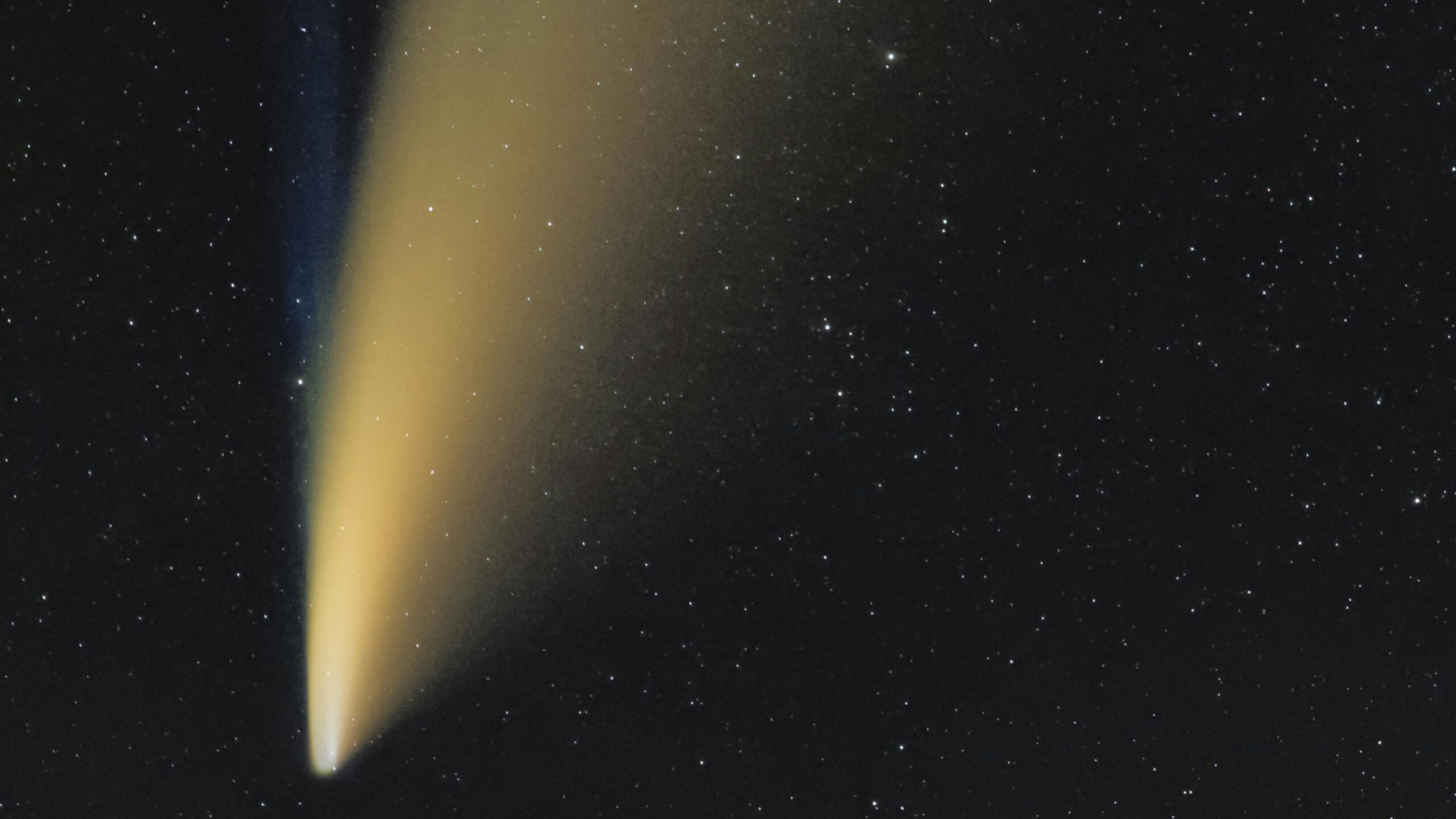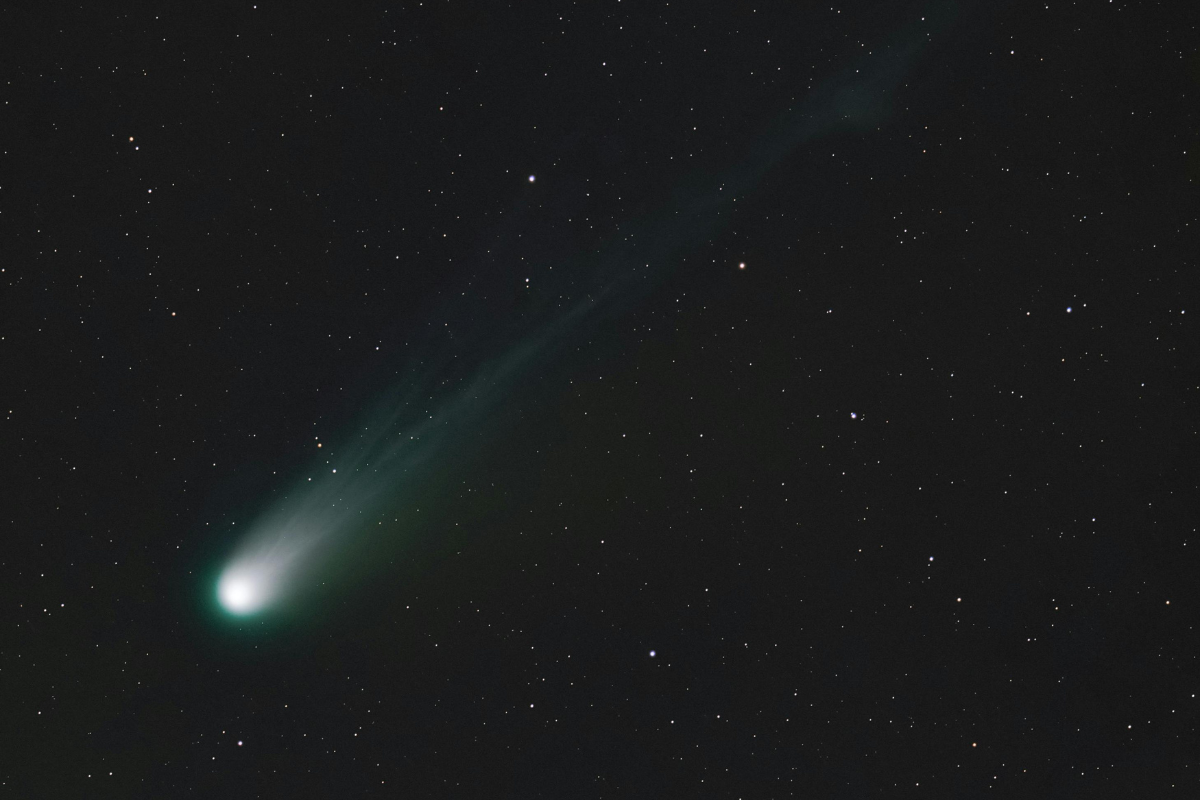
An early image of the interstellar object 3I/ATLAS has generated significant debate within the scientific community. Captured shortly after its discovery, the image showcases a highly asymmetric light distribution that diverges from typical comet characteristics. While subsequent observations by NASA have confirmed it as a standard cometary body, the initial image’s peculiarities have prompted discussions about its implications for understanding the object’s nature.
The image, taken by ground-based telescopes, displays an “over-brightened, lopsided glow,” which has proven difficult to reconcile with established models of cometary behavior. This discrepancy has led to varying interpretations among astronomers, who are divided on whether the image is a mere artefact or a meaningful insight into 3I/ATLAS. The object, which follows a hyperbolic trajectory indicating an origin beyond the solar system, has been recognized as a scientifically valuable entity since its early observations.
Follow-up imaging from reputable sources such as the Hubble Space Telescope and the Solar and Heliospheric Observatory (SOHO) has confirmed the presence of a typical cometary coma. Spectroscopic measurements have identified volatile compounds, including carbon dioxide and water vapour, as the object approaches the Sun. Despite these confirmations, the strange early images continue to linger in discussions, as they do not conform to the symmetric coma patterns expected from solar heating.
Controversy Surrounding 3I/ATLAS
The controversy surrounding the early image intensified following remarks from Avi Loeb, a Harvard astrophysicist. Loeb has suggested that certain characteristics of 3I/ATLAS merit further investigation beyond conventional explanations. He introduced the Loeb scale, rating 3I/ATLAS at a four, indicating it aligns largely with natural hypotheses but is still open to other interpretations.
Loeb’s criticisms include observations regarding the object’s unusual orientation within the solar system’s plane and the potential presence of non-gravitational forces indicated by the early image’s asymmetry. He also highlighted unexpectedly high nickel readings in some spectral analyses, which challenge typical comet profiles. Despite his claims, mainstream scientific bodies have reiterated the object’s classification as a natural comet in peer-reviewed publications.
Researchers from NASA have emphasized that the features observed, such as anti-tails and irregular jet structures, fall within expected variations due to outgassing asymmetries and viewing angles. Furthermore, rigorous spectroscopic evidence of water and carbon dioxide in the comet’s coma strengthens the consensus on its natural origin.
Public Discourse and Misinformation
Alongside professional discussions, public discourse surrounding 3I/ATLAS has been marked by confusion and misinformation. Misleading content, including deepfake videos featuring quotes from prominent physicists like Michio Kaku, has circulated widely. These scientists have publicly disavowed such misrepresentations, clarifying their positions regarding the nature of 3I/ATLAS.
The flood of misinformation highlights a broader cultural challenge in distinguishing verified scientific findings from viral speculation. Many amateur communities are striving to separate credible scientific sources from conjecture, underscoring the need for clarity in public understanding of astronomical phenomena.
On November 19, 2025, NASA and allied agencies released a new set of images that provided crucial insights into 3I/ATLAS. These images demonstrated the comet’s characteristic coma and confirmed its trajectory consistent with interstellar passage. Despite ongoing debates, experts agree that 3I/ATLAS poses no threat to Earth, solidifying its status as a fascinating natural visitor from beyond our solar system.
The unfolding story of 3I/ATLAS reflects not only the complexity of astronomical discovery but also the importance of accurate communication within both the scientific community and the public sphere. As further observations are made, scientists remain committed to unraveling the mysteries surrounding this remarkable interstellar object.