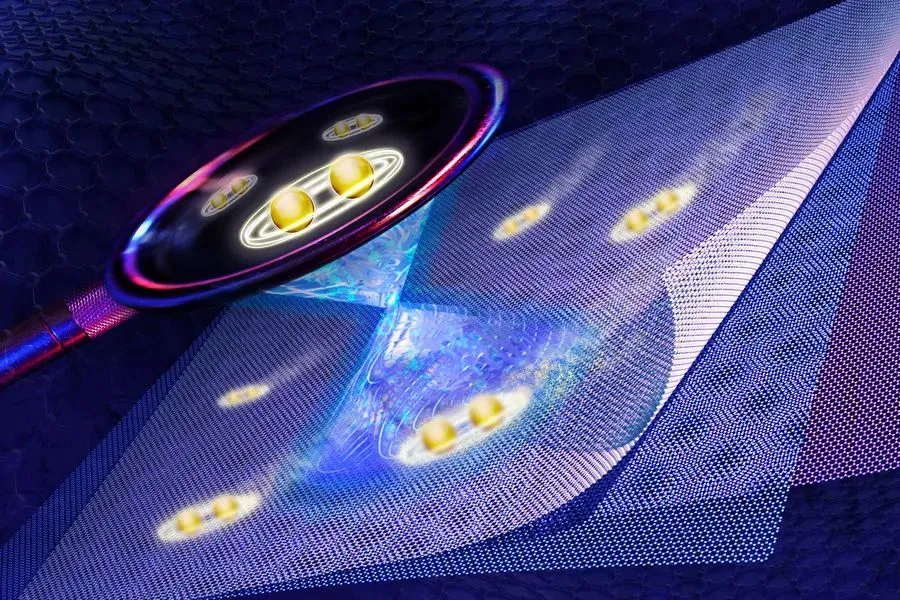
A team from the Hefei Institutes of Physical Science of the Chinese Academy of Sciences has made significant strides in laser technology by successfully growing a high-entropy garnet-structured oxide crystal. This innovative development enhances laser performance at the 2.8 μm wavelength band, which is critical for various applications in mid-infrared technology.
By incorporating a high-entropy design into the garnet crystal system, the researchers achieved a broad emission band near 2.8 μm. This advancement allows for continuous-wave laser output with notably improved average power and beam quality. These characteristics demonstrate the material’s potential as a high-performance gain medium for mid-infrared ultrashort-pulse lasers.
Breakthrough in Mid-Infrared Laser Technology
The research team’s findings highlight the capabilities of high-entropy materials in enhancing laser performance. Traditional laser materials often face limitations due to narrow emission bands, which can restrict their effectiveness for specific applications. The introduction of high-entropy garnet crystals addresses these constraints, providing a wider operational spectrum that can be harnessed in various technological fields, including telecommunications, medical diagnostics, and environmental monitoring.
The successful experiments were conducted at the Hefei facility, where researchers meticulously crafted the garnet crystals under tightly controlled conditions. The team’s rigorous testing confirmed that the new material not only meets but exceeds current benchmarks for laser efficiency and stability.
Potential Applications and Future Directions
The implications of this research extend beyond academic curiosity. Enhanced mid-infrared lasers hold promise for significant advancements in multiple industries. For example, in the field of medicine, these lasers could improve imaging techniques and treatments that rely on precise laser application. Similarly, in environmental science, they could facilitate better detection methods for pollutants or hazardous substances.
The researchers plan to further explore the properties of high-entropy garnet crystals, aiming to refine their techniques and expand the potential applications of this promising material. As they continue their investigations, the team is optimistic about contributing to the next generation of laser technologies, demonstrating the transformative power of innovative materials science.
The work of the Hefei Institutes represents a significant step forward in laser research, showcasing the benefits of high-entropy designs in enhancing material properties. As the demand for advanced laser systems continues to grow, this breakthrough could pave the way for new technologies that were previously thought to be unattainable.