Recent research has provided substantial evidence that ancient humans, rather than glaciers, were responsible for transporting the famous bluestones to Stonehenge. A study conducted by Curtin University challenges a long-standing archaeological debate regarding the origins of the Altar Stone and other megaliths at the iconic site located on Salisbury Plain in southern England.
Employing advanced mineral “fingerprinting” techniques, researchers examined microscopic grains found in rivers near Stonehenge. These grains act as geological time capsules, revealing how sediments have moved across Britain over millions of years. The analysis involved over 500 zircon crystals, one of the most durable minerals on Earth, using state-of-the-art equipment at Curtin’s John de Laeter Centre.
This research follows a significant finding from 2024, which traced the Altar Stone, weighing six tonnes, back to Scotland. This evidence further supports the theory that Neolithic builders intentionally sourced and transported the monumental stones over considerable distances.
Evidence Against Glacial Transport
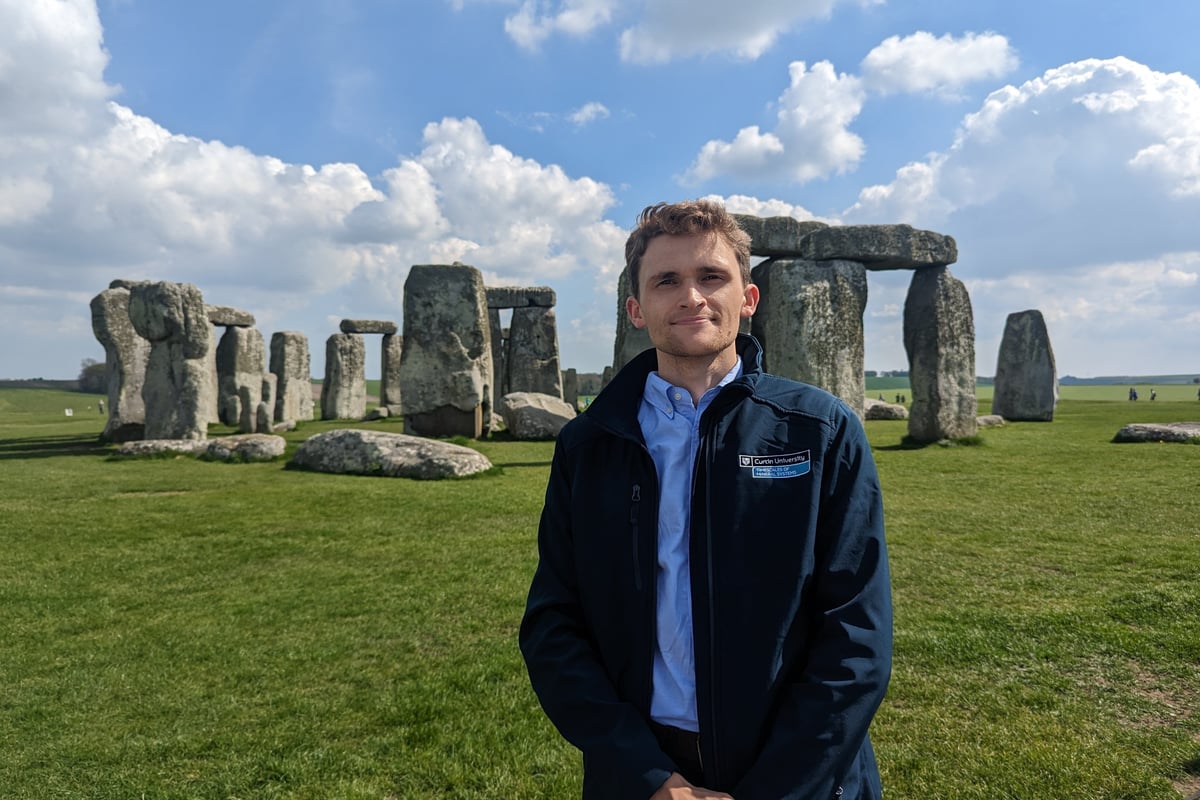
Lead author Dr. Anthony Clarke, from the Timescales of Mineral Systems Group within Curtin’s School of Earth and Planetary Sciences, stated that there is no geological evidence to suggest glaciers reached the Stonehenge site.
“If glaciers had carried rocks all the way from Scotland or Wales to Stonehenge, they would have left a clear mineral signature on the Salisbury Plain,” Dr. Clarke explained. He added, “We looked at the river sands near Stonehenge for some of those grains the glaciers might have carried, and we did not find any. That makes the alternative explanation – that humans moved the stones – far more plausible.”
While the exact methods of transportation remain uncertain, Dr. Clarke noted various theories. “Some people say the stones might have been sailed down from Scotland or Wales, or they might have been transported over land using rolling logs, but really we might never know,” he said. “But what we do know is ice almost certainly didn’t move the stones.”
Modern Techniques Shed Light on Ancient Mysteries
Co-author Professor Chris Kirkland emphasized the importance of modern geochemical tools in answering historical questions that have persisted for decades. “Stonehenge continues to surprise us,” he remarked. “By analyzing minerals smaller than a grain of sand, we have been able to test theories that have persisted for more than a century.”
The study not only addresses how the stones arrived at Stonehenge but also opens up further inquiries about the monument’s purpose. Professor Kirkland suggested that it may have served multiple functions, such as a calendar, an ancient temple, or a site for communal gatherings.
“Answering these sorts of questions requires diverse data sets, and this study adds an important piece to that bigger picture,” he noted.
The findings are detailed in the paper titled “Detrital zircon–apatite fingerprinting challenges glacial transport of Stonehenge’s megaliths,” published in the journal Communications Earth and Environment. The study represents a significant advancement in understanding one of the world’s most renowned archaeological sites.