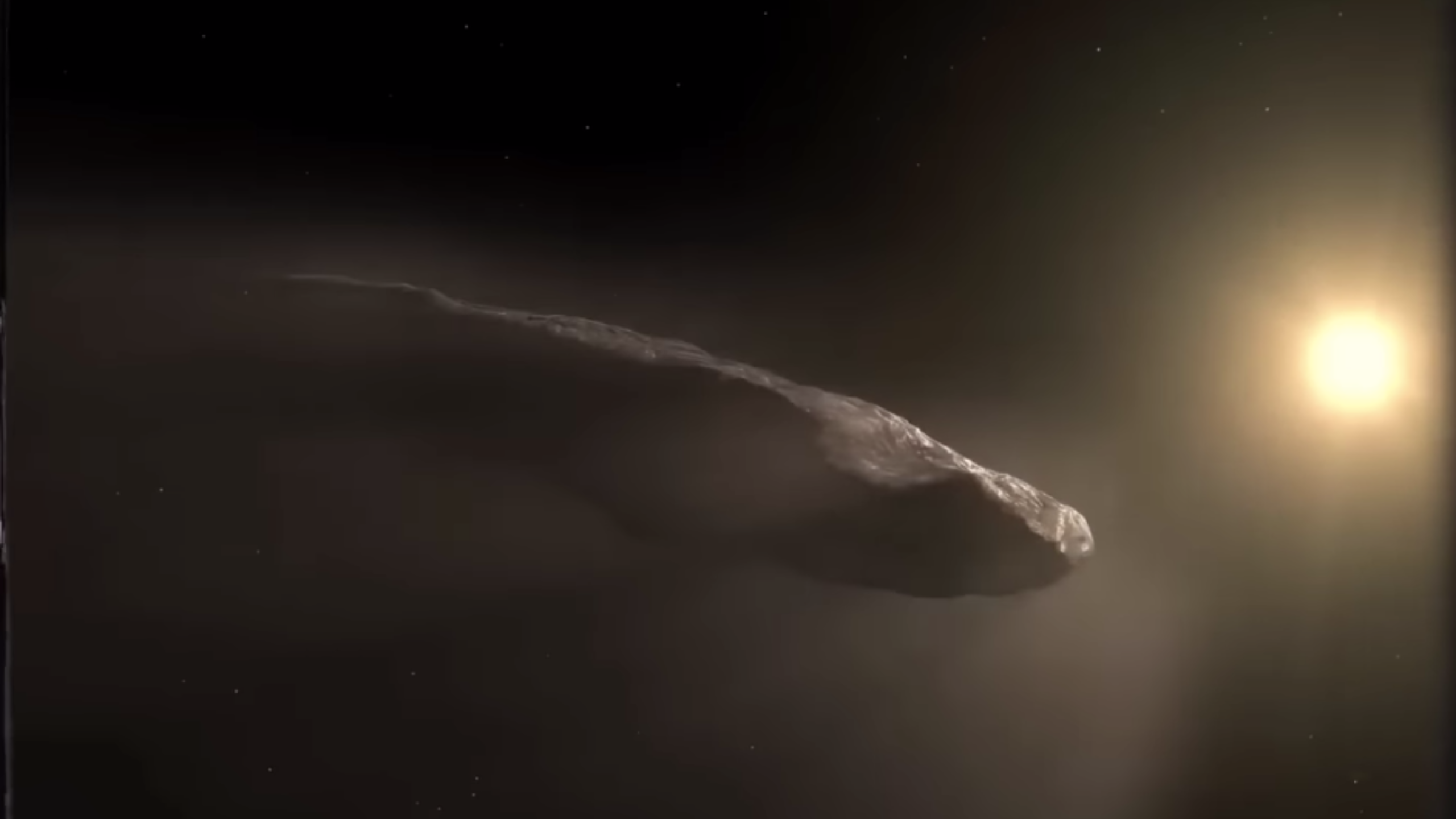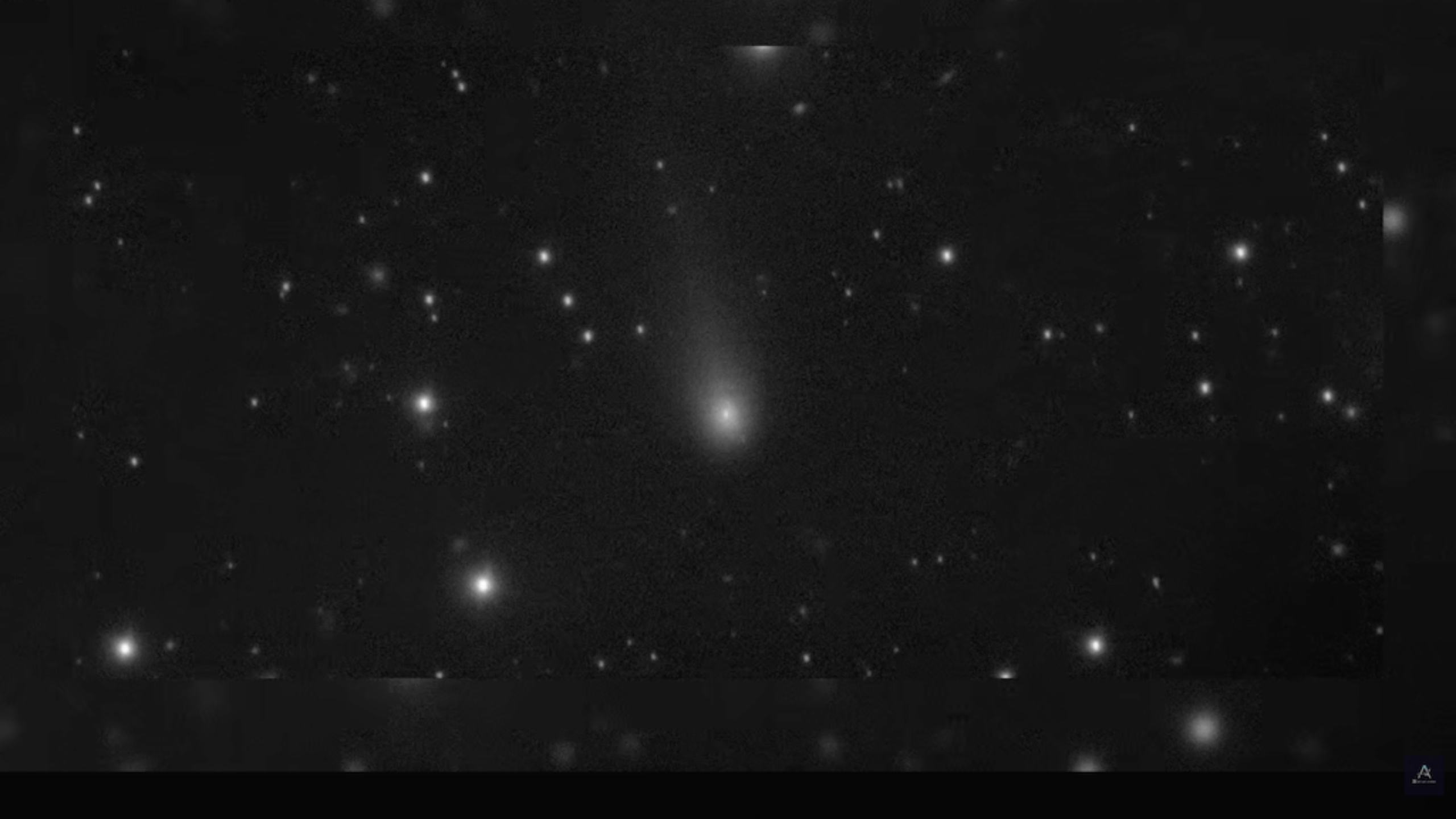
Newly released images from NASA of the interstellar object known as 3I/ATLAS have sparked interest among astronomers and the general public. This rare object, which is the third confirmed visitor from beyond the solar system, is currently being observed as it travels through the inner planets. While NASA categorizes 3I/ATLAS as a natural comet, the striking visuals have led to speculation regarding its origin, with some suggesting it may be an artificial construct.
NASA’s images depict 3I/ATLAS as a faint, diffuse object enveloped by a halo of gas and dust, referred to as a ‘coma,’ along with a narrow tail extending from it. These features are typical of active comets as they heat up while approaching the Sun. The most detailed images were captured on October 2, 2023, by the Mars Reconnaissance Orbiter’s HiRISE camera at a distance of approximately 30 million kilometres, or 0.2 astronomical units. The object appears as a blurry nucleus surrounded by a thin cloud of material, with a subtle trailing tail.
Further observations from NASA’s Lucy and Psyche spacecraft have reaffirmed the object’s natural characteristics, revealing consistent traits such as gas emissions, dust jets, and faint plumes driven by solar heating. Experts involved in these studies state that the behavior of 3I/ATLAS closely aligns with known cometary activity.
Despite NASA’s assessments, claims suggesting that 3I/ATLAS could be an alien spacecraft have gained traction on social media. These theories intensified following a personal blog post by astrophysicist Avi Loeb, who questioned whether certain brightness patterns observed in the object’s images could be atypical for a standard comet. Loeb posited that some visual features did not conform to the expected tail patterns, which typically extend only behind the object when subjected to solar pressure.
Nonetheless, mainstream astronomers emphasize that such effects can result from factors like viewing angles, image processing, dust behavior, and background light. They have firmly dismissed notions that 3I/ATLAS is ‘targeting’ meteors or actively clearing debris along its path. Comets generally traverse vast distances between debris fields and lack mechanisms to selectively intercept material.
The excitement surrounding 3I/ATLAS is underscored by its significance; as only the third confirmed interstellar object ever detected, it provides scientists with a unique opportunity to study material that has formed around another star. Insights gleaned from this object may enhance our understanding of how planetary systems evolve across the galaxy.
As 3I/ATLAS continues its journey through the solar system, astronomers remain confident in their conclusions. All available evidence supports the classification of 3I/ATLAS as a naturally occurring interstellar comet. Ongoing observations are planned to gather further data, but scientists assert there is currently no indication to dispute its natural origin or to suggest it is interacting with meteors in any targeted manner.