The publication of the best science and nature books for 2025 showcases a diverse selection of works that address pressing global issues, the intricacies of the natural world, and the human experience. This year’s titles reflect profound themes, ranging from artificial intelligence and extinction to personal health and the environment, urging readers to engage with the complexities of our existence.
AI and the Future of Humanity
One of the most thought-provoking titles is If Anyone Builds It, Everyone Dies, authored by computer scientists Eliezer Yudkowsky and Nate Soares. The book contends that the rapid development of superintelligent AI poses existential risks to humanity. Yudkowsky and Soares argue that even AI designed to understand the universe could inadvertently lead to human extinction. They assert, “Even an AI that cares about understanding the universe is likely to annihilate humans as a side-effect,” highlighting the potentially dire consequences of unchecked technological advancement.
In a different vein, historian Sadiah Qureshi explores the intersection of extinction and social justice in her book, Vanished: An Unnatural History of Extinction. This title, shortlisted for the Royal Society Trivedi science book prize, delves into how colonial expansion has historically been intertwined with the concept of extinction. Qureshi raises critical questions about the implications of “de-extinction” initiatives, asking whose land will be reclaimed by resurrected species like the woolly mammoth.
The Rights of Nature and Climate Change
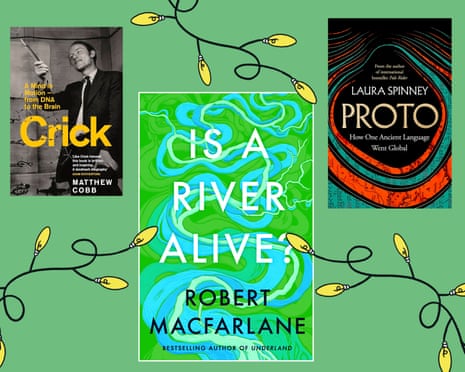
Natural landscapes are central to Robert Macfarlane‘s Is a River Alive?, which advocates for recognizing rivers as living entities deserving of legal rights. By documenting the stories of three threatened rivers, Macfarlane presents a compelling argument for environmental protection and respect for nature. His work, shortlisted for the Wainwright prize, underscores the vital connection between humanity and the natural world.
Biologist Neil Shubin invites readers on an expedition to the extremes of our planet in Ends of the Earth. Shubin, also shortlisted for the Royal Society science book prize, discusses the historical significance of ice and its role in shaping our world. He emphasizes the urgency of addressing climate change, as these fragile environments face unprecedented threats.
Another significant work, The Forbidden Garden of Leningrad by historian Simon Parkin, recounts the efforts of Russian scientist Nikolai Vavilov to preserve vital seed collections during the siege of Leningrad in 1941. Parkin’s book not only illuminates the challenges of safeguarding biodiversity but also highlights Vavilov’s tragic fate as he fell out of favor and faced imprisonment.
Health Insights and Human Experience
For those interested in health, Super Agers by cardiologist and medical professor Eric Topol provides insights into longevity and health in older age. Topol, who recently reviewed the digital future of the NHS, examines the “Wellderly” and offers practical advice for maintaining vitality. He discusses how advancements in medical technology, including AI and new weight-loss drugs, may redefine chronic disease management.
In The Age of Diagnosis, neurologist Suzanne O’Sullivan addresses the complexities of medical labeling in society. This sensitive examination questions the implications of diagnostic labels such as ADHD and anxiety, especially in the context of the 2.8 million people in the UK who are economically inactive due to long-term illness. O’Sullivan’s work invites a crucial conversation about how society perceives and addresses these conditions.
Meanwhile, Masud Husain‘s award-winning Our Brains, Our Selves explores identity and the impact of brain disorders. Through poignant patient stories, Husain illustrates how illnesses can drastically alter behavior and self-perception, providing a deeper understanding of the human condition.
Language and Historical Figures
The fascinating evolution of language is the focus of Proto by science writer Laura Spinney. This narrative traces the origins of the Proto-Indo-European language, revealing its profound influence on modern languages and cultures. Spinney’s exploration spans linguistics, archaeology, and genetics, demonstrating how interconnected our linguistic heritage is.
Lastly, Crick by Matthew Cobb offers a comprehensive biography of Francis Crick, a key figure in the discovery of the DNA double helix. Cobb captures Crick’s intellectual journey and his quest to understand consciousness, providing readers with a portrait of a man whose work fundamentally changed the course of biology.
For those captivated by the interplay between science, nature, and humanity, these titles promise to enrich understanding and provoke thought. As we navigate the complexities of modern life, these books serve as essential guides, prompting reflection on the past, present, and future. To explore more science and nature books, visit guardianbookshop.com. Delivery charges may apply.