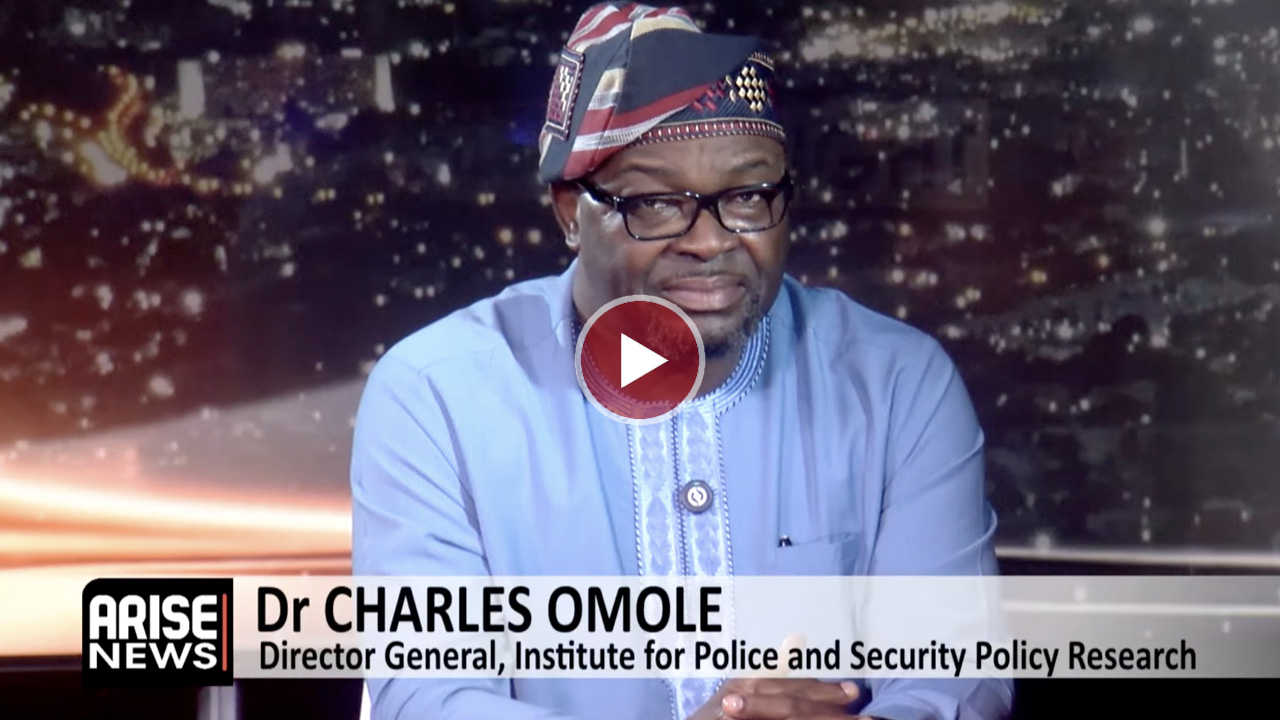
The call for state policing in Nigeria has gained momentum following an appeal from President Bola Tinubu to the Senate, urging the prioritization of constitutional amendments. In a recent interview with ARISE NEWS, Dr. Charles Omole, Director-General of the Institute for Police and Security Policy Research, emphasized that for state police to be effective, significant safeguards must be established.
Dr. Omole highlighted that state policing is not a novel concept in Nigeria; it has historical roots tracing back to colonial times. He noted, “The colonial masters actually started what we call the ‘local native police.’ Up until 1960, we had what we call the Nigeria Police Force, which is like the federal police.” This historical context underpins the current discussions surrounding the re-establishment of state police forces.
Despite the potential benefits, some state governors express reservations regarding the financial implications of implementing state police. Dr. Omole explained that the centralization of policing in 1970 also led to the centralization of prisons, meaning states would incur additional costs if they were to establish their own police forces. “States must now establish their own prisons. And it will come at a cost,” he stated. This includes not only infrastructure expenses but also the ongoing costs associated with prisoner care, which are currently managed by the Federal Prison Service.
To ensure the successful implementation of state policing, Dr. Omole proposed several critical measures. He emphasized the need for uniformity in police ranks across states, suggesting that a sergeant in one state should not hold a rank equivalent to an inspector in another. He also advocated for standardized training protocols and equipment specifications to ensure coherence among state police forces.
The establishment of criteria for each state to meet before forming its own police force is another key element Dr. Omole identified. “There has to be interoperability between State A and State B,” he stated, warning against the potential complications of having 36 different policing systems in Nigeria. He argued that effective crime data storage and sharing are essential for the functionality of state police.
While the push for state police is gaining traction, Dr. Omole cautioned that the process is inherently complex. He remarked that significant constitutional and legal changes would be necessary, stating, “There will have to be a change. The legal framework is more complicated than people think.” He does not foresee these changes occurring within the next two to two and a half years.
The discussion around state policing represents a critical moment in Nigeria’s approach to law enforcement. With the potential to enhance local governance and response to crime, the establishment of a state police system hinges on the careful consideration of financial, legal, and operational frameworks. As the government moves forward with these discussions, the insights from experts like Dr. Omole will play a vital role in shaping the future of policing in Nigeria.