
Christmas festivities often revolve around indulgence and merriment, yet this year, families can merge holiday cheer with engaging science experiments. Experts from various universities offer simple yet captivating activities that challenge perceptions and ignite curiosity during the holiday season.
Exploring Taste and Smell with Sweet Treats
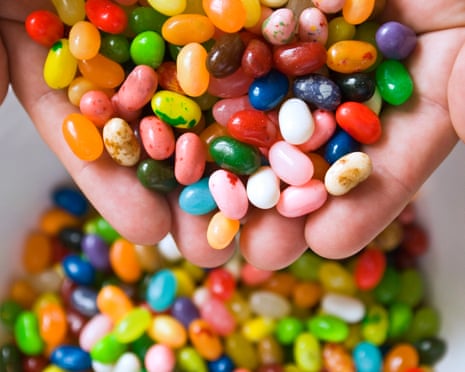
Matthew Cobb, a professor of zoology at the University of Manchester, introduces a playful experiment using jellybeans to illustrate the connection between taste and smell. Participants should close their eyes, pinch their noses, and taste the jellybean without any sensory input from their olfactory senses. Most will only recognize the sweetness, lacking the ability to pinpoint the flavor.
After five seconds, removing fingers from the nose allows aromas to travel to the olfactory neurons, resulting in an enriched flavor experience. Cobb emphasizes that this demonstrates how flavor is primarily derived from smell.
A more elaborate version involves grating an onion and an apple, tasting them under similar conditions. Participants may be surprised to find that both taste alike until they release their noses. Cobb notes, “When we chew, the volatile smells emitted by the food go up into our nose, stimulating our olfactory neurons.” This experiment serves as a reminder of the importance of smell, especially highlighted during the early days of the Covid-19 pandemic when many experienced loss of taste.
Social Laughter and the Science of Cracker Jokes
During Christmas gatherings, jokes often spark laughter, and Sophie Scott, a professor of cognitive neuroscience at University College London, sheds light on what influences humor. She suggests conducting an experiment with Christmas cracker jokes to explore their social impact.
First, participants should read the jokes silently to gauge their reaction. Next, they should share the jokes aloud in a group setting to observe laughter and engagement. Scott reveals, “You are 30 times more likely to laugh if there is someone else with you than if you are on your own.” This illustrates the communal nature of laughter, emphasizing that jokes read in solitude are far less likely to elicit laughter compared to those shared with others.
Understanding Anatomy through Holiday Meals
For those preparing a festive turkey, Steve Brusatte, a professor of palaeontology at the University of Edinburgh, suggests examining the bird’s anatomy. After cooking the turkey, Brusatte encourages families to explore the bones and joints, demonstrating how they function to enable movement.
He shares his experience from a recent Thanksgiving, stating, “This is a simple thing that you can do with a roast turkey or chicken – actually look at the bones and understand how they fit together.” This hands-on approach provides a deeper understanding of biomechanics, making the anatomy lesson engaging and delicious.
Sue Black, a forensic anthropologist at the University of Oxford, adds to the conversation by recommending boiling the carcass to create a 3D jigsaw of bones, facilitating a fun reconstruction activity that enhances learning about motion and anatomy.
Making Ice Cream with Chemistry
In a delightful chemistry experiment, Andrea Sella, a professor of inorganic chemistry at UCL, provides a recipe for homemade ice cream using simple kitchen ingredients. Participants will need 500ml of full-fat milk or cream, five egg yolks, 125g of sugar, and optional vanilla.
After whisking the ingredients and warming them to thicken, the next step involves crushing ice and mixing it with salt. This combination, when placed around the custard mixture in a sealed bag, creates a chilling effect that can drop temperatures to -10°C or lower. Sella explains, “The dissolved salt prevents liquid water molecules from freezing back onto the remaining ice.” The end result is delicious ice cream, illustrating the fascinating science behind freezing points and heat transfer.
Mathematics Meets Festivity
Lastly, Kit Yates, a professor of mathematical biology at the University of Bath, presents a festive twist on Buffon’s Needle, now dubbed Buffon’s Pine Needles. This experiment uses pine needles to approximate the value of π.
Participants should gather similar-length pine needles and a piece of ruled paper, ensuring the lines are spaced further apart than the needles. By scattering the needles and counting how many cross the lines, families can plug their numbers into the formula π ≈ 2 LT/CW, where L is the length of the needles, T is the total number of needles, and C is the number of needles crossing the lines.
Yates remarks, “What I love about this is that it demonstrates how π seems to crop up in really unusual places.” This simple yet engaging activity reinforces mathematical concepts in a fun, festive manner.
By integrating these experiments into Christmas traditions, families not only celebrate the holiday but also cultivate a spirit of inquiry and learning. These activities offer a unique way to engage with science, ensuring that the joy of the season is enriched with discovery and fun.


