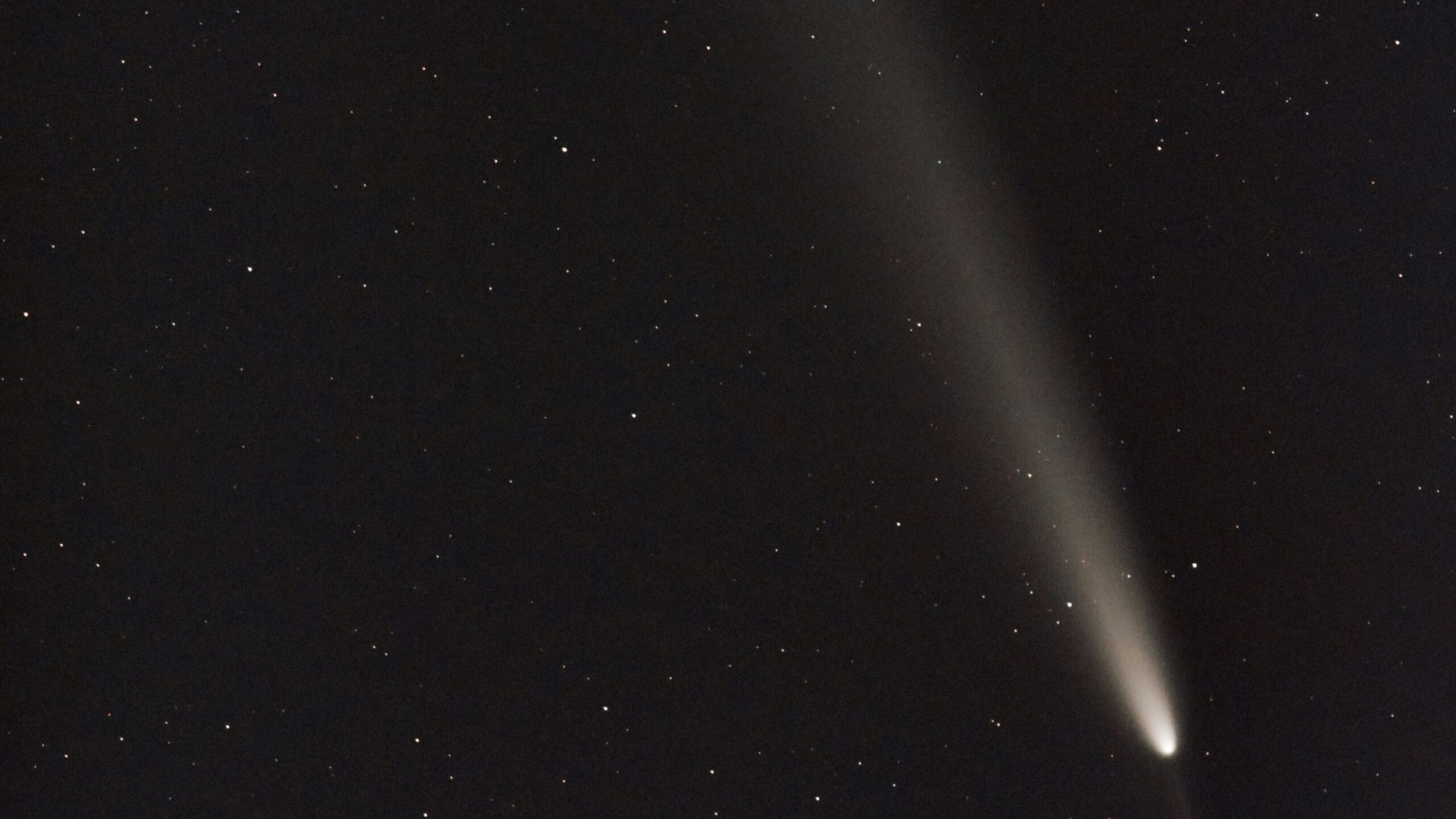
The arrival of 3I/ATLAS, an interstellar object detected by a telescope in Chile, has reignited discussions about the possibility of intelligent extraterrestrial life. Discovered in July, this anomaly marks only the third time astronomers have observed such a visitor within our solar system. As it speeds toward a close encounter with Earth, set for December 19, 2023, scientists are actively examining its origins and nature.
The object, with its unusual trajectory and characteristics, has prompted a mix of excitement and skepticism among researchers. While many believe that 3I/ATLAS is likely a natural comet composed of ice and dust, some experts, including Harvard physicist Avi Loeb, have not entirely dismissed the possibility of an artificial origin. As the date of closest approach approached, the Breakthrough Listen project, an initiative aimed at detecting signs of intelligent life, directed its efforts toward the object.
Utilizing the Green Bank Telescope, the world’s largest fully steerable radio telescope, researchers aimed to capture any potential signals that could indicate advanced technology. On the day prior to its closest approach, the telescope scanned for any electronic emissions that might suggest 3I/ATLAS is not merely a natural phenomenon. The results, detailed in a preliminary report, revealed no candidate signals during the observation period.
The Search for Extraterrestrial Intelligence Institute (SETI) confirmed this lack of evidence, stating on its website that “no artificial radio emission localized to 3I/ATLAS was detected.” The data suggests that the object is cold, silent, and likely devoid of life. SETI concluded that “3I/ATLAS continues to behave as expected from natural astrophysical processes.”
Despite the absence of detectable signals, researchers maintain that the study of 3I/ATLAS is valuable. They point out that interstellar objects are rare, making each one an important subject for further observation. Loeb, who has closely monitored the object, has identified what he calls “anomalies” in its behavior. These include a suspected large size and a trajectory that appears finely tuned, bringing it within tens of millions of miles of several major planets, including Mars and Venus.
Loeb has introduced a metric known as the “Loeb scale” to evaluate the likelihood of interstellar objects being artificial. On this scale, which ranges from zero (a natural rock) to ten (confirmed alien technology), he rated 3I/ATLAS as a four shortly after its discovery. He has withheld any adjustments to this rating pending the release and analysis of new data from its closest approach.
The findings from the Breakthrough Listen project acknowledge the current lack of evidence supporting the idea that interstellar objects like 3I/ATLAS are anything other than natural phenomena. Nevertheless, researchers emphasize the importance of continued investigation, citing the small number of known interstellar objects—only three to date. They argue that the plausibility of interstellar probes warrants thorough study.
Skeptics remain unconvinced that 3I/ATLAS represents an alien craft, arguing that if it were indeed a probe, it would likely be transmitting signals, particularly given Earth’s strong radio emissions. The absence of such signals bolsters the theory that the object is simply a large collection of ice and carbon compounds.
As researchers continue to analyze data from 3I/ATLAS, a comprehensive understanding of the object may take several months. Until then, the debate about its origins remains open, with many scientists eager for further exploration of this cosmic visitor.