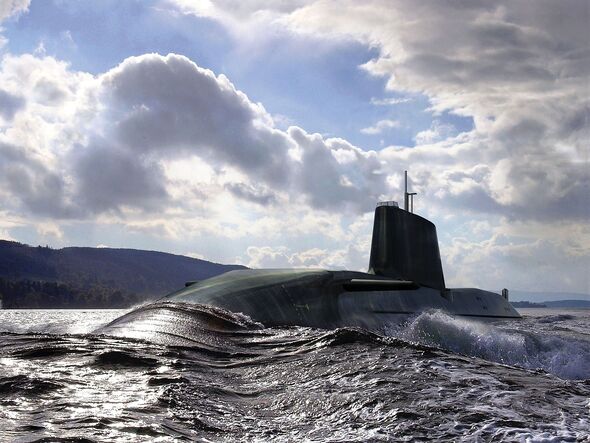
Britain’s ability to maintain a viable nuclear submarine program is being called into question by a former senior naval officer. Rear Admiral Philip Mathias has expressed grave concerns about what he describes as “catastrophic” failures within the UK’s nuclear deterrent strategy. As a former director of nuclear policy at the Ministry of Defence (MOD), Mathias is well-placed to identify critical weaknesses that he believes have left the UK vulnerable.
Mathias pointed to the growing challenges in producing attack submarines at a necessary scale, which he argues places undue stress on crews and extends deployment lengths. During the Cold War, submarines typically deployed for around 70 days, but this has now ballooned to approximately 200 days. The recently released Strategic Defence Review (SDR) acknowledged the need to boost production capacity, yet Mathias warns that the current course must change, advocating for a reevaluation of the Aukus agreement. This trilateral security partnership between Australia, the UK, and the United States aims to produce 12 new nuclear submarines in the UK.
In an interview with The Telegraph, Mathias stated, “The UK is no longer capable of managing a nuclear submarine programme. Dreadnought is late, Astute class submarine delivery is getting later, and there is a massive backlog in Astute class maintenance and refitting, which continues to get worse.” He further criticized the SSN-Aukus, indicating it would not meet the UK’s or Australia’s requirements in terms of capability or timelines.
Challenges Facing the Royal Navy
The Royal Navy is grappling with a fleet plagued by severe maintenance issues, leaving many vessels docked for extended periods as they await repairs. Currently, HMS Artful and HMS Audacious are undergoing lengthy maintenance programs, while HMS Astute and HMS Anson also remain in port.
Mathias has urged that the next generation of nuclear weapon boats, the Dreadnought class, should be the “last class of nuclear-powered submarines that the UK builds.” He proposed that the Aukus initiative be “cancelled now,” suggesting that technology could be leveraged to develop “cost-effective” alternatives, such as drones and smaller, unmanned submarines.
The former naval officer criticized successive governments for chronic underfunding, which he claims has led to a decline in naval forces and poorly executed nuclear submarine programs.
In response to these serious allegations, a spokesperson from the MOD stated, “We are unwavering in our commitment to renewing and maintaining the nuclear deterrent, underlined by the biggest sustained investment into defence spending since the end of the Cold War. The Strategic Defence Review made clear the need for sustained investment across the Defence Nuclear Enterprise, which will see the delivery of the most powerful attack submarines ever operated by the Royal Navy and the investment of £15 billion this Parliament into our sovereign warhead programme.”
As the UK navigates these challenges, the future of its nuclear submarine capability remains uncertain, raising questions about national security and strategic independence.