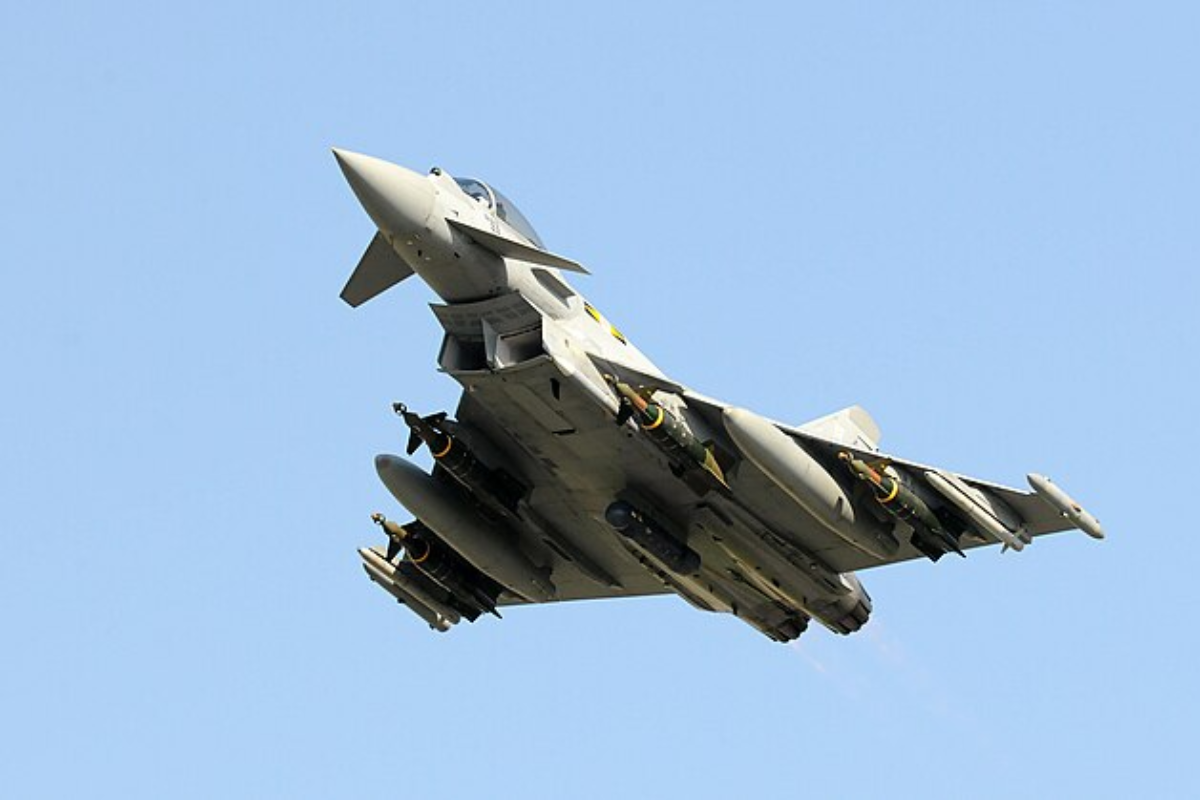
Britain has officially entered the conflict involving Iran for the first time, following the interception of an Iranian drone by a Royal Air Force (RAF) Typhoon jet on March 1, 2026. The drone was heading towards Qatari territory when it was shot down, marking a notable shift in the UK’s military stance in the region. Previously, the UK Ministry of Defence (MoD) had asserted that it was not involved in the initial strikes that killed Iran’s Supreme Leader, Ayatollah Ali Khamenei, on February 28, 2026.
According to an official statement from the MoD, the RAF Typhoon, operating from Qatar as part of the joint UK-Qatar Typhoon Squadron, successfully conducted a defensive air patrol. The jet employed an air-to-air missile to neutralize the drone, which was deemed a potential threat to Qatar’s airspace and British interests. The statement emphasized, “Our Armed Forces are playing a vital role to protect our people, our interests, and our Allies.”
The interception of the drone was not an isolated event. On Sunday, John Healey, the UK Defence Minister, raised concerns regarding Iranian missile and drone strikes that approached within a few hundred yards of approximately 300 British military personnel stationed in Bahrain. Furthermore, two missiles were reportedly fired in the direction of Cyprus, where the UK maintains military bases. Healey remarked, “We don’t believe they were targeted at Cyprus, but nevertheless, it’s an example of how there is a very real and rising threat from a regime that is lashing out widely across the region, and that requires us to act.”
In contrast, Cyprus offered a different perspective. Government spokesman Constantinos Letymbiotis stated on social media platform X that claims of missiles being fired towards the island were “not valid” and insisted that “there is no indication whatsoever that any threat to the country has occurred.”
The backdrop to these developments includes the joint strikes by US and Israeli forces on Iran, which occurred just days prior to the drone interception. In response to those strikes, Prime Minister Keir Starmer had stated unequivocally, “The United Kingdom played no role in these strikes.” However, the unfolding realities in the region have complicated this position, as British personnel are now embedded across various locations, and Iranian retaliation has escalated beyond Israel’s borders.
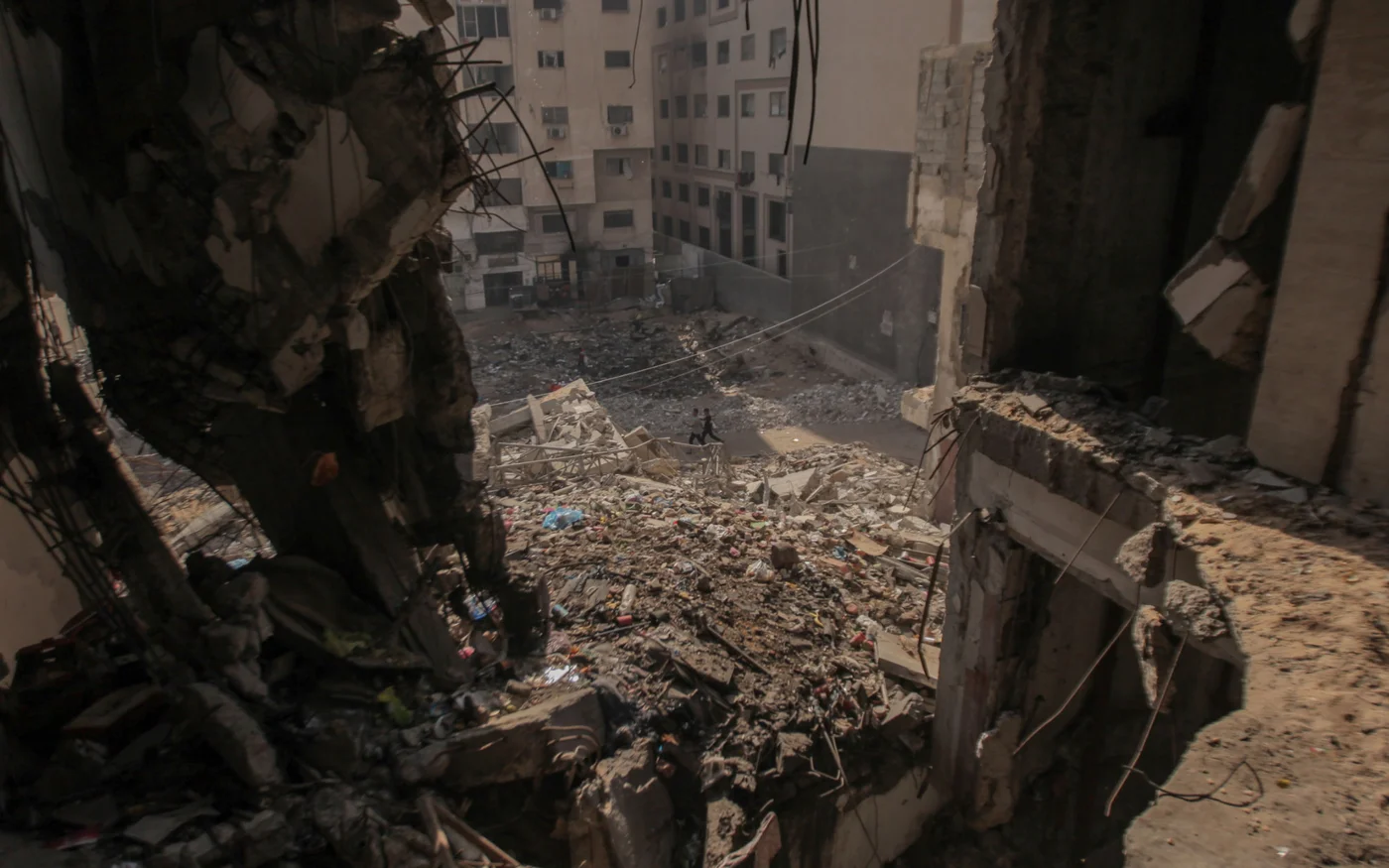
The recent drone intercept over Qatar, where the RAF operates as part of a cooperative military effort, signifies Britain’s most direct military engagement in the rapidly escalating conflict. Since the US-Israeli assault, Iranian drones and missiles have targeted various locations across the region, with reports of smoke rising from Doha’s industrial district on the same day as the RAF’s action.
This first military engagement by the UK against Iranian assets suggests that the conflict triggered by the killing of Ayatollah Khamenei is no longer a distant crisis. With hundreds of British troops deployed throughout the region and RAF jets actively engaging Iranian threats, the question arises regarding the extent of Britain’s defensive posture. As the situation evolves, Westminster faces increasing pressure to respond to the urgent needs of national and allied security in this volatile landscape.