United States President Donald Trump has openly rejected the authority of international law, asserting that only his “own morality” can guide the aggressive foreign policies he is implementing. This declaration follows the controversial abduction of Venezuelan President Nicolas Maduro, which has drawn significant global scrutiny. In an interview with The New York Times on Thursday, Trump stated, “I don’t need international law. I’m not looking to hurt people,” suggesting that his interpretation of legalities is flexible.
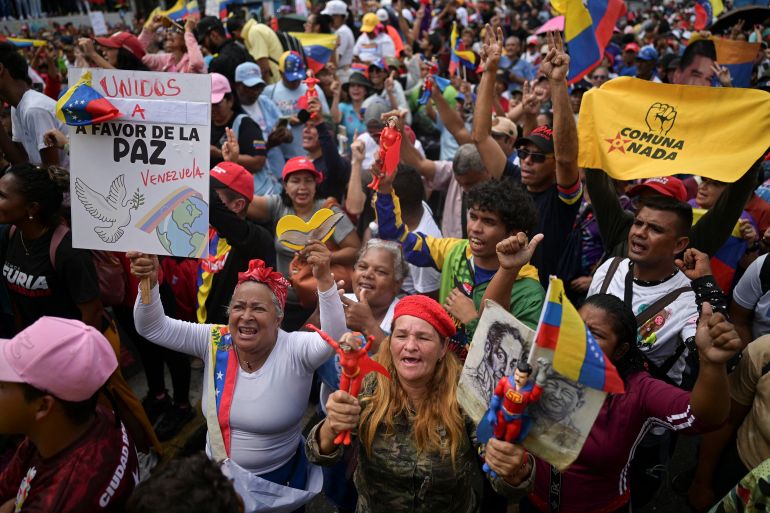
During the early hours of March 2, 2024, the US military launched an attack on Venezuela, with reports of explosions in the capital city, Caracas. This military action has been characterized by critics as a blatant violation of the United Nations Charter, which prohibits the use of force against the territorial integrity of sovereign nations. Following the operation, Trump indicated that the US would effectively govern Venezuela and utilize its extensive oil resources. His administration has stated intentions to collaborate with interim President Delcy Rodriguez while simultaneously threatening further military actions if US directives are not followed.
In a Sunday interview with The Atlantic, Trump warned Rodriguez of severe consequences should she fail to comply with US interests. “If she doesn’t do what’s right, she is going to pay a very big price, probably bigger than Maduro,” he stated. His administration’s posture has not only been aggressive towards Venezuela but has also included suggestions of military action against Colombia’s left-wing President Gustavo Petro. Furthermore, Trump has revived discussions regarding the US’s interest in acquiring the Danish territory of Greenland.
The president’s foreign policy strategy has not gone unnoticed. Stephen Miller, a senior advisor, has criticized the post-World War II international order, asserting that the US will act unapologetically to protect its interests. “We’re a superpower, and under President Trump, we are going to conduct ourselves as a superpower,” Miller remarked during a CNN interview.
Concerns regarding the implications of disregarding international law have been raised by various experts. Margaret Satterthwaite, the UN special rapporteur on the independence of judges and lawyers, described the current US stance as “extremely dangerous.” She highlighted the potential for a regression to an “age of imperialism,” which may embolden adversaries to engage in their own aggressive actions. “International law cannot stop states from doing terrible things if they’re committed to doing them,” Satterthwaite explained.
Similarly, Yusra Suedi, an assistant professor of international law at the University of Manchester, warned against the mentality that “might is right.” She expressed concern that such a mindset could lead other nations, specifically mentioning China and Russia, to pursue aggressive actions in pursuit of their interests.
The historical context of US intervention in Latin America adds depth to the current situation. Ian Hurd, a political science professor at Northwestern University, noted that over a century of US interventions in the region has led to instability and human rights abuses. He cited numerous instances, including interventions in Panama, Haiti, and Nicaragua, suggesting that each has ultimately regretted its choices to intervene. Hurd emphasized that Trump’s approach to Venezuela aligns with past US attempts to influence governance in other parts of the Americas, often with detrimental outcomes.
As the situation evolves, the ramifications of Trump’s dismissal of international law and the aggressive military posture may resonate far beyond the borders of Venezuela, impacting global diplomatic relations and altering the landscape of international governance. The actions taken by the US could set precedents that other nations may follow, potentially leading to increased volatility on the world stage.