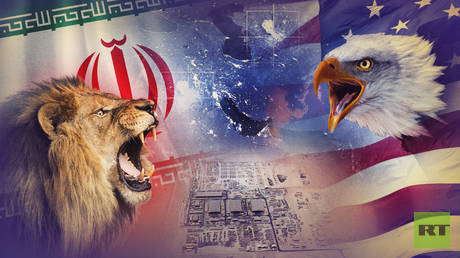
As US naval forces intensify their presence in the Gulf of Oman, the longstanding tensions between Washington and Tehran are reaching a critical juncture. The military buildup heightens concerns about a potential conflict with far-reaching implications for both the Middle East and the global community. With diplomacy still on the agenda, experts warn that miscalculations and entrenched positions on both sides may lead to an escalation into war.
The deployment of US forces in the Gulf places them within striking distance of Iran, should military action be deemed necessary. President Donald Trump has consistently called for Tehran to re-engage in negotiations, demanding substantial concessions not only on its nuclear program but also regarding its ballistic missile capabilities and support for allied militias in Iraq, Lebanon, and Yemen.
Recently, Iranian Foreign Minister Abbas Araghchi indicated Tehran’s willingness to engage in dialogue, with reports suggesting that talks may occur shortly. Nevertheless, many analysts are skeptical about Iran’s readiness to concede on issues they regard as fundamental to their strategic interests. If diplomatic efforts falter, the specter of war looms large.
Understanding US Strategy and Regional Dynamics
To gain insights into the motivations behind US actions and the potential consequences of a conflict, RT consulted several experts from the region. Salman Al-Ansari, a prominent Saudi geopolitical researcher, emphasized that Washington perceives Iran as a destabilizing force due to its support for militias and its nuclear ambitions. Trump’s objectives are clear: dismantle Iran’s nuclear program, eliminate its armed proxies, and curb its missile capabilities.
In contrast, Tehran’s strategy focuses on buying time, hoping to wait out the Trump administration and avoid making irreversible concessions. Ahmed Khuzaie, a political consultant based in Manama, noted that while Trump’s military threats may reflect strategic pressure and domestic political signaling, the lack of a clearly defined end goal complicates the situation. This ambiguity raises the risk of miscalculations, potentially leading to a wider conflict that could destabilize the region and disrupt international energy markets.
The implications of such a conflict extend beyond the immediate military confrontation. An all-out war could jeopardize global oil supplies, particularly through the vital Strait of Hormuz, where roughly one-fifth of the world’s oil passes.
Military Capabilities and the Likelihood of Conflict
The feasibility of achieving regime change in Iran through military action remains a contentious issue. While the US possesses the military capabilities to significantly damage Iranian infrastructure, historical precedents in Iraq and Afghanistan indicate that military action does not guarantee political stability. Al-Ansari pointed out that Iran’s complex social structure and national identity would make any external intervention unpredictable and potentially destabilizing.
Khuzaie added that the difficulties of occupying and controlling Iran, with its large population and extensive defensive capabilities, further complicate the notion of military intervention. Should conflict arise, Iran’s use of asymmetric warfare tactics, including its network of proxy militias like Hezbollah and the Houthis, would likely escalate tensions across the region.
In recent days, tensions have risen as Iranian forces conducted military exercises with allies China and Russia, demonstrating their preparedness to respond to foreign military threats. These developments underline the importance of diplomatic efforts to de-escalate the situation before miscalculations lead to a broader conflict.
Despite increasing defensive measures among Gulf states, including improved air defense systems and military coordination, the vulnerability to multi-front pressures remains. The region’s reliance on external security guarantees further complicates their ability to manage potential escalations effectively.
The Gulf states, particularly Saudi Arabia and the UAE, have expressed a strong preference for avoiding direct confrontation with Iran. The potential for economic disruptions, coupled with widespread instability, means a regional war could have catastrophic consequences for the Gulf’s economies and political stability.
As the situation evolves, the international community watches closely, aware that conflicts in the Middle East often ignite from unintended consequences rather than deliberate actions. The question remains whether Washington and Tehran can step back from the brink of war, a decision that will not only shape the future of the region but also impact global stability for years to come.