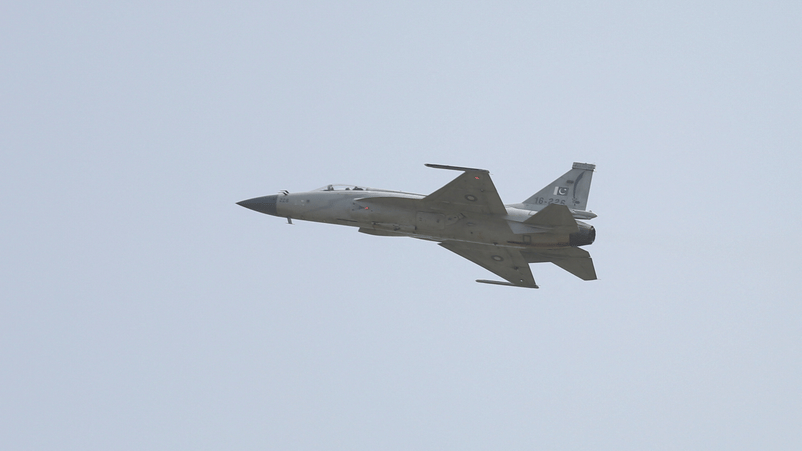
Pakistan and Saudi Arabia are currently engaged in negotiations to convert approximately $2 billion of Saudi loans into a deal for the purchase of JF-17 Thunder fighter jets, according to sources familiar with the discussions. This potential agreement represents a significant step in deepening military cooperation between the two countries, following the signing of a mutual defence pact in September 2023. As Pakistan grapples with acute financial challenges, this deal could provide a much-needed boost to its defence capabilities.
The talks focus primarily on the provision of JF-17 fighter jets, which are light combat aircraft developed collaboratively by Pakistan and China. According to one source, the overall deal could reach a total value of $4 billion, with an additional $2 billion earmarked for related equipment and systems. These discussions come at a critical time for both nations, as Saudi Arabia seeks to redefine its security partnerships in light of uncertainties regarding United States commitments in the Middle East.
The mutual defence pact signed last September was prompted by escalating tensions in the region, particularly following Israeli military actions against Hamas targets in Doha. This agreement commits both countries to treat any aggression towards either as an attack on both, thus significantly enhancing their longstanding security partnership.
Pakistan’s Air Chief, Zaheer Ahmed Baber Sidhu, recently visited Saudi Arabia for bilateral talks that included discussions on military cooperation. Saudi media outlet SaudiNews50 reported on the visit, highlighting its significance in the context of ongoing negotiations.
Retired Air Marshall Amir Masood noted that Pakistan has been in discussions or has finalised agreements with multiple nations regarding the JF-17 aircraft and related systems. He emphasized that the JF-17’s combat readiness and cost-effectiveness have made it an attractive option for potential buyers. The aircraft was notably deployed during the heavy conflict between Pakistan and India in May 2022, further solidifying its operational credentials.
Despite the ongoing negotiations, official responses from Pakistan’s military and government ministries have yet to materialise, as has been the case with Saudi Arabia’s government media office.
Pakistan has a history of military support to Saudi Arabia, including advisory roles and training programs. In 2018, Riyadh extended a financial support package worth $6 billion, which included a $3 billion deposit to Pakistan’s central bank and an equivalent amount in oil supplies on deferred payment terms. This financial assistance has been crucial for Islamabad, particularly during periods of economic strain, as evidenced by the rollover of deposits and loans in the past year.
As Pakistan looks to enhance its defence capabilities and expand its arms exports, the government has recently signed a weapons deal valued at more than $4 billion with Libya’s eastern-based Libyan National Army. This transaction includes JF-17 fighter jets and training aircraft, marking one of Pakistan’s largest arms sales to date. Additionally, discussions are ongoing with Bangladesh regarding the potential sale of JF-17s, illustrating Pakistan’s ambition to broaden its arms supply reach beyond South Asia and into the Middle East.
During a recent interview, Defence Minister Khawaja Asif expressed optimism about the future of Pakistan’s weapons industry, stating that the growing demand for its military aircraft could significantly improve the nation’s economic outlook. He suggested that with the current influx of orders, Pakistan may not require assistance from the International Monetary Fund (IMF) within the next six months. Currently, Pakistan is under a $7 billion IMF programme, which followed a short-term $3 billion deal that helped avert a sovereign default earlier in 2023.
As the negotiations between Pakistan and Saudi Arabia continue, the outcome may have far-reaching implications not only for their bilateral relations but also for the broader geopolitical landscape in the region.