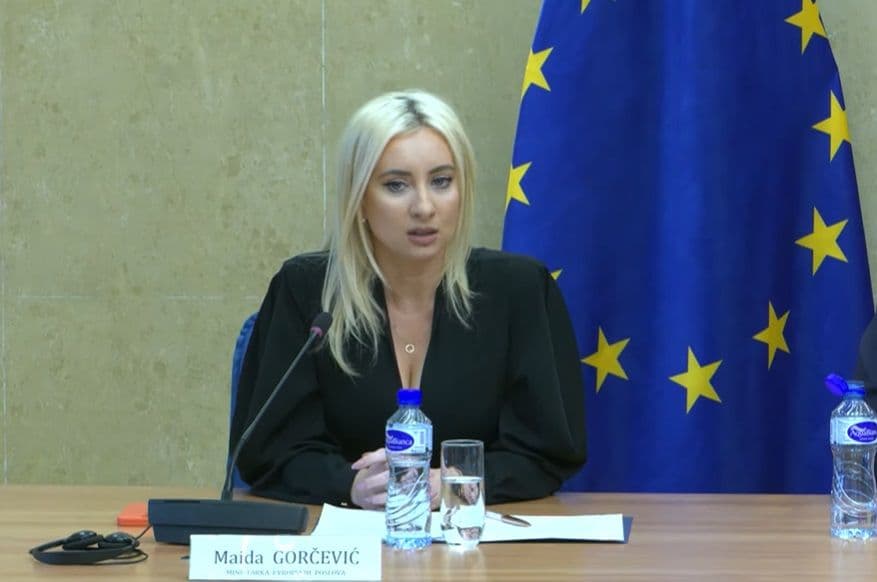
Montenegro is making significant strides in its negotiations to join the European Union (EU), despite facing recent setbacks related to the closure of specific chapters. Minister for European Affairs, Maida Gorčević, stated that the country has met all final benchmarks required for five negotiation chapters. This announcement follows remarks from Ivan Vuković, who indicated that only three chapters might be closed by the end of the year.
During a session of the Committee for European Integrations, Gorčević emphasized that the integration process involves both technical and political elements. She noted, “From our side, we have fulfilled the requirements. The European Commission has confirmed that we have met all obligations; now, political will from the 27 member states is necessary.”
Her comments come in light of recent developments where France blocked the closure of two chapters: Chapter 11, which pertains to agriculture and rural development, and Chapter 13, focused on fisheries. This action means Montenegro is now likely to close only three out of the anticipated five chapters in its EU negotiations by the end of 2023.
Political Dynamics Impacting Negotiations
Gorčević highlighted that the path to EU membership is often influenced by political considerations among member states. She pointed out that while Montenegro has successfully resolved issues at both technical and political levels, some countries raise additional questions based on their specific interests. “Some states may be more focused on agriculture, prompting inquiries in that area, while others may be concerned with the transitional period for Chapter 13,” she explained.
Despite these challenges, she maintained that substantial progress has been made. “A huge amount of work has been done regarding these five chapters,” Gorčević stated. Her remarks reflect the ongoing efforts of Montenegro to align itself with EU standards and requirements, fostering hope for eventual membership.
Future Prospects for Montenegro’s EU Integration
With the EU integration process being both complex and multifaceted, the recent decision by France to block the closure of the two chapters poses a challenge for Montenegro. However, Gorčević remains optimistic, asserting that the country has already demonstrated its commitment to fulfilling the necessary criteria.
The political landscape within the EU can shift rapidly, and Montenegro’s government is hopeful that ongoing discussions can lead to the eventual closure of all five chapters. The coming months will be crucial as Montenegro navigates these challenges and seeks to secure the necessary political support from EU member states.
As the negotiations continue, the focus will remain on the technical requirements laid out by the European Commission and the political dynamics that influence member states’ decisions. Montenegro’s commitment to the EU integration process remains steadfast, with officials actively working to address concerns and facilitate progress.