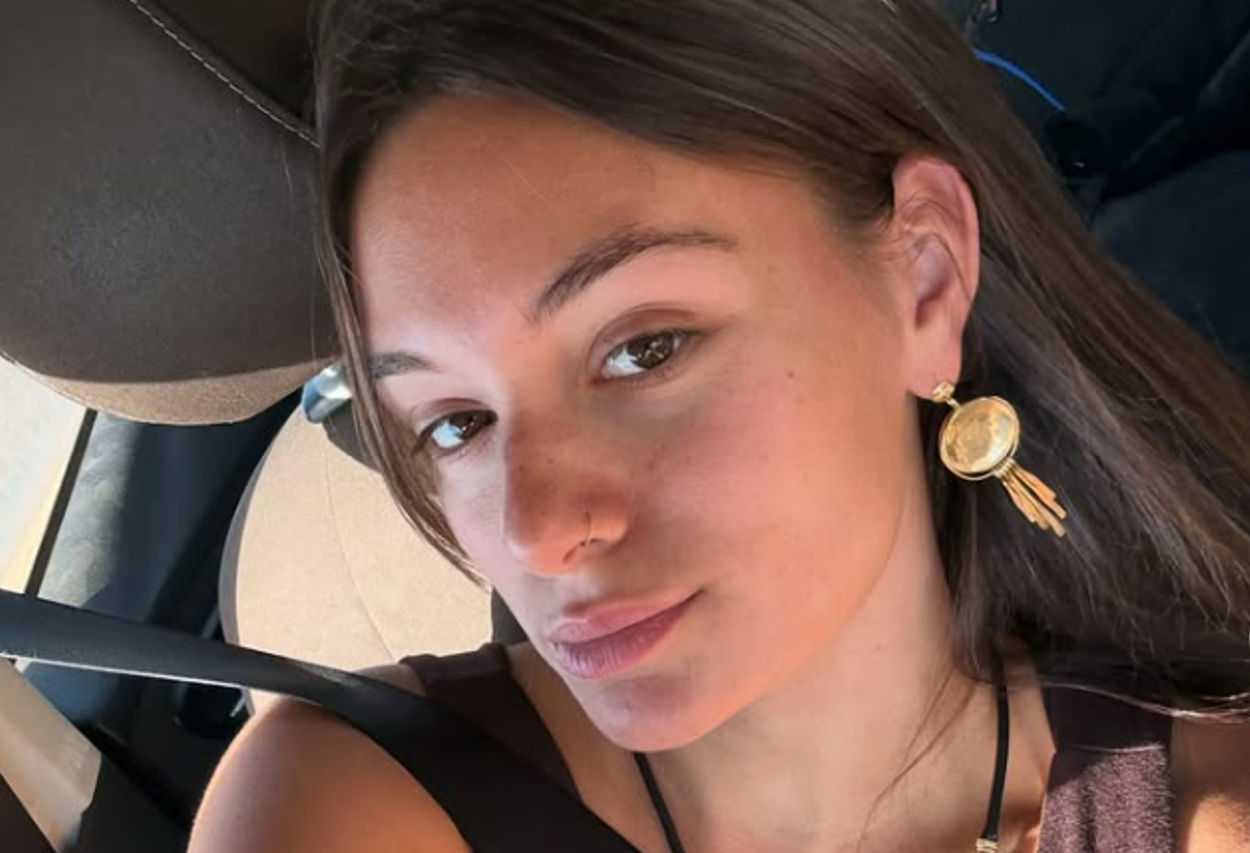
An Israeli woman is at the center of a viral sensation after a news report incorrectly claimed she had been executed in Iran. Noya Zion, who has never visited Iran, expressed her shock upon seeing her photo on Israel’s national television, alongside a misleading report from Channel 12 News. The broadcast stated that she was one of four Jews allegedly killed during protests in Iran, misidentifying her as Sanaz Javaherian, a supposed victim of Iranian security forces.
In a video shared on her Instagram account, Zion addressed the situation directly. “Wow, can you explain how this happened? And what happened? You didn’t understand from the stories,” she questioned, visibly bewildered. In her video, Zion clarified, “I’m here, I’m alive, sitting at home, and in half an hour I’m going to training. I’ve never been to Iran in my life.” She expressed disbelief that her photo had been used in such a manner, stating, “My photo was broadcast as if I had been executed.”
Zion’s father took a more lighthearted approach on Facebook, suggesting that the mix-up might stem from her resemblance to Israeli actress Niv Sultan, known for her role in the series “Tehran.” He humorously noted, “Maybe she looks like Niv Sultan; maybe Niv Sultan looks like her,” while firmly declaring that his daughter was not in Tehran during the reported unrest. He criticized Channel 12, calling it “a channel of fools” for its role in the misinformation.
The erroneous report has sparked significant backlash on social media, with many users expressing outrage over what they describe as a blatant journalistic error or an example of Israeli propaganda. “Wild. The lengths they go through to lie,” one user remarked, while another stated, “Israeli propaganda is so efficient it even kills its own settlers on TV.” Some comments called the situation “pure propaganda,” arguing that the media fabricates stories to instill fear.
The incident highlights the ongoing tensions between Israel and Iran, particularly as unrest continues within Iran. On January 8, 2026, the longstanding animosity shifted focus from military confrontations to internal stability, as the Iranian government faced unprecedented domestic challenges. Amid a nationwide internet blackout aimed at suppressing protests, the regime accused Israel and the United States of instigating terrorism to destabilize the state.
From Israel’s perspective, the emphasis has been on preventing the Iranian regime, distracted by internal upheaval, from launching military actions that could rally national support. This has led to heightened military readiness and continued operations against Hezbollah in Lebanon.
As the narrative around Noya Zion continues to unfold, the incident serves as a reminder of the delicate balance between media representation and the real-life implications that such representations can create. The erroneous claim not only affected Zion personally but also reignited debates about the integrity of news reporting in a highly polarized region. The lack of a correction from Channel 12 News further complicates the situation, leaving many to question the credibility of the information disseminated by mainstream media.