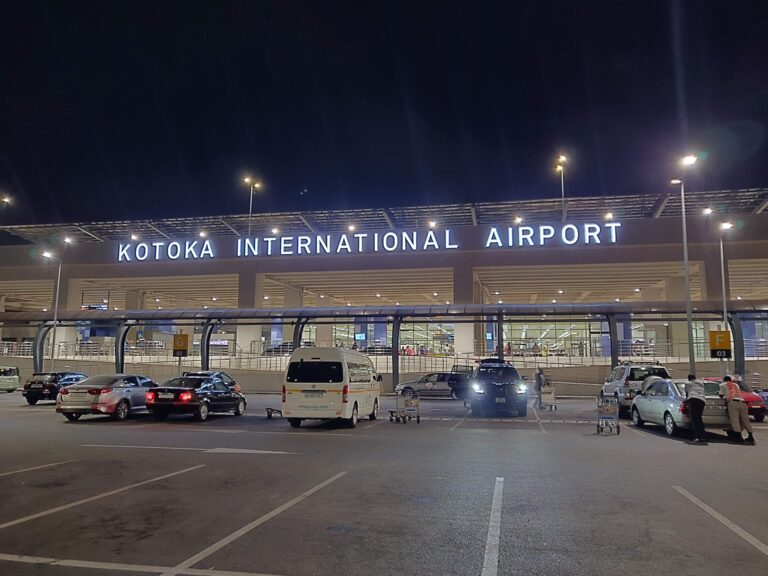
The government of Ghana has officially renamed Kotoka International Airport back to its original title, Accra International Airport. This decision marks a significant shift after 60 years of the airport bearing the name of Emmanuel Kwasi Kotoka, a military officer involved in the coup that overthrew the nation’s first president, Kwame Nkrumah, in 1966. The announcement has ignited a nationwide debate regarding the implications of honoring a controversial historical figure.
According to the Ministry of Transport, the change was made to reflect the national capital’s name and to project a more neutral image on the international stage. Transport Minister Joseph Bukari Nikpe stated, “The change was aimed at projecting a neutral national image and reflecting the name of the capital city, Accra,” emphasizing the government’s desire to align current values with Ghana’s evolving democratic principles.
Kotoka played a pivotal role in the military coup that deposed Nkrumah, who led Ghana to independence in 1957. Following Kotoka’s death in a counter-coup attempt in 1967, the military government renamed the airport in his honor, framing him as a liberator from what they termed Nkrumah’s authoritarianism. Yet, this representation has faced scrutiny from various quarters, particularly from civil society groups who argue that honoring a coup leader contradicts the democratic values Ghana has sought to uphold.
Critics of the name change have emerged, including Alexander Afenyo-Markin, the minority leader in parliament, who claims the decision erases Kotoka’s legacy and service to the nation. He highlighted the airport’s name as one of the few national honors acknowledging the contributions from the Volta Region, Kotoka’s home region. This sentiment is shared by several members of Kotoka’s family and others who view the renaming as a betrayal of local history.
The debate has gained traction following the return of President John Mahama to power after the December 2024 elections. Public discourse has intensified online, with Ghanaians expressing mixed feelings regarding the political, legal, and historical ramifications of the name change. Some have raised concerns over the financial implications of rebranding the airport, questioning why the government is focusing on this issue rather than pressing matters like unemployment and living conditions.
In response to the controversy, the Ministry of Transport has urged the public and international partners to support the transition. The ministry reassured stakeholders that the renaming would not disrupt airport operations, safety standards, or international travel. They emphasized the importance of cooperation among relevant authorities to ensure a smooth transition.
As this debate unfolds, it has rekindled discussions about Ghana’s political history, particularly the events leading up to the 1966 coup. Nkrumah faced significant criticism during his tenure, with opponents accusing him of increasingly oppressive governance. Historians continue to explore the role of Western powers, notably the Central Intelligence Agency, in the circumstances surrounding Nkrumah’s removal.
Since the restoration of multiparty democracy in 1992, Ghana has experienced a series of closely contested elections, maintaining a reputation for peaceful power transfers. The recent decision to rename the airport signals a broader reflection on the country’s past and its aspirations for the future. As the public engages in this lively debate, the implications of such historical narratives will undoubtedly continue to shape Ghana’s national identity.