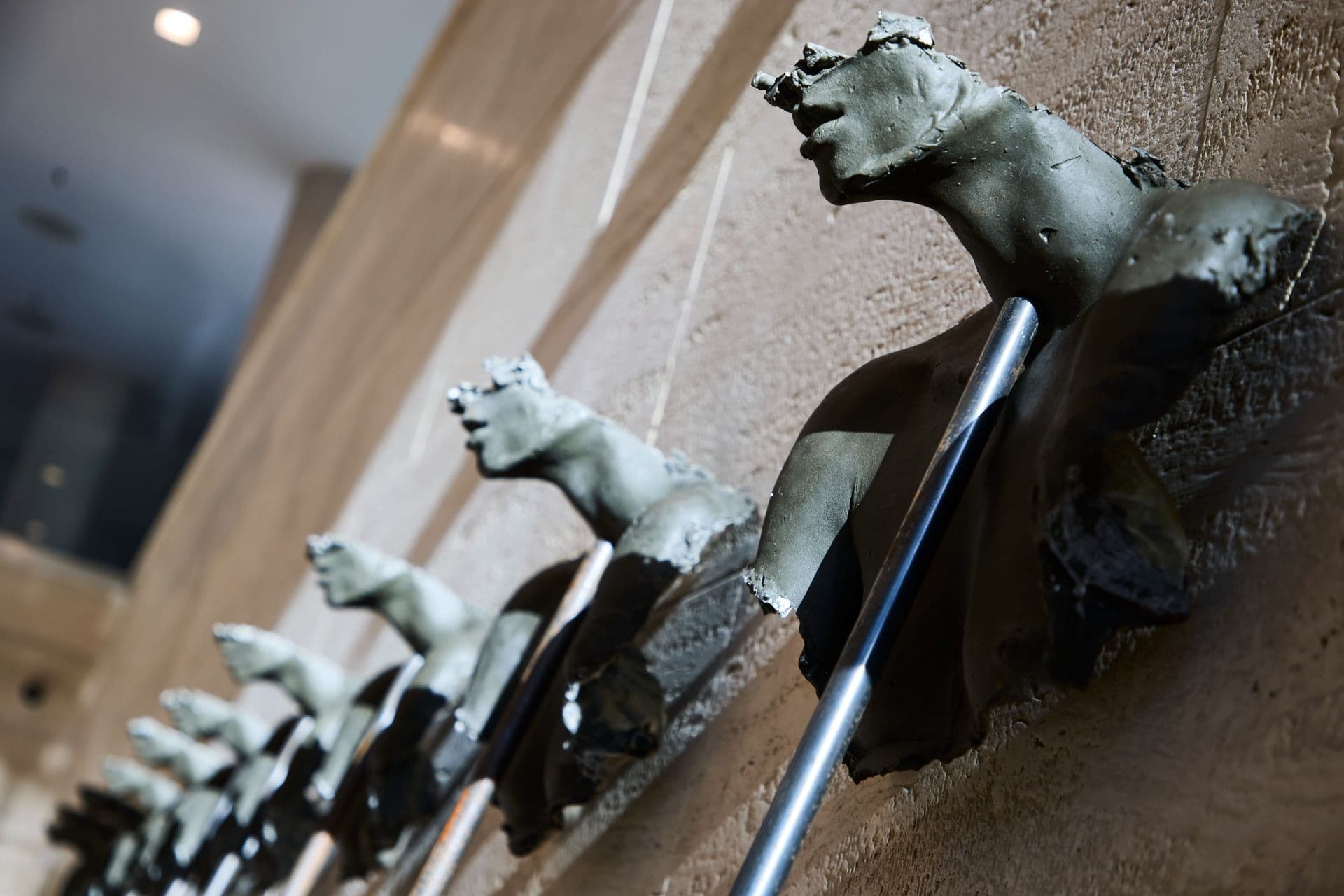
The Crnogorska akademija nauka i umjetnosti (CANU) is set to open a prominent exhibition titled “Ad Iuventas” featuring the works of young Montenegrin artists. The exhibition will commence on March 15, 2024, at 19:00 in the Gallery CANU. A panel of judges, composed of members from CANU’s Department of Arts, will award a prize of 2,000 EUR to the best artwork, further encouraging the creative potential of emerging artists.
Visitors will have the opportunity to explore the works of fifteen young talents, including Jovana Vujović, Milica Živković, Jovana Vujanović, and others. During a recent visit to the exhibition’s preparation, Pavle Pejović, the head of Gallery CANU, alongside curators Ljiljana Karadžić, Svetlana Racanović, and Maša Vlaović, emphasized the exhibition’s role as a strong institutional support for young artists. They noted that this initiative is rooted in the authenticity, research freedom, and potential of artists to address important societal and personal themes through contemporary artistic language.
Pejović highlighted that CANU has long established a Centre for Young Scientists, which has been a significant platform for promoting the most talented individuals. He stated, “In the past, I proposed transforming this centre into a hub for young scientists and artists, which gained support.” With the acquisition of a new building featuring a representative gallery space, the timing became a matter of coordinating various exhibition activities.
Vlaović elaborated on the central theme of the exhibition, focusing on the exploration of contemporary experience, identity, and the ways in which art can reinterpret reality. The concept, titled “4 / Meet,” signifies four encounters, four artists, and four distinct ideas converging on a shared path of contemplation. She noted that despite their diverse media, the artists share a research-oriented approach and sensitivity to personal and societal issues.
Each artist employs a unique language: Vujović utilizes introspective body imagery to depict internal struggles, Vujanović critiques the mundane through playfulness, Delić explores symbolic meanings, and Živković investigates women’s identity at the intersection of tradition and modernity. Together, they create a dialogue that merges social reflection, play, and symbolism.
The exhibition delves into questions of identity, gender roles, and symbolism through various artistic approaches. These range from body and emotion explorations to depictions of contemporary individuals trapped in the routines of daily life, presenting symbolic objects that prompt introspection. Vlaović asserts that the exhibition challenges contemporary audiences to consider how individuals maintain their voice and autonomy in a society that often imposes speed, superficiality, and social distance.
She explains that the exhibition invites viewers to critically reflect on their roles and responsibilities within their communities while recognizing new approaches through art. The overarching theme emphasizes the transformation of the individual, encouraging the audience to take initiative, question established patterns, and become the change they wish to see.
Karadžić emphasized that the selection of five young artists—Željka Jovićević, Milka Delibašić, Milena Vukoslavović, Srđa Dragović, and Luka Mrkaić—was based on their individual poetic expressions rather than a specific curatorial theme. She remarked, “This selection reflects their youthful enthusiasm, fresh perspectives, and serious research, demonstrating trust in their potential for growth.”
In her accompanying text, Karadžić discussed the relationship between “security” and “freedom” in art. She noted, “If security in art means consolidating established positions and operating within confirmed practices, then the choice of young artists embodies freedom. This choice arises from a desire for the risks that bring the joy of the unexpected and the newly discovered.”
Racanović, who curated works by Ana Novaković, Maša Laković, Sandra Đurović, Ivana Mašanović, Marko Kilibarda, and Mijat Bojović, explained that her selections did not conform to traditional artistic media classifications. She emphasized that the artists’ openness and ability to define compelling concepts ultimately guided her choices.
The exhibition will remain open until the end of February 2026. Pejović expressed that exhibitions like this should be organized triannually to ensure high-quality presentations, noting that more frequent exhibitions could lead to repetition. He affirmed that CANU, as the umbrella institution for science and art in Montenegro, is committed to supporting young artists by providing quality presentations, including the publication of a representative catalogue and the establishment of the CANU award, which will be granted by a jury appointed by the CANU Presidency.
This initiative stands as a mission with a promising future, demonstrating CANU’s dedication to fostering the artistic community in Montenegro.