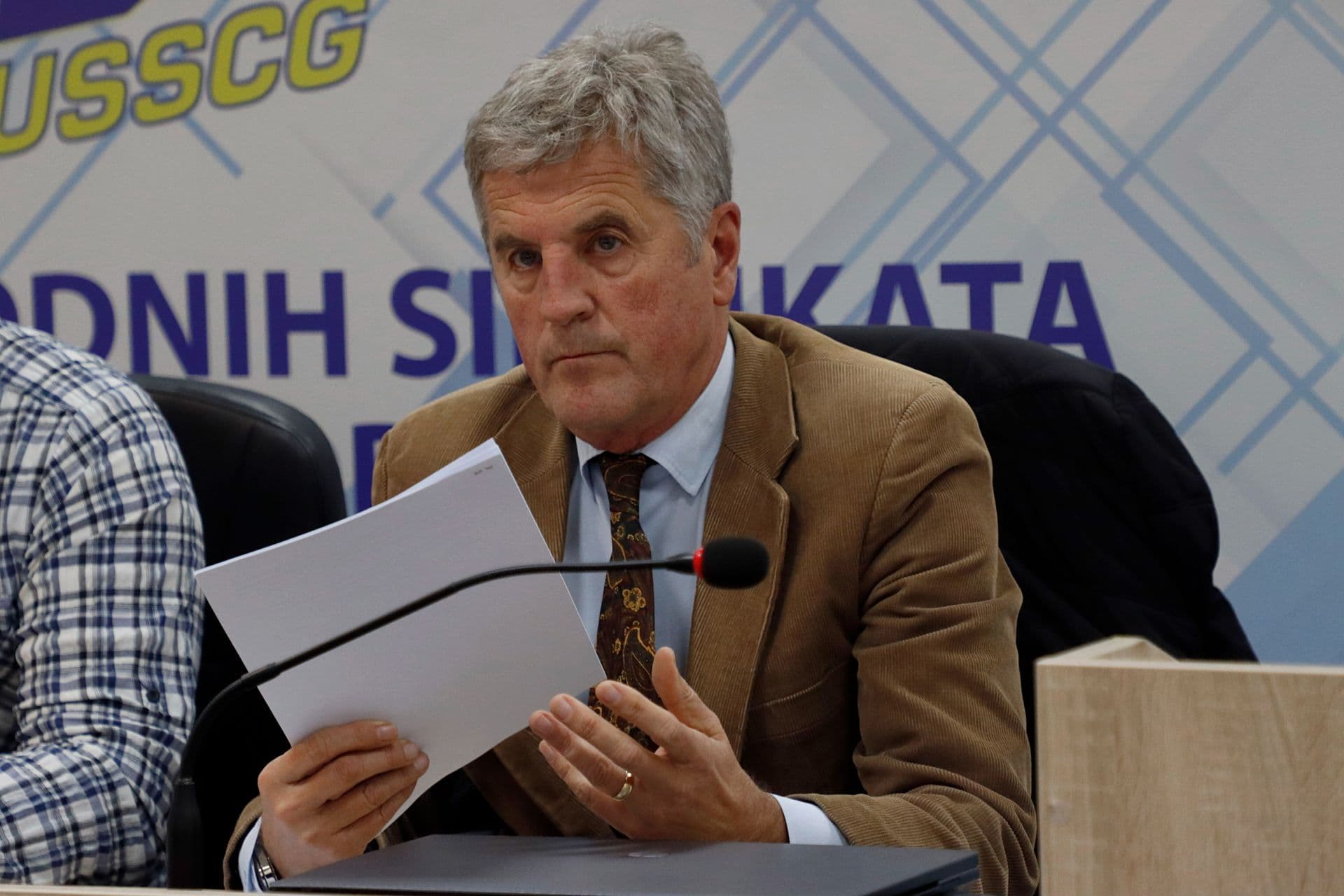
The General Secretary of the Union of Free Trade Unions, Srđa Keković, announced that the Employers’ Union of Montenegro has agreed to raise the calculation value of the coefficient to €100 gross. This proposal aims to ensure that salary increases apply equally to both the private and public sectors. The announcement follows a meeting of a working group from the relevant ministry, which is currently discussing amendments to the General Collective Agreement.
Keković expressed optimism, stating, “We expect the arguments we have put forward to be accepted by decision-makers. We believe it is high time for this to happen.” The meeting was adjourned for further consultations, indicating ongoing discussions regarding the proposed salary adjustments.
On March 13, 2024, Minister of Labour, Employment, and Social Dialogue, Naida Nišić, expressed surprise at the Union’s initiative, which targets only the public sector for a 10% salary increase. She indicated that while she would not approve this specific approach without addressing the private sector, she was open to discussions about the broader issue. Nišić emphasized the need for analyses and expressed hope for a compromise.
Keković clarified that the Union is advocating for salary increases across both sectors. “We are grateful to the Employers’ Union of Montenegro for recognizing the need to maintain living standards, especially as young people are leaving the country,” he said.
Keković pointed to the government’s obligation to present a draft budget law to the Social Council, a request that has been made multiple times by social partners prior to the proposal being submitted to the Assembly. He noted that the Union has not yet received this draft, despite efforts to meet with the Prime Minister to discuss several pressing issues, including the effects of inflation and the necessity of raising the calculation value to preserve the benefits of the “Europe Now” initiative.
“If the increase does not occur as planned on January 1, we risk losing the achievements of ‘Europe Now’,” Keković warned. He reminded the audience that the World Bank has conditioned the government to halt budget growth, which restricts salary increases. Nonetheless, he pointed out that there are substantial resources within the budget that could facilitate salary hikes.
Keković highlighted specific areas where funds could be reallocated, noting that party funding has doubled to €20 million in recent years and that there have been increased expenses for consulting services. The tourism sector alone reportedly suffers losses amounting to hundreds of millions of euros.
“We can save the €90 million gross necessary for public sector salaries through budget adjustments,” he stated. He reiterated the Employers’ Union’s agreement that now is the time to increase the calculation value of the coefficient to €100 gross, aiming to stimulate retention within the workforce.
Keković criticized the government for failing to engage in social dialogue, stating that this absence has forced unions to communicate their needs through the media. He remarked, “The lack of social dialogue promised by this government is evident.”
He also condemned the government’s refusal to meet with representative unions regarding salary increases and the next year’s budget formulation, receiving a reply from the Prime Minister’s office that such discussions are outside the Prime Minister’s purview. “This is nonsensical. We must fight for our arguments, which we believe are justified,” Keković asserted.
Last week, the Union of Free Trade Unions of Montenegro held a press conference to express their frustration over the government’s lack of response to their initiatives. They indicated that an analysis of the budget suggests that salaries in the public sector could indeed be increased by 10%, requiring an estimated €90 million in funding. If a compromise cannot be reached, the Union has indicated that they will escalate their communications with the Prime Minister through demonstrations.
The call for increased salaries comes at a time when economic pressures in Montenegro are prompting discussions about the need for adjustments to ensure that both public and private sector employees can maintain their living standards.