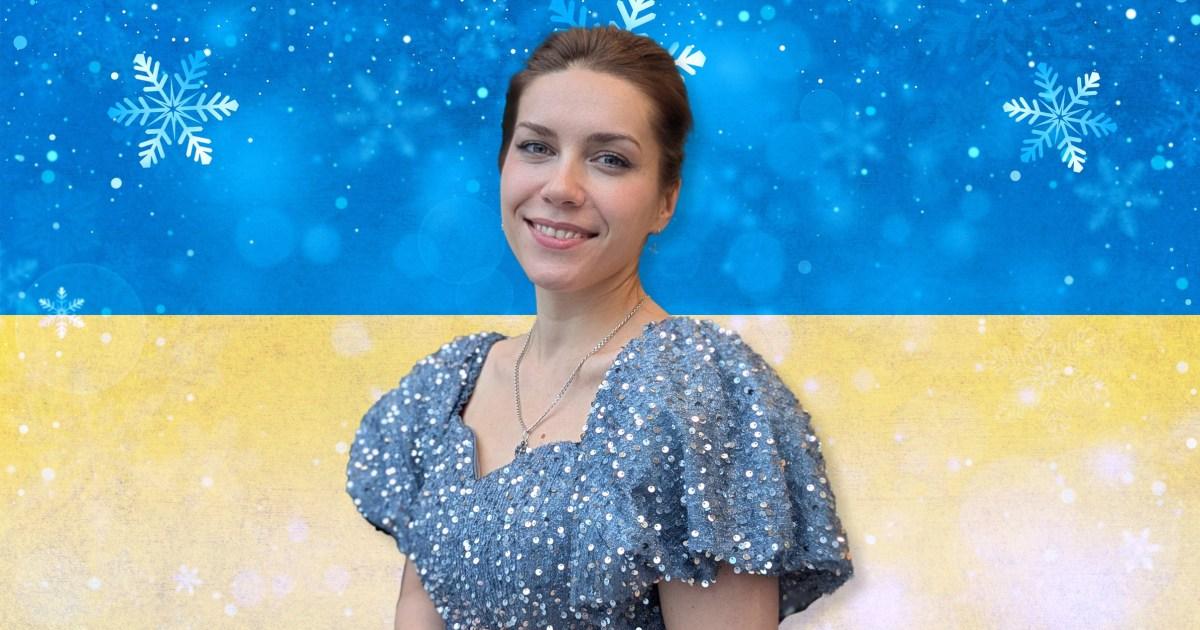
As Christmas approaches, many Ukrainians living abroad are finding ways to celebrate their traditions while grappling with the ongoing war in their homeland. For individuals like Mariia Kushch, who fled Ukraine shortly after the Russian invasion began on February 24, 2022, this festive season evokes deep nostalgia and a complex blend of emotions.
On that fateful morning, Mariia awoke to the sound of explosions near her home just outside of Kyiv. With her seven-year-old son in tow, she sought refuge in the basement of their apartment building. What followed was a harrowing escape from a country engulfed in conflict. Now residing in Hertfordshire, Mariia reflects on the lives lost and the cultural traditions she holds dear.
According to the United Nations, there have been over 53,000 civilian casualties and 14,534 deaths in Ukraine since the war began. “We have uprooted everything we knew,” Mariia said, noting the challenges of adapting to a new language and culture while missing her homeland. Christmas serves as a poignant reminder of her roots, filled with cherished memories of celebrating St Nicholas Day on December 6, where children look forward to gifts placed under their pillows.
Ukrainians traditionally celebrate Orthodox Christmas on January 7, marking the end of a festive season that embodies community and togetherness. Mariia reminisces about carolling and the traditions that have become symbols of resilience, such as the song “Shchedryk,” known globally as “Carol of the Bells.” This year, she plans to celebrate with another Ukrainian family nearby, sharing carols and preserving cultural ties that bring a sense of home to their new lives.
Karyna, another Ukrainian expatriate now living in London, shares similar sentiments. Having experienced the invasion first-hand, she describes her last Christmas in Kyiv as the “most beautiful” she ever had. She recalls the warmth of family gatherings, complete with traditional dishes like kutia, a sweet dish that signifies health and prosperity. “This Christmas, I plan to make the Sviata Vecheria dinner and celebrate with friends,” Karyna expresses, emphasizing the importance of keeping traditions alive.
The resilience of the Ukrainian people is evident in their unwavering spirit, even in the face of hardship. Karyna believes that the unity among Ukrainians provides hope for the future, reinforcing the idea that their fight is not merely geopolitical but rooted in the preservation of culture and dignity. “Ukrainians are fighting not for power, but for the ability to live with dignity, make their own choices, and preserve their traditions,” she asserts.
Efforts to support Ukraine continue from abroad as charities mobilize to provide essential aid. Fynn Watt and Jacob Simpson, the founders of Driving Ukraine, have organized convoys delivering life-saving vehicles to the front lines. Their latest effort involved a convoy of sixteen vehicles, including ambulances, which were decorated with Christmas lights. “We’ve delivered over 270 vehicles and raised more than £1.7 million for the cause,” Jacob explains, highlighting the commitment of volunteers who wear Christmas jumpers and Santa hats as they traverse Europe.
Karol Swiacki, founder of Ukraine Relief, echoes similar sentiments about the ongoing challenges faced by those in Ukraine. He has spent nearly 240 days in the country since the invasion began, delivering vital supplies, including ambulances and medical equipment. “The people in Ukraine are fighting for freedom because of their families,” he shares. These personal stories remind us that for many, Christmas is a time of hope intertwined with sorrow.
While many Ukrainians celebrate the season abroad, the realities of war cast a shadow over the festivities. Mariia, Karyna, and countless others remind us that the true spirit of Christmas lies not only in celebration but in the strength of community and the enduring connection to their homeland. As they navigate their new lives, the traditions of Ukraine remain a vital part of their identity, serving as a bridge to the past and a beacon of hope for the future.