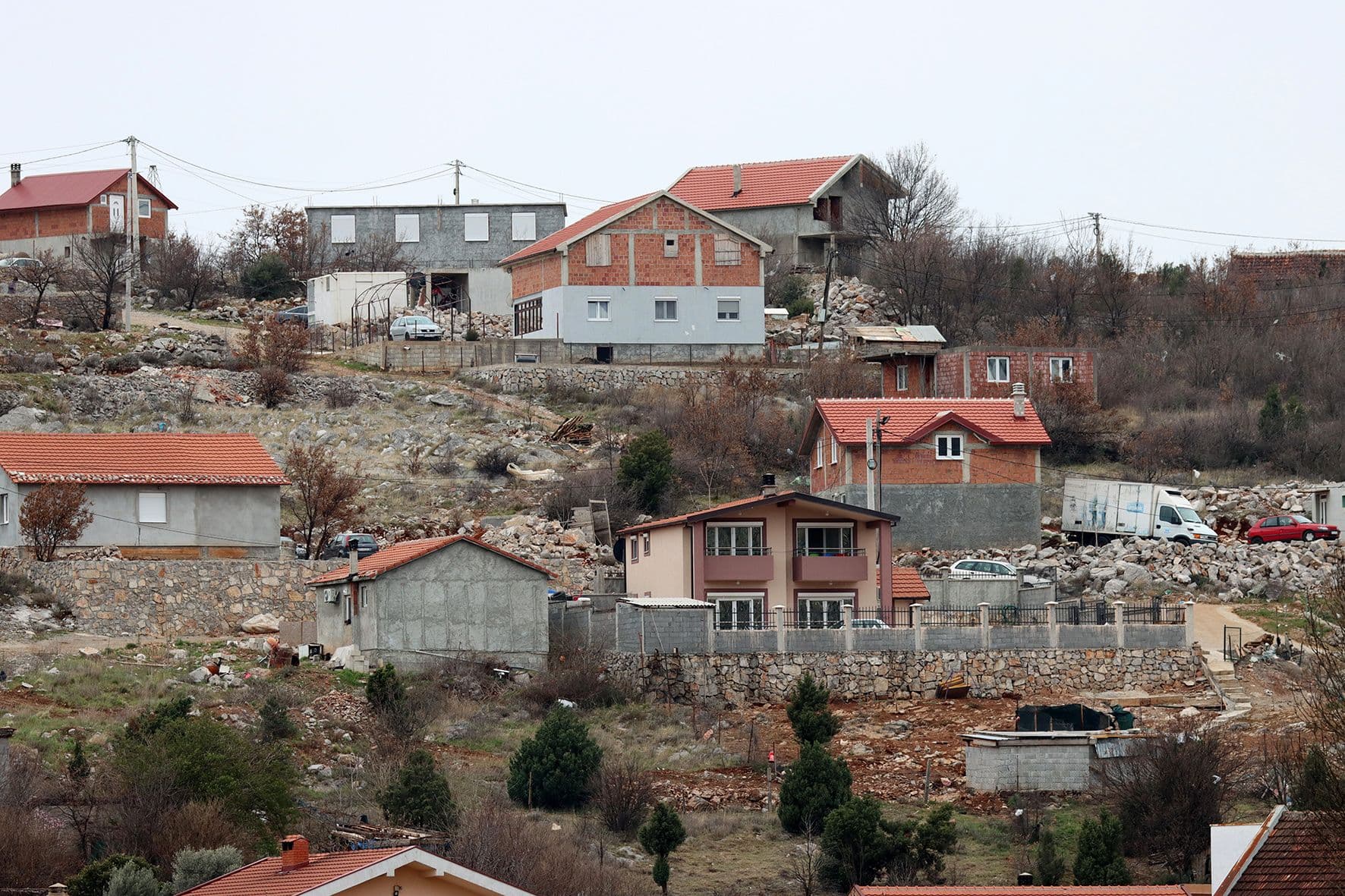
Legalization of illegal structures in Montenegro remains a long and uncertain process for many citizens. According to Željka Krivokapić-Milićević, director of the Centre for Legalization of Real Estate, the application of the law over the past seven years has often lagged behind the evolving legal framework, leaving citizens caught in a web of bureaucratic challenges.
Krivokapić-Milićević highlights that since the introduction of the first legal solution for legalization in 2017, the law has frequently been ahead of the institutions responsible for its implementation. Citizens have found themselves navigating a complex system involving the cadastre, local governments, and fluctuating procedures. Her main message underscores that legalization must prioritize the needs of the citizens, without compromising state interests.
Many individuals entered the legalization process believing that possession of property documentation was sufficient. However, they soon discovered that registration in the cadastre does not equate to legality and that the absence of burdens or restrictions does not signify the presence of a building permit. This realization often came at critical moments, such as during sales, inheritances, or attempts to secure credit for tourism-related activities.
Procedures have evolved alongside changing laws, often outpacing the ability of citizens and administrative bodies to adapt. As Krivokapić-Milićević notes, what was once a rule can quickly become an exception, leading to frustration among those trying to comply with the law. Citizens often found themselves mediating between institutions that lacked coordinated databases, standardized forms, and effective communication.
This frustration is particularly pronounced for those whose properties have undergone modifications over time. Changes such as enclosed terraces, additional rooms, or converted attics have complicated the legal identity of these structures. Krivokapić-Milićević emphasizes that many citizens have worried whether minor alterations could jeopardize their entire legalization process.
Facing strict deadlines has intensified pressure on citizens. They are often confronted with legal terms beyond their control, as the speed of resolution depends on the capacity of institutions like the cadastre and local administrations. These bodies handle tens of thousands of cases, frequently with insufficient staffing and ever-changing procedures.
Krivokapić-Milićević stresses that this issue is not a critique of individual officials but rather a commentary on a system needing more personnel, clearer rules, and greater stability. She expresses empathy for the challenges faced by employees in the cadastre and local administrations, who operate under significant pressure.
The situation is particularly challenging for expatriates and foreign property owners. Physical distance, tight deadlines, and the necessity for notarizations complicate the legalization process, making it both expensive and stressful. Many have been paying taxes regularly, which exacerbates feelings of injustice, as the state acknowledges their properties for tax purposes but fails to provide full legal certainty.
Krivokapić-Milićević points out that the most vulnerable groups include elderly citizens, families with a single home, and those who built during periods when planning documentation was scarce or unavailable. For these individuals, legalization transcends profit; it represents dignity and security.
She draws a clear line between the legalization of luxury properties constructed for profit and family homes built for living. The recent announcement of new legislative changes presents cautious but realistic hope. For the first time, there seems to be an attempt to address the specific issues raised by citizens over the years. Extending deadlines acknowledges the realities of life and administration. Clarifying the relationship between documentation and property identity aims to alleviate fears that minor technicalities could derail the process.
While these legislative amendments are promising, Krivokapić-Milićević remains realistic, stating that no law can resolve the issue without stable procedures, consistent application, intersectoral communication, and significant digitization efforts. She emphasizes that the state must establish a clear boundary for the future: while understanding the past may justify legalization, new constructions without permits must face zero tolerance, stringent oversight, and serious penalties.
The crux of the legalization issue in Montenegro revolves around one fundamental question: do we want a system that provides citizens with clear rules and security, or one where individuals must navigate uncertainty? The answer will be evident not only in legal texts but in practice—whether citizens will feel that regulations are not traps but pathways to resolution. This discussion extends beyond urban planning and law; it encompasses trust, responsibility, and societal maturity, as articulated by Željka Krivokapić-Milićević.