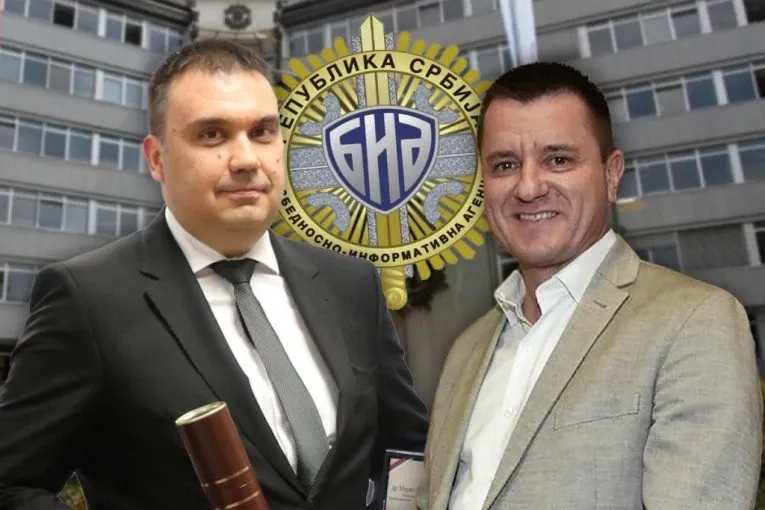
Marko Parezanović has been dismissed from his position as the head of the Bezbjednosno informativna agencija (BIA), Serbia’s security and intelligence agency. He has been replaced by Nikola Vasiljević, who previously served as the head of the BIA’s Novi Sad center. Following his removal, Parezanović has taken on a role as an advisor to the BIA director, a position that reportedly carries significantly less authority and influence.
The decision to replace Parezanović comes with indications of further personnel changes within the BIA expected before the end of the year. His tenure as a prominent figure in the agency has been marked by close ties to Serbian President Aleksandar Vučić, but it has also been clouded by multiple controversies and allegations.
Parezanović’s name has surfaced in connection with various dubious activities. Notably, he was mentioned in communications involving the Šarić brothers, linked to notorious criminal operations. These messages, exchanged via the encrypted platform “Sky,” suggested an attempt to influence judicial proceedings regarding Darko Šarić, a figure facing serious criminal charges. The discussions also involved Milimir Lukić, a judge of the Appeals Court, whose integrity appeared to be a concern among the criminals involved.
Additionally, KRIK, a Serbian investigative journalism outlet, reported that Serbian police had implicated both Nebojša Stefanović and Parezanović in a criminal complaint as facilitating activities for Darko Šarić. According to the investigation, Stefanović had assigned two police associates to assist Šarić’s criminal network and allegedly provided confidential information to them. Messages exchanged among the criminals revealed that Stefanović received a luxury watch valued at approximately €17,000 from the group.
There are also allegations that Parezanović served as a conduit to a powerful official referred to as “Oskar” in the intercepted communications. President Vučić has publicly stated that he is uncertain whether he is the “Oskar” mentioned in these discussions, adding complexity to the ongoing scrutiny surrounding both Parezanović and his former associates.
As these developments unfold, the implications for the BIA and its leadership remain significant. The agency’s future direction and operational integrity are now under the microscope, especially amid past controversies surrounding its officials. The public will be closely monitoring any further personnel changes and their potential impact on Serbia’s security landscape.