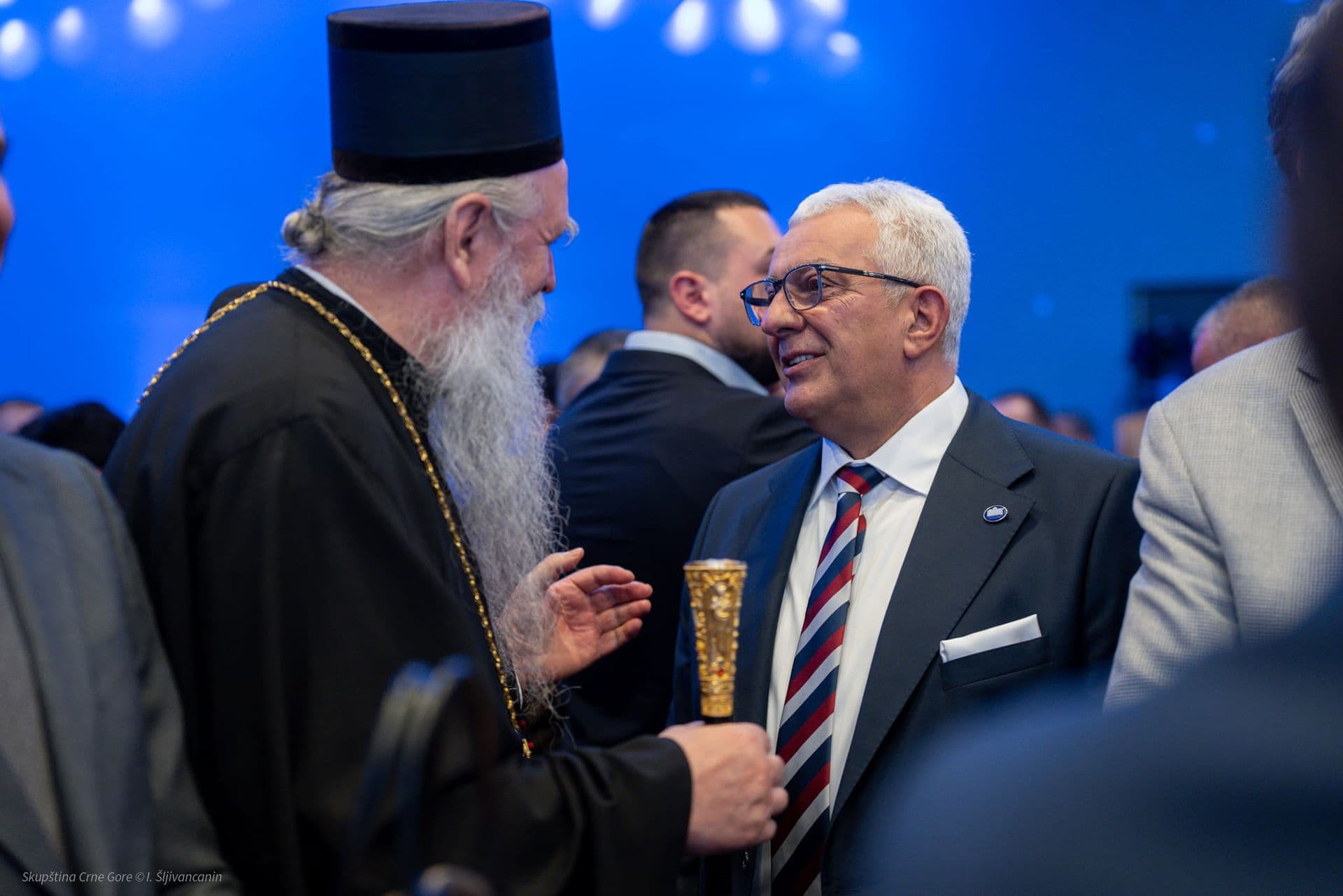
The President of the Parliament of Montenegro, Andrija Mandić, hosted a ceremonial reception on March 15, 2024, marking the 120th anniversary of the adoption of the Constitution for the Principality of Montenegro. During this event, Mandić emphasized the need to align the current constitution with contemporary realities, particularly regarding the status of the Serbian language.
In his opening remarks, Mandić recalled the significance of the Nikoljanski Constitution, Montenegro’s first constitutional act. He noted that this document represented the country’s entry into the community of modern European states, establishing the separation of powers and defining citizens’ rights and duties. The constitution also played a pivotal role in transitioning Montenegro from a patriarchal system to a modern constitutional monarchy, while preserving its identity, traditions, and historical heritage.
Mandić underscored that the Nikoljanski Constitution serves as a reminder that a constitution is not merely a legal instrument but a social agreement and a foundation of trust between citizens and the state. He pointed out that the current constitution, enacted nearly two decades ago, does not adequately reflect the societal realities of Montenegro. Many of its provisions, he argued, are due for alignment with the modern state, with a particular focus on the status of the Serbian language.
“Citizens of Montenegro do not seek miracles; they simply want the current highest legal act to represent the reality of this country,” Mandić stated. He acknowledged that while no one wishes to alter the status of other languages in the constitution, it is time to rectify the historical injustices created by those who divided Montenegro for 30 years. He called for responsibility similar to that shown by the ancestors he referenced throughout his speech.
Today, Mandić asserted, Montenegro is a multi-ethnic, multi-religious, and democratic state, whose stability relies on respecting all its citizens while maintaining a clear awareness of its historical roots. He concluded that Montenegro’s European path does not signify a rejection of its identity but rather an opportunity to incorporate values that have characterized the nation for centuries—freedom, honor, and heroism.
Mandić highlighted that, unlike in the past, the modern measure of Montenegro’s progress should be the standard of living and happiness of its people. He expressed a vision where Montenegro emerges as a land of content, free, and prosperous individuals, signifying the territories they aim to liberate and fight for together.
Following the reception, the celebration of this significant anniversary continued with a special program. The Parliament of Montenegro is set to host a roundtable discussion on March 16, 2024, at the Gorica Villa, commencing at 09:00, further engaging in dialogue regarding the constitutional reform and its implications for the nation.