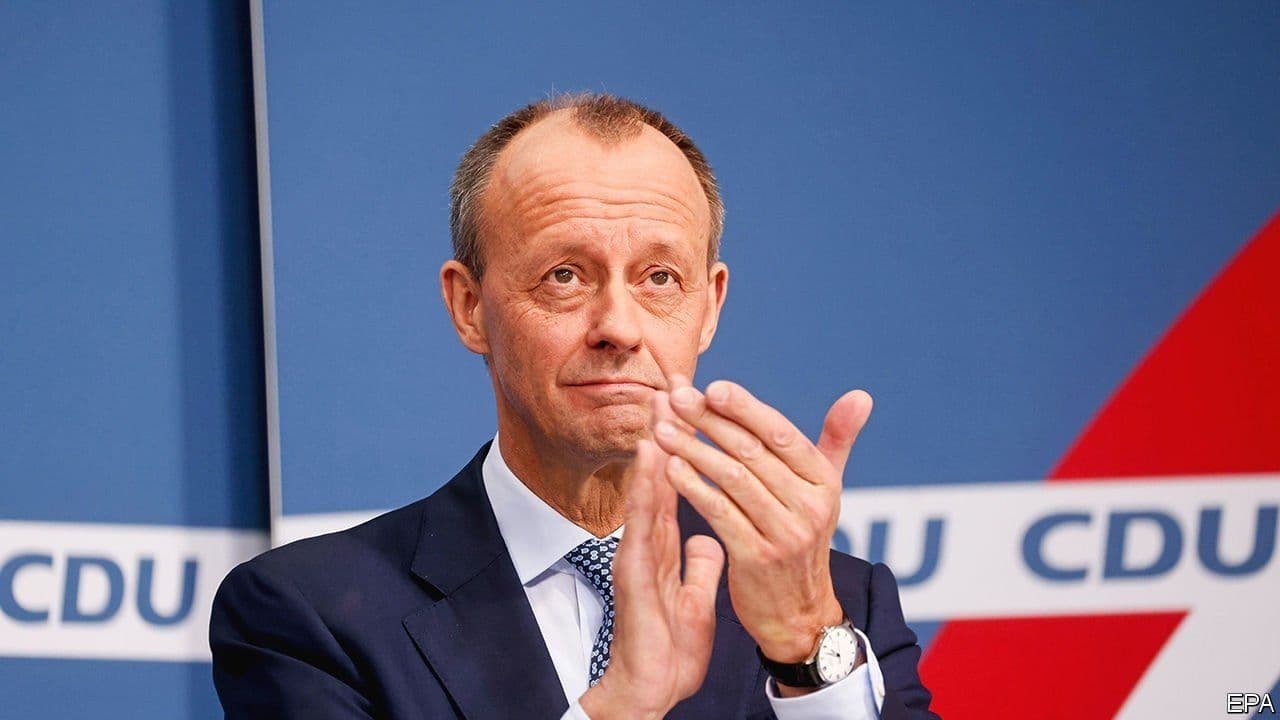
Germany’s Chancellor, Friedrich Merz, announced that Montenegro is among the top candidates for European Union membership and is ready to begin drafting its accession agreement. This statement, made during a press conference in Berlin, underscores the significance of Montenegro’s entry into the EU for Germany’s strategic interests.
Merz emphasized that closer ties between the EU and Montenegro would enhance joint efforts to tackle issues such as illegal migration. “The closer we are connected, the better we can act together in Europe,” he stated, as reported by Deutsche Welle.
Political consultant Aleksandar Musić commented on Merz’s remarks, stating that Europe recognizes its critical geopolitical moment and must act decisively. He noted the challenges posed by “an alienated America” and “an aggressive Russia,” as well as internal players like Hungary. Musić believes that Europe cannot afford to hesitate as it did in the past and is prepared to accelerate the accession of new member states that meet basic criteria.
He warned that if Europe fails to respond effectively, other forces would step in, suggesting that Montenegro is next in line for EU membership. Musić also pointed out a subtle competition for leadership between Merz and French President Emmanuel Macron, with Merz currently taking a more assertive approach.
Ambassador Željko Perović echoed the importance of Merz’s statement, characterizing it as a significant development for Montenegro amid its negotiations with Brussels. He described the Chancellor’s support as both a motivation for the Montenegrin government and a warning to address disruptive elements within the ruling coalition that threaten Montenegro’s EU aspirations.
Perović asserts that progress towards EU membership is primarily a result of reforms and the adoption of European standards. Drawing from his extensive diplomatic experience in EU countries, he highlighted that merit-based membership has historically prevailed in EU enlargement policies, although differing opinions exist today. Nevertheless, he advised Montenegro to focus on its own merits rather than external opinions.
Despite the positive momentum from Merz’s statement, Musić cautioned that EU membership alone will not resolve Montenegro’s entrenched internal political issues. He mentioned economic challenges, the rise of parallel societies, ideological pressures from abroad, and a lack of a unifying social consensus as pressing concerns that Montenegro must address independently.
The Accession Agreement is a crucial document that allows candidate countries to participate as observers in the workings of the European Union Council and Parliament before full membership. Its formulation involves representatives from the candidate state, EU member states, and EU institutions, typically drafted after a candidate has provisionally closed negotiations on all chapters.
Before the signing of the Accession Agreement, the European Commission must provide a final opinion on the membership application, followed by the approval of the European Parliament. The EU Council then makes a unanimous decision on accepting the new member state. The agreement becomes effective once ratified by the parliaments of all member states and the candidate country.
As Montenegro navigates this complex path toward EU membership, the stakes remain high, not just politically but also socially and economically. The support from Germany, a leading EU member state, could prove pivotal in shaping the future of Montenegro within the European framework.