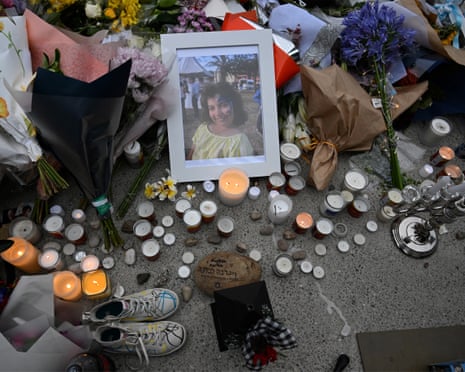
The recent attack at Bondi Beach has reignited discussions about rising antisemitism in Australia. This incident, which involved a violent shooting, has drawn attention to a troubling pattern of antisemitic rhetoric that has been increasingly downplayed in various social and political circles. Observers argue that the failure to confront this issue has significant implications for community safety and cohesion.
For years, antisemitism has been minimized, described by some as mere misunderstanding or a nuanced perspective. In Australia, language that many Jews find threatening has often been defended as a form of political expression. Antisemitic imagery has been dismissed as metaphorical, while explicit threats have been redefined as contextual. When Jewish individuals raise concerns, they are frequently accused of conflating legitimate criticism with hatred. This double standard raises important questions about the commitment to equality and respect for all communities.
Progressive institutions, which often champion moral integrity, have been criticized for their reluctance to address antisemitism within their ranks. While these organizations have been quick to scrutinize language used by conservative voices, they have shown hesitance to challenge the use of terms like “Zionist” as euphemisms for Jews. This inconsistency has created an environment where antisemitism can flourish unchecked.
The consequences of this neglect were evident in the Bondi attack. As Simon Tedeschi from Newtown, New South Wales, noted, the violence was not an isolated incident but rather a culmination of years of ignored warnings and misrepresented concerns. He emphasized that if progressive politics cannot confront the antisemitism it tolerates, its moral claims become hollow.
In the wake of the tragedy, reactions have varied. Dr. Eric van Beurden, a resident of Lismore Heights, expressed deep sorrow for the loss of life and highlighted the importance of maintaining a diverse and respectful society. He conveyed pride in the bravery of a local Muslim shopkeeper who disarmed one of the shooters, showcasing a moment of solidarity amid chaos. This act of courage, he argued, stands as a counterpoint to the rising xenophobia that threatens multicultural trust.
Similarly, Jerusha Sandler from Woodbridge, Tasmania, reflected on her own experiences with discrimination. She recalled her fear following the attack, reaching out to friends in Bondi to ensure their safety. Sandler reiterated that such acts of violence do not represent entire communities but are perpetrated by a small, dangerous minority. She urged Australians to remember that the vast majority of Muslims are peaceful, emphasizing that both Muslim and Jewish communities deserve safety and dignity.
As the nation grapples with the aftermath of the Bondi attack, it faces a crucial moment for reflection and action. The need for a unified response against all forms of hate is clear. It is essential for leaders, institutions, and communities to engage in open dialogues about antisemitism and other forms of discrimination. Only through such efforts can Australia hope to preserve its commitment to a diverse and harmonious society.