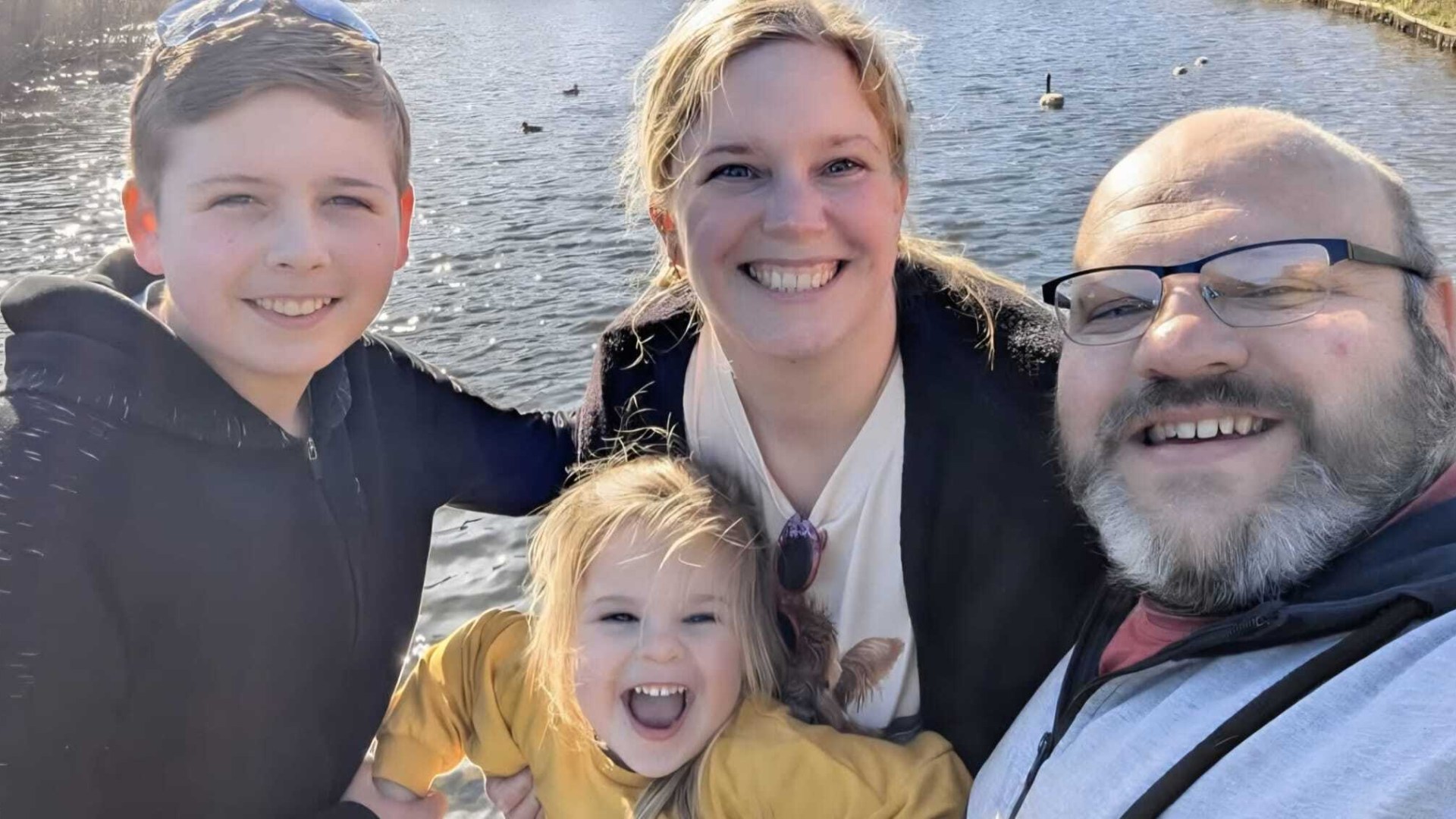
Zoe Plumley, a mother from Bridgend, South Wales, experienced a life-altering health crisis on Christmas Day 2020 after pushing through extreme fatigue and pain. Initially, she believed her symptoms were simply related to the busy holiday season. However, by the time Christmas arrived, she found herself unable to move, culminating in a diagnosis of rheumatoid arthritis.
On Christmas Eve, Zoe was out with her family, enjoying the festive lights while her newborn daughter, Larna, rested in her pram. Despite her exhaustion, she tried to enjoy the festivities. “I said to my partner, George, that the cold was getting into my bones and I felt really sore,” she recounted. The evening ended with Zoe unable to push the buggy up a kerb, prompting the family to return home.
The following day brought a shock. Zoe awoke to “excruciating pain” that left her unable to perform even basic tasks, such as opening a packet of painkillers or unwrapping presents. “I felt like I’d turned to stone,” she said. The day was spent at her parents’ house in Somerset, where she struggled to engage with her family. “I couldn’t cuddle my baby properly or dress myself,” she noted, adding that swelling made her shoes unwearable. “It was terrifying.”
As her condition deteriorated, Zoe returned home, where she experienced severe joint pain that made even the simplest activities impossible. “Every joint in my body was affected,” she described. When George contacted an out-of-hours GP, he was advised to take Zoe to A&E, where she was diagnosed with pneumonia. Doctors administered morphine before sending her home, but her condition continued to worsen.
Over the following weeks, Zoe struggled with daily life, often relying on her ten-year-old son, Logan, for assistance. Her GP promptly arranged an urgent referral to a rheumatologist after noting alarming blood test results. In January 2021, a specialist confirmed Zoe’s worst fears: she had rheumatoid arthritis.
Rheumatoid arthritis is an autoimmune disease that often manifests as pain and swelling in the joints. It can significantly impact daily life, and its symptoms can escalate rapidly. Zoe described her experience of the disease: “It’s not just joint pain; it’s an intense, full-body pain that doesn’t make sense.”
She began treatment with methotrexate, a common disease-modifying anti-rheumatic drug (DMARD) used to slow the progression of rheumatoid arthritis. Unfortunately, the disease proved aggressive. “I’ve now lost the joint in my thumb,” Zoe explained, highlighting the physical toll the condition has taken on her life.
Zoe’s daily routine has changed dramatically. She now relies on two crutches for mobility and requires adaptations at home, including a fall alarm. “I thought it was just another diagnosis,” she said, reflecting on her initial response. “Then came the grief—realizing my old self was gone.” Doctors warned her that autoimmune diseases could shorten her life expectancy.
Thanks to advancements in medical treatments, many individuals with rheumatoid arthritis can manage their symptoms more effectively than in the past. Biological therapies, which target specific immune responses, are now available. Yet, these treatments come with their own risks, including increased susceptibility to infections. “Even a cold can knock me out,” Zoe noted, reflecting the complexities of managing her health.
Living with rheumatoid arthritis has also taken a mental toll. Zoe had to leave her job running a printing business, and George became her primary caregiver. Just months later, he developed long Covid, adding to their shared challenges. “Now we care for each other,” she said.
Zoe’s children, Logan and Larna, have adapted to their new reality. Logan has taken on responsibilities as a young carer, helping his mother when she is unable to move. Zoe expressed the emotional weight of her situation: “Some mornings I physically can’t sit up without him or George. It feels like my bones are breaking.”
Despite the challenges, Zoe has turned her experience into a source of strength. She now runs her own company, L&L Specialist Services, which supports others facing health challenges and invisible disabilities. “People still assume disability means a wheelchair,” she remarked, sharing her frustrations with public perceptions. “I’ve had strangers try to take my blue badge off me because I look ‘fine’.”
Zoe remains determined to raise awareness about rheumatoid arthritis and its impact on daily life. “I take each day as it comes,” she said. “I make the most of the good ones, and if I can help others understand this condition, then that’s worth it.” Through her journey, she exemplifies resilience and the importance of support in overcoming the challenges posed by chronic illness.