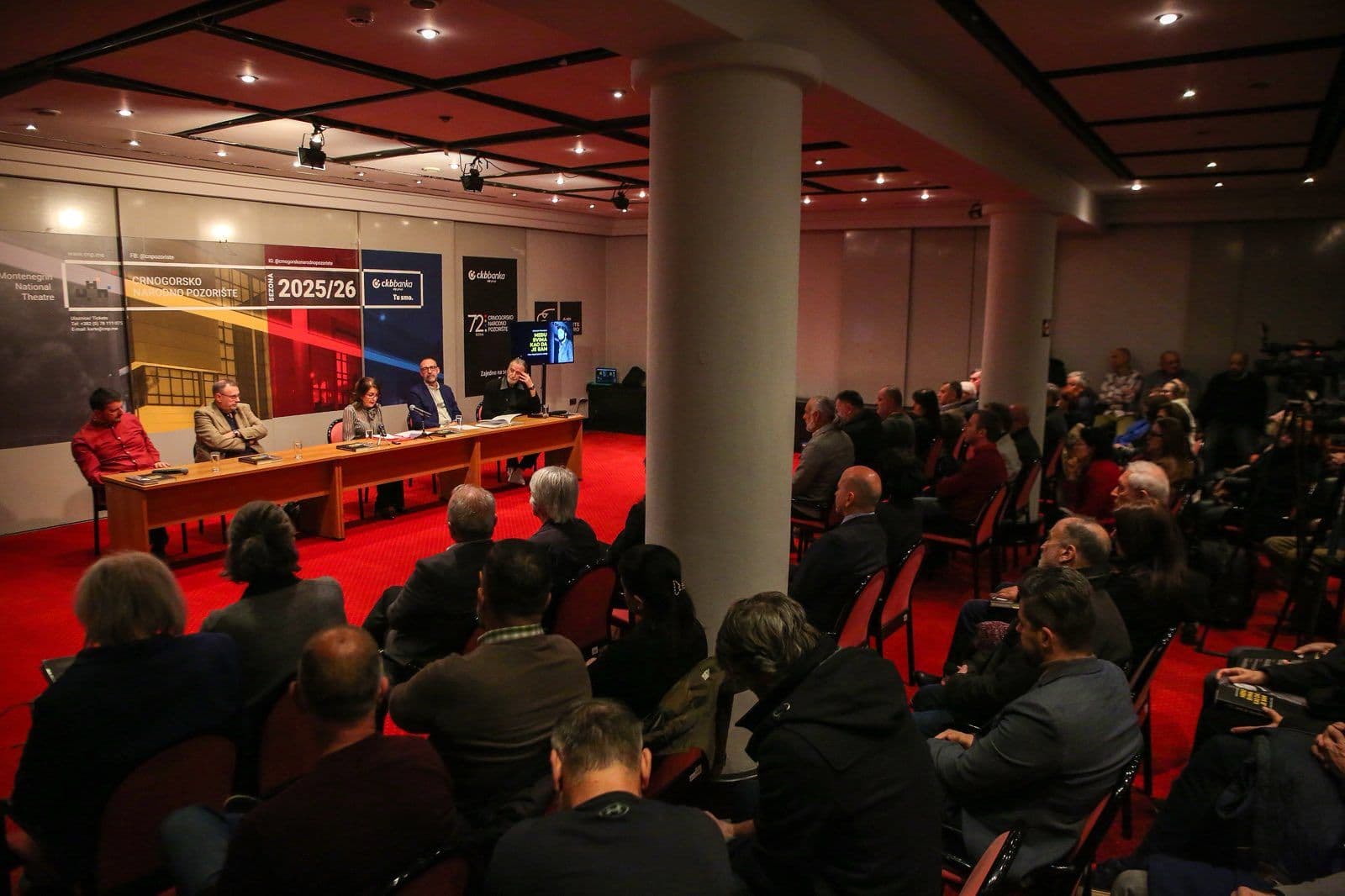
A new book titled “Među svima kao da je sam – priča o Blagoti Erakoviću”, authored by Aleksandar Milosavljevic, was launched at the Crnogorsko narodno pozorište (CNP) in Montenegro. The event drew a full audience, requiring extra seating to accommodate all who wished to attend. The book pays tribute to the esteemed Montenegrin director Blagota Erakovic, who celebrated his remarkable career spanning over 60 years.
During the presentation, Erakovic reflected on his journey in theatre, recalling his first directing venture six decades ago. He expressed gratitude for the opportunity to work alongside legendary actors like Dragica Tomas, Bora Begovic, and Petar Begovic. Erakovic emphasized the importance of mentorship he received from these icons, stating, “They were truly exceptional actors. I had much to learn from them, which influenced my decision to finally anchor myself in my home, my country, and my city.”
Erakovic shared a poignant memory of a conversation with writer Danilo Kis, who remarked, “You have a homeland and can return whenever you wish. I do not.” This reflection underscored his commitment to Montenegro’s cultural landscape, as he urged the audience to advocate for the theatre and the nation to reach new heights.
Milosevic described the book as more than just a narrative about Erakovic; it encompasses the history of CNP and the broader cultural context of Montenegro. He noted Erakovic’s pivotal role in the reconstruction of CNP after a devastating fire, highlighting the challenge of rebuilding the institution while navigating financial hardships. “It was Blagota Erakovic’s mission to not only build the theatre but to preserve it,” Milosavljevic remarked.
The author also highlighted Erakovic as a vital link between different artistic epochs. He pointed out that prior to Erakovic’s influence, there was little progress in Montenegrin theatre. “During his era, what he accomplished as a director opened new avenues for Montenegrin directing,” Milosavljevic stated, likening him to a “Prometheus of the directing world.”
Vasko Raicevic, the book’s editor, described Erakovic as a pioneer of modern aesthetics in Montenegrin theatre. He noted that Erakovic’s career coincided with significant transformations in the artistic landscape, propelling Montenegro’s theatre out of its archaic practices and into a modernized aesthetic.
Janko Ljumanovic added that Milosavljevic’s work transcends traditional monograph formats. He praised the book for its innovative structure, combining interviews with Erakovic, selected writings by contemporaries, and rich archival documentation. This multifaceted approach allows readers to view Erakovic’s contributions not only as personal achievements but as integral to the wider theatrical and cultural narrative.
The book intertwines Erakovic’s personal biography with his professional history, creating a narrative that serves as both a tribute to the director and a testament to the development of theatre in Montenegro and the broader regional context. “Through the voices of various authors and Erakovic’s own reflections, the book chronicles the evolution of directing in Montenegro, the aesthetic foundations, and the challenges faced,” Ljumanovic highlighted.
The launch event was attended by many theatre enthusiasts and professionals, although the director of CNP, Ilija Subotic, was unable to attend. His speech was read at the beginning of the presentation, emphasizing Erakovic’s significant impact on Montenegrin culture.
Overall, the book celebrates a remarkable career and the lasting influence of Blagota Erakovic, marking an important chapter in the history of Montenegrin theatre.