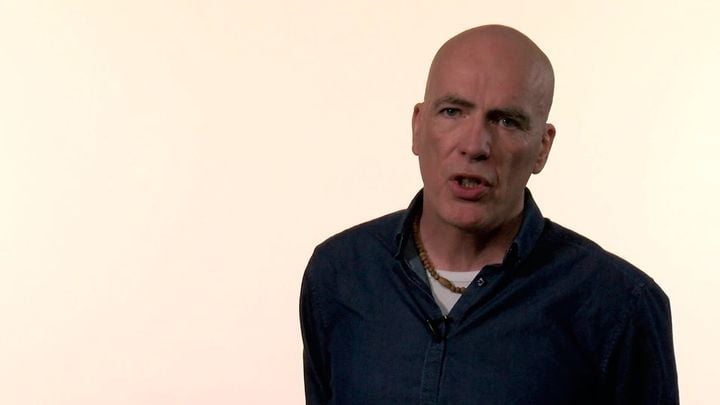
Robin Harding, the Asia Editor of the Financial Times, challenges the notion that university is solely about discovering the best version of oneself. During a recent discussion, he reflected on his own experiences at Cambridge, where he began his studies in Social and Political Sciences in 1997 before switching to Economics.
A Journey of Self-Discovery
Harding’s initial foray into university life was far from the confident experience many envision. He described himself as a “shy and unworldly kid” upon arriving at Cambridge, overwhelmed by the environment. This sentiment resonates with many students who feel pressure to excel immediately. His reflections reveal a more grounded perspective on the undergraduate experience: “I read a lot. I probably drank more than was good for me […] I made great friends, lifelong ones.”
He acknowledges that a significant portion of students share similar feelings of uncertainty. “A good half of everyone is sort of fairly bewildered, and just trying to find our way through,” he noted, emphasizing that growth often comes from navigating such challenges. This realization is comforting for those who fear they are not living up to the ideal of university life.
Finding Purpose Beyond Finance
After graduating in 2000, Harding followed a conventional path for a Cambridge economist, pursuing internships and graduate schemes in investment banking. However, he quickly became disillusioned by the realities of the finance sector. “It’s quite disillusioning when you encounter the reality of finance,” he remarked, pointing out that despite the brilliance of many colleagues, the industry often operates in ways that do not align with client interests.
His experiences at major institutions, including a notable internship at Merrill Lynch, initially captivated him with their glamour. “The internship scheme was absolutely insane… they hired out the National History Museum to have a dinner for us,” he recalled. Yet, the allure faded as he sought more meaningful work.
Harding’s career took a pivotal turn when he accepted a position at a public policy think tank followed by a Master’s degree in Japan. His journey led him to the Peter Martin Fellowship, which offered a three-month internship at the Financial Times. This decision required him to leave the banking sector, a choice he now reflects on with satisfaction. “I was really excited by journalism,” he stated, recognizing that the opportunity brought him closer to what truly mattered.
On his first day as an intern, Harding wrote an editorial for the Financial Times that was published the following day, a moment he described as “mind-blowing.” His diverse experiences in economics, finance, and public policy all converged in his role as a financial journalist, illustrating that what may initially seem like detours can be integral to one’s career path.
Harding’s journey serves as a reminder that the undergraduate experience is about more than achieving a polished persona. Instead, it is an opportunity to explore varied interests, build relationships, and ultimately shape a future that aligns with one’s values and aspirations. As he aptly puts it, “our time as an undergraduate is about starting the long, meandering work of moulding ourselves into someone we can grow into.”